
Navigating Sweden's Economic Crossroads: Risks and Rewards in a Post-Growth World
The Swedish economy has entered a period of heightened uncertainty. Official data shows that GDP stagnated in Q1 2025, falling short of expectations and marking a sharp slowdown from the previous quarter's 0.6% growth. While this contraction has raised concerns about broader Nordic market stability, it also presents a critical juncture for investors to dissect sectoral divergences and identify opportunities amid geopolitical and trade headwinds.
The Stagnation: A Tale of Two Sectors
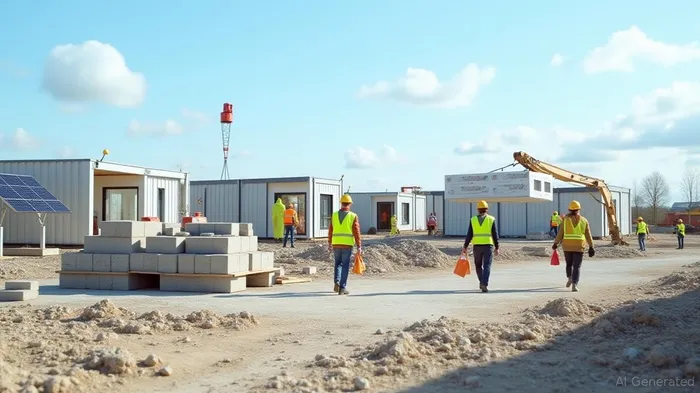
The Q1 2025 GDP report reveals a stark dichotomy: weakness in industrial output contrasts with resilience in construction and select export sectors. The automotive industry, a cornerstone of Sweden's manufacturing base, faced a global slump in demand, dragging factory output lower in early 2025. This drag was partially offset by a surge in defense-related exports—a testament to Europe's military rearmament—and export front-loading ahead of anticipated U.S. tariffs. Meanwhile, the construction sector defied the gloom, growing 2.2% year-on-year in March, buoyed by government spending on green infrastructure and urban housing projects.
The Export Dilemma: Tariffs, Trade, and Tactical Opportunities
The U.S. tariff threat looms large. While Sweden's defense exports to Europe and North America have provided a near-term boost, prolonged U.S. protectionism could cap long-term growth. Investors should prioritize firms with diversified export portfolios or those insulated by government contracts. For instance, may offer stability if they can pivot supply chains or leverage EU trade agreements.
Conversely, undervalued exporters in sectors less exposed to U.S. trade wars—such as defense contractors like Saab (SAAB) or renewable energy firms like Northvolt—could present entry points. These companies are capitalizing on European defense budgets and green energy mandates, which are insulated from transatlantic trade tensions.
The Construction Boom: A Green-Fueled Growth Engine
The construction sector's 9.1% contribution to the private sector highlights its role as a stabilizer. Government investments of 5.8 billion kronor in infrastructure and green projects—such as the HYBRIT carbon-neutral steel initiative—are driving demand for firms like Skanska (SKAB) and NCC (NCC B). may signal undervaluation relative to their growth trajectories.
The sector's recovery is also underpinned by urban housing shortages and tech-driven efficiency gains. Modular construction techniques and AI integration are lowering costs, while demand for data centers and modern office spaces fuels commercial projects. Investors should favor companies with strong balance sheets and exposure to green infrastructure mandates.
Hedging Against the Risks: A Pragmatic Playbook
While the outlook for 2025-2026 remains cautiously optimistic—with GDP growth expected to reach 1.8% and 2.6%—downside risks persist. A prolonged German manufacturing slump or a sharp rise in U.S. tariffs could amplify stagnation. To mitigate this, investors should:
- Diversify geographically: Focus on firms with European or Asian export exposure.
- Leverage fiscal tailwinds: Invest in companies benefiting from Sweden's expansionary fiscal policy, such as infrastructure contractors.
- Use options to hedge: Consider put options on export-heavy equities to protect against tariff-related volatility.
Conclusion: A Time to Act
Sweden's Q1 contraction is not a verdict on its economic health but a call to discernment. The construction boom and strategic export sectors offer a roadmap for capitalizing on mispriced assets. With the Riksbank poised to cut rates further and government spending on green projects accelerating, now is the moment to deploy capital into firms positioned to thrive in this divergent economy.
The Nordic markets' volatility presents a rare opportunity to buy quality assets at a discount—provided investors stay attuned to sectoral nuances and geopolitical risks. The next two quarters will test this thesis, but for those who act decisively now, Sweden's crossroads could become a turning point for gains.







Comentarios
Aún no hay comentarios