
Navigating the Storm: Strategic Investment in U.S. Offshore Wind Amid Regulatory Uncertainty
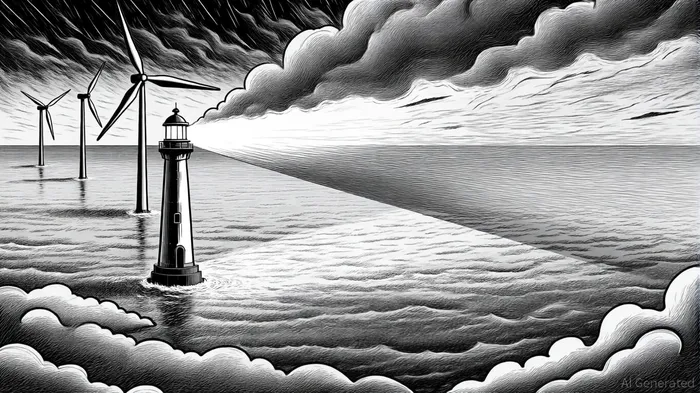
The U.S. offshore wind industry is at a crossroads. Regulatory uncertainty, driven by abrupt federal policy shifts, has created a volatile environment for developers and investors. Yet, amid the turbulence, companies are adopting innovative strategies to mitigate risks and secure long-term value. This analysis explores how strategic investment in offshore wind is evolving in response to regulatory headwinds, drawing on recent developments and global best practices.
Federal Policy Shifts and Immediate Impacts
Since January 2025, the Trump administration's executive actions have fundamentally altered the regulatory landscape. A presidential memorandum temporarily withdrew all areas on the Outer Continental Shelf (OCS) from offshore wind leasing, effectively halting new project approvals and triggering a review of existing leases[1]. The Bureau of Ocean Energy Management (BOEM) rescinded designated wind energy areas and issued stop-work orders for projects like the $4 billion Revolution Wind initiative, which was 80% complete[2]. These moves have sparked legal challenges, with courts recently ruling in favor of resuming construction for Revolution Wind, citing irreparable harm to developers and job losses[3].
The broader implications are stark: federal funding for 12 projects across 11 states was canceled, and renewable energy investment in the U.S. declined by 36% in the first half of 2025 compared to the prior year[4]. This regulatory instability undermines investor confidence, as companies face the risk of stranded assets and delayed returns.
Corporate Responses: Risk Mitigation and Adaptation
Faced with uncertainty, U.S. offshore wind firms are recalibrating their strategies. One key approach is diversification of markets. For example, Nexans, a major cable manufacturer in South Carolina, has shifted focus to European markets to mitigate domestic regulatory risks[5]. Similarly, developers are renegotiating contracts for difference (CfDs) with governments to align with evolving policy frameworks, even if it means revising contractual obligations[6].
Technological innovation is another critical lever. Companies are investing in floating wind technology and grid integration solutions to reduce costs and enhance project viability[7]. For instance, advances in turbine efficiency and noise reduction technologies are addressing environmental concerns, particularly under the Endangered Species Act and the Marine Mammals Protection Act[8].
Legal and Market Dynamics
The legal battles surrounding offshore wind projects highlight the sector's reliance on a stable regulatory framework. Revolution Wind's successful challenge to BOEM's stop-work order underscores the importance of judicial oversight in balancing federal authority with private investment rights[3]. Meanwhile, the U.S. Chamber of Commerce has emphasized the need for “permitting certainty from start to finish,” arguing that unpredictable policies deter long-term capital commitments[9].
Globally, the UK's Contracts for Differences (CfD) model offers a contrast. By adjusting strike prices and extending contract terms, the UK has stabilized investment despite macroeconomic pressures[10]. U.S. developers are studying these models to advocate for similar mechanisms, though federal fragmentation complicates adoption.
Future Outlook: Navigating Uncertainty
The path forward for U.S. offshore wind hinges on three factors:
1. Policy Stability: A return to consistent federal support, such as through the Inflation Reduction Act's incentives, is critical for attracting capital[11].
2. Stakeholder Engagement: Improved collaboration with tribal communities, the fishing industry, and local governments can address ecological and economic concerns[12].
3. Financial Innovation: Structuring deals with flexible terms and leveraging public-private partnerships will reduce exposure to regulatory shifts[13].
Conclusion
The U.S. offshore wind sector is navigating a storm of regulatory uncertainty, but strategic investments—rooted in diversification, innovation, and advocacy—can weather the turbulence. While federal policy remains a wildcard, companies that prioritize adaptability and stakeholder alignment are better positioned to capitalize on long-term opportunities. For investors, the key takeaway is clear: resilience in offshore wind requires not just technological and financial agility, but also a nuanced understanding of the political and legal forces shaping the industry.







Comentarios
Aún no hay comentarios