
Navigating the Storm: South Korea-U.S. Tariff Talks and Market Implications
The economic landscape between South Korea and the United States is set to undergo significant turbulence as Seoul prepares to launch urgent tariff negotiations with Washington. With a 90-day suspension of U.S. tariffs on South Korean vehicles and auto parts in effect since April 9, 2025, the stakes are high for both nations. The talks, announced by South Korean Acting President Han Duck-soo on April 14, aim to resolve a 25% tariff regime imposed by the Trump administration, while balancing geopolitical ambitions and economic survival.

The Auto Industry: A Crucible of Negotiations
At the heart of the dispute are the automotive tariffs, which threaten to disrupt South Korea’s $50 billion auto export market. The U.S. tariffs on vehicles and parts, coupled with Seoul’s paused reciprocal 25% duty on U.S. goods, have already spurred Seoul to allocate $2 billion in financial aid to its automotive sector. This includes subsidies for consumers and tax breaks for manufacturers like Hyundai (005380.KS) and Kia (000270.KS), whose U.S. sales could plummet without relief.
Data shows that U.S. imports of South Korean vehicles surged by 18% in 2024, making the American market critical for Seoul. However, the tariffs risk reversing this trend. A failure to secure exemptions could force companies to absorb costs or relocate production—a move that would ripple through global supply chains.
Semiconductors: The Hidden Wildcard
While autos dominate headlines, semiconductors pose a quieter but equally perilous challenge. The U.S. plans to impose new tariffs on “superconductor chips” by mid-2025, targeting South Korea’s tech giants like Samsung Electronics (005930.KS) and SK Hynix. These chips are vital for electric vehicles and advanced manufacturing, sectors where South Korea holds a global edge.
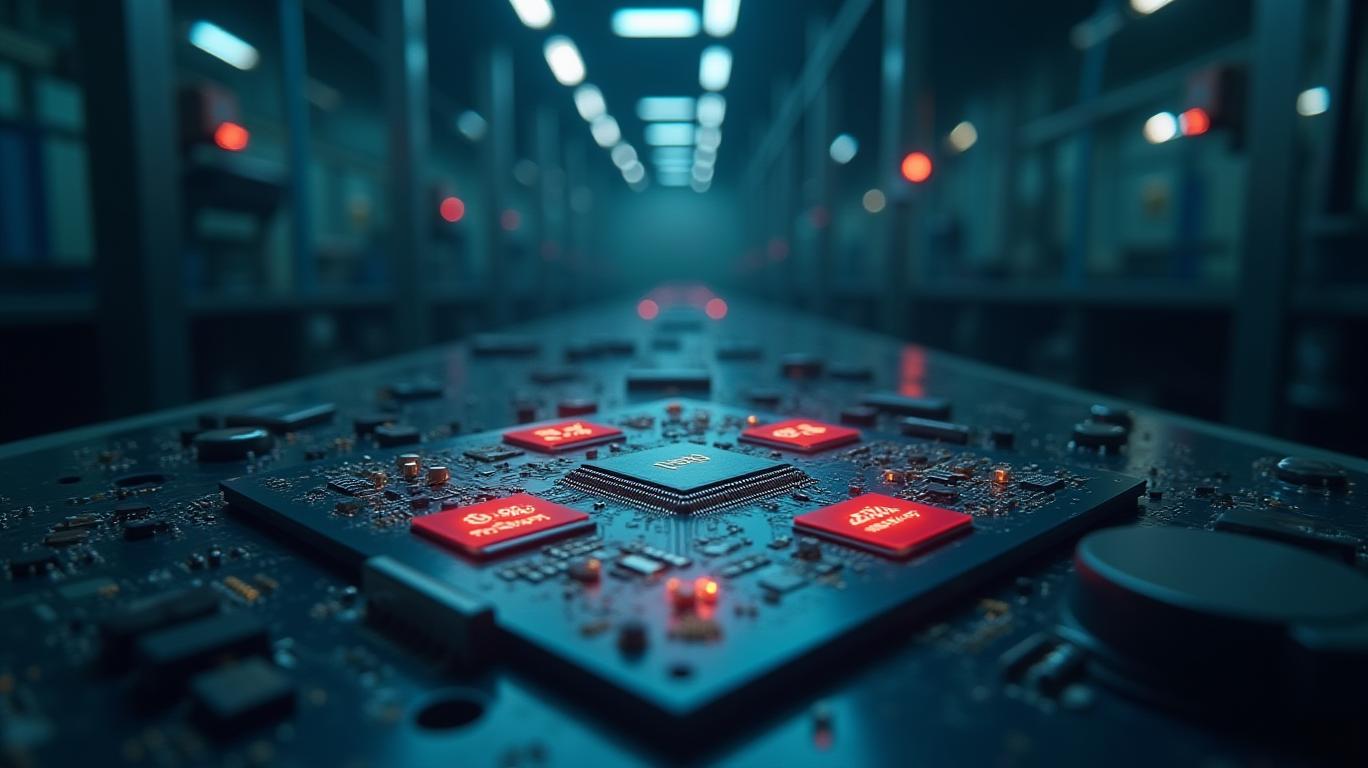
Analysts warn that even a 25% tariff could destabilize South Korea’s $180 billion semiconductor industry. The U.S.’s push to reshore production clashes with Seoul’s reliance on export-driven growth, creating a precarious equilibrium.
Energy and Shipbuilding: Leverage or Distraction?
South Korea is using energy and shipbuilding as negotiation chips. Discussions about the Alaska LNG project—highlighted in Han’s video call with U.S. officials—aim to secure U.S. energy supplies while softening trade demands. Meanwhile, Seoul’s dominance in shipbuilding, particularly in eco-friendly vessels, offers leverage against U.S. demands for “fair trade.”
Shipbuilding giants like Hyundai Heavy Industries (009540.KS) could gain if the U.S. prioritizes domestic maritime projects, but this sector’s cyclical nature makes it a risky bet.
Geopolitical and Economic Stakes
The Kospi index surged 5% on April 9 after the tariff suspension announcement, reflecting investor optimism. However, prolonged uncertainty could erode gains. With South Korea’s economy already fragile—GDP growth slowed to 1.2% in Q1 2025—the negotiations are a lifeline.
A successful deal would stabilize markets, but delays could trigger a sell-off. The June 3 U.S. presidential election adds urgency, as a new administration might reset trade priorities.
Risks and Opportunities
The path forward is fraught with risks. A “no-deal” scenario could:
1. Hurt auto stocks: Hyundai and Kia’s U.S. sales might drop by 15–20%, squeezing margins.
2. Impact semiconductors: Samsung’s semiconductor division, which accounts for 40% of its revenue, faces margin pressures.
3. Weaken the won: Currency fluctuations could amplify import costs for energy and raw materials.
Yet opportunities exist for agile investors:
- Shipbuilders: LNG projects could boost orders if energy cooperation is prioritized.
- Tech resilience: Companies with diversified supply chains (e.g., SK Hynix’s AI chip investments) may outperform.
- Government support: The $2 billion auto aid package could cushion short-term losses.
Conclusion: A Delicate Balance
The South Korea-U.S. tariff talks are a high-stakes dance between economic survival and strategic ambition. If an agreement emerges by the 90-day deadline, markets will rally: the Kospi could rebound to pre-tariff levels (e.g., surpassing 2,800 points), and auto/shipbuilder stocks like Hyundai and Samsung Heavy Industries (009540.KS) might rebound. However, a failure risks a 5–10% Kospi correction, with semiconductor stocks like Samsung Electronics (005930.KS) underperforming.
The ultimate outcome hinges on whether Seoul can secure tariff relief while offering concessions in energy and tech—without compromising its export-driven economy. Investors should monitor two key indicators: the Kospi’s performance post-April 9 (already up 5% on hope) and the semiconductor tariff timeline. For now, the storm rages—but the path to calmer waters remains uncertain.







Comentarios
Aún no hay comentarios