
Navigating the Storm: Replimune's FDA Hurdles and the Resilience of Oncology Biotech
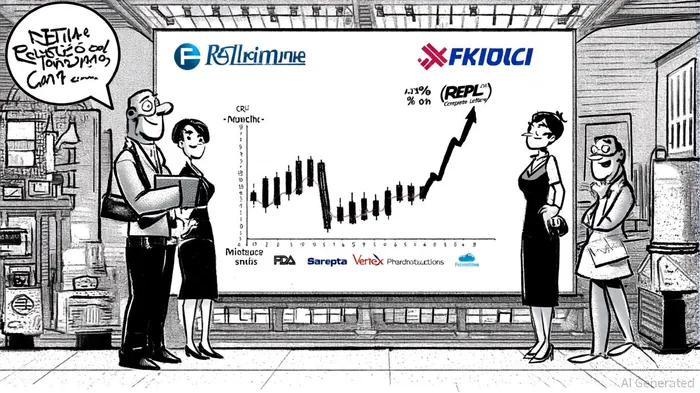
Replimune Group (REPL) has experienced a 39% stock plunge following the U.S. Food and Drug Administration's (FDA) recent Type A meeting, which left the regulatory path for its melanoma therapy RP1 (vusolimogene oderparepvec) in limbo. The FDA's concerns—centered on the IGNYTE trial's adequacy and the heterogeneity of its patient population—highlight the growing scrutiny of oncology drug developers[1]. Yet, this turmoil raises a critical question for investors: Can biotech firms with high-risk, high-reward oncology pipelines overcome such regulatory hurdles and retain long-term value?
The FDA's Stance and Replimune's Dilemma
The FDA's rejection of Replimune's Biologics License Application (BLA) for RP1 underscores a broader shift toward demanding robust, globally diverse clinical data. The IGNYTE trial, while reporting a 33.6% confirmed overall response rate and manageable safety profiles[5], was deemed insufficient due to its heterogeneous patient population and flawed confirmatory trial design (IGNYTE-3)[2]. This mirrors the FDA's recent rejection of Eli LillyLLY-- and Innovent's sintilimab, where the agency emphasized the need for multiregional trials over single-country data[3]. For ReplimuneREPL--, the challenge lies not only in redesigning IGNYTE-3 but in convincing regulators that RP1's mechanism—a replication-competent oncolytic virus—justifies its accelerated approval pathway.
Historical Precedents: Resilience in the Face of CRLs
While Replimune's stock has plummeted, history shows that biotech firms can recover from FDA setbacks. Consider Sarepta TherapeuticsSRPT--, whose Vyondys 53 faced a CRL in 2020 over safety and efficacy concerns but secured approval in 2023 after addressing data gaps[4]. Similarly, Vertex PharmaceuticalsVRTX-- navigated regulatory delays for its cystic fibrosis therapies, maintaining a 80% five-year stock return despite repeated hurdles[3]. These cases illustrate that long-term resilience hinges on two factors: the ability to address FDA concerns efficiently and the strength of the underlying pipeline.
For Replimune, the IGNYTE-3 trial—currently enrolling patients—represents a critical opportunity to generate the robust data the FDA demands. If the trial confirms RP1's efficacy in a more homogeneous population, the company could pivot toward a traditional approval pathway or leverage the Accelerated Approval (AA) program, which has approved 29% of oncology drugs between 2021–2023[5]. However, the AA program's risks are evident: Over 20% of AA-designated drugs have failed to confirm clinical benefits, leading to regulatory complications[5].
The Biotech Sector's Adaptive Strategy
The broader biotech sector has shown adaptability in responding to FDA challenges. Companies like Incyte CorporationINCY-- (INCY) and Gilead SciencesGILD-- have weathered CRLs by refining trial designs or securing strategic partnerships[3]. For instance, a small biotech firm recently overcame a clinical hold by collaborating with regulatory experts to resolve Chemistry, Manufacturing, and Controls (CMC) deficiencies[6]. Such strategies suggest that Replimune's path forward may involve external expertise or trial redesigns to align with FDA expectations.
Investor sentiment, however, remains fragile. A study in the Journal of Finance and Accountancy found that CRLs trigger immediate stock declines but often stabilize if companies demonstrate clear plans to address deficiencies[4]. Replimune's stock drop reflects short-term panic, but its forward P/E ratio of 11.75—lower than peers like Incyte—suggests undervaluation if the company can navigate this phase[3].
Long-Term Outlook: Risk vs. Reward
The oncology space's high-stakes nature means that regulatory hurdles are inevitable, but they also create opportunities for firms with innovative pipelines. Replimune's RP1, if approved, could target a $2.1 billion advanced melanoma market[5], particularly in patients resistant to anti-PD-1 therapies. However, the company's reliance on a single asset increases risk, as seen in Lykos Therapeutics' struggles with its MDMA-based PTSD treatment[1].
For investors, the key is to balance Replimune's current challenges with its long-term potential. Historical data indicates that biotech firms with strong cash reserves and adaptive trial strategies—like VertexVERX-- and Sarepta—can outperform despite CRLs[3]. Replimune's $350 million cash runway and ongoing IGNYTE-3 enrollment provide a buffer, but its success will depend on its ability to align with the FDA's evolving standards.
Conclusion
Replimune's stock plunge is a stark reminder of the FDA's growing influence over oncology drug approvals. Yet, the company's situation is not unique. By studying historical precedents and the sector's adaptive strategies, investors can discern that regulatory hurdles, while painful, are often surmountable. The critical question is whether Replimune can leverage its remaining resources to generate the data the FDA demands—and whether its pipeline justifies the risk. In a sector defined by innovation and resilience, the answer may yet lie in the next phase of clinical trials.





Comentarios
Aún no hay comentarios