
Navigating the Storm: Positioning for U.S. Government Shutdown Risk in a Politically Uncertain Era
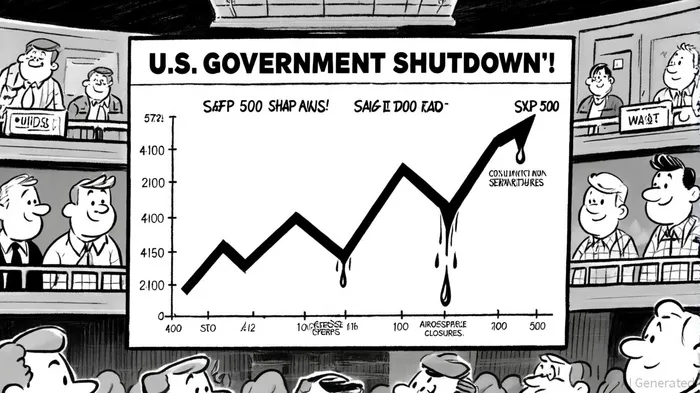
Political uncertainty is the new normal. From partisan gridlock to fiscal brinkmanship, U.S. government shutdowns have become recurring specters in the investment landscape. While markets often dismiss short-term volatility as noise, the interplay between political dysfunction and sector-specific fragility demands a more nuanced approach. This article dissects historical patterns, sector vulnerabilities, and actionable strategies to navigate shutdown risk in 2025.
Historical Market Volatility: Short-Term Pain, Long-Term Gain?
Government shutdowns have historically triggered mixed market reactions. Shorter closures (≤5 days) have shown limited impact, with the S&P 500 even posting gains during four of the most recent such events [1]. However, prolonged shutdowns (≥10 days) tell a different story. The 2018–2019 35-day shutdown, the longest in U.S. history, saw the S&P 500 plummet by 19.8% in the lead-up to the crisis [2]. Yet, markets have historically rebounded, with a median 18.9% gain in the 12 months following extended shutdowns [2].
The key takeaway? Short-term volatility is inevitable, but long-term fundamentals often prevail. For instance, during the 2013 shutdown, the S&P 500 fell 0.6%, while the VIX volatility index spiked 6.2% [4]. Conversely, the 2018–2019 shutdown coincided with a dovish Federal Reserve policy, which cushioned the blow and catalyzed a 10.3% rebound in the S&P 500 during the closure itself [4].
Sector Resilience: Who Survives and Who Suffers?
Shutdowns disproportionately affect sectors tied to federal activity. Defense and aerospace—heavily reliant on government contracts—typically face revenue delays. Companies like Lockheed MartinLMT-- and Northrop GrummanNOC-- have historically seen earnings dip during closures due to halted procurement processes [4]. Similarly, consumer discretionary sectors suffer as furloughed federal employees reduce spending, particularly in regions like Washington, D.C., and military-dependent communities [3].
Conversely, defensive sectors like utilities and consumer staples tend to outperform. During the 2018–2019 shutdown, Procter & Gamble and Duke EnergyDUK-- rose by 5.7% and 5.8%, respectively [4]. Technology and healthcare also show resilience, though healthcare faces mixed outcomes: while Medicare/Medicaid payments continue, regulatory delays (e.g., FDA approvals) create operational friction [4].
The financial sector remains relatively neutral, as stock exchanges operate normally, but investor sentiment shifts—evidenced by VIX spikes—can indirectly pressure asset prices [4].
Investment Strategies: Hedging Against the Unknown
Given the asymmetric risks of shutdowns, investors should prioritize sector rotation and volatility hedging:
- Defensive Sector Overweights:
- Utilities and consumer staples offer stability. For example, Duke Energy's consistent dividends and low beta make it a natural hedge during political turmoil [4].
Technology benefits from its low reliance on federal contracts and long-term growth tailwinds.
Short-Term Volatility Protection:
Allocate to VIX-linked instruments or options strategies (e.g., long puts) to mitigate downside risk during prolonged shutdowns. Historical data shows the VIX can surge by 6.2% within days of a closure [4].
Underweight Vulnerable Sectors:
- Defense and aerospace stocks face near-term revenue uncertainty. Investors should monitor contract timelines and cash reserves.
Consumer discretionary may see reduced demand in government-heavy regions [3].
Leverage Central Bank Support:
- The Federal Reserve's dovish pivots during past shutdowns (e.g., 2018–2019) have cushioned market declines. A repeat of such policies could limit downside risks [4].
Conclusion: Prepare for the Storm, But Don't Panic
While government shutdowns inject volatility into markets, history shows they rarely derail long-term trends. Investors who position for sector-specific resilience and volatility spikes can turn uncertainty into opportunity. As the 2025 shutdown risk looms, the playbook is clear: defensive positioning, sector rotation, and tactical hedging will be the keys to navigating the political tempest.





Comentarios
Aún no hay comentarios