
Navigating the Storm: Oil Tanker Market Dynamics and Investment Opportunities Amid Geopolitical Tensions and Supply Chain Disruptions
The oil tanker market in 2025 is a theater of paradoxes: geopolitical chaos fuels short-term gains, while long-term uncertainty looms large. As global trade bottlenecks and sanctions reshape shipping routes, investors face a high-stakes chessboard where volatility and resilience coexist. This analysis unpacks the forces driving the market, evaluates the investment potential of tanker shipping, and highlights strategies to navigate the turbulence.
Geopolitical Tensions: A Double-Edged Sword
The Red Sea crisis has become a defining feature of the 2025 oil tanker landscape. Houthi attacks forced a 467% surge in crude tanker rates for key routes, as vessels rerouted around the Cape of Good Hope, adding days to transit times and inflating costs. While the Houthis announced a temporary ceasefire in November 2025, BIMCO estimates a 2%–3% demand reduction if normalcy resumes. This duality-short-term rate spikes versus long-term demand erosion-creates a volatile backdrop.
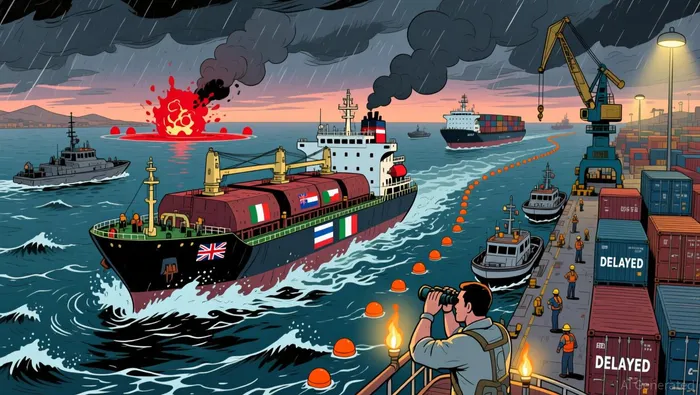 Meanwhile, sanctions regimes have weaponized compliance. The EU's 18th sanctions package and the UK's addition of 200+ ships to blacklists have disrupted Russian oil exports and forced floating storage solutions. Over 1,000 vessels have been sanctioned since 2023, with U.S. tariffs on Chinese-owned vessels further fragmenting trade patterns. These measures have elevated the geopolitical risk premium in oil prices, with insurance and operational costs rising as a result.
Supply Chain Disruptions: Beyond Rerouting
Port congestion and regulatory shifts compound the challenges. Maersk's Q3 2025 report highlights North American supply chain bottlenecks, including variable lead times and capacity constraints. The U.S. Customs and Border Protection's elimination of the $800 de minimis exemption for imports has added layers of complexity, forcing shippers to adopt digital tools for compliance.
Tariff-driven reconfigurations are reshaping global trade. Apple's accelerated shift to India and Vietnam, and Walmart's pivot to Southeast Asia, underscore a broader trend of supply chain diversification. For tankers, this means sustained demand from Europe-importing oil from the Middle East, U.S., and Latin America-but weaker growth in product tanker markets due to slower demand.
Investment Trends: Compliance, Digitalization, and Resilience
The 2025 tanker market is defined by two competing forces: compliance costs and technological adaptation. Operators now prioritize due diligence tools to navigate sanctions, with firms like Skuld noting heightened risks from GPS jamming and infrastructure attacks. The cost of noncompliance-reputational damage, penalties, or market exclusion-has made regulatory scrutiny a core part of commercial strategy.
Investment activity, however, remains muted. Newbuilding prices stay high by historical standards, and ordering has slowed compared to 2024. Yet, the market's balance hinges on China's potential rebound. If Beijing's oil demand and imports surge in 2026, as some analysts predict, freight rates could stabilize.
Strategic Opportunities in the Chaos
For investors, the key lies in balancing risk and reward. Tanker operators with diversified fleets and robust compliance frameworks are better positioned to capitalize on short-term rate spikes. Those leveraging digital tools for real-time tracking and predictive analytics-trends highlighted by global supply chain reports-can mitigate disruptions.
However, caution is warranted. A sudden de-escalation in Red Sea tensions or a collapse in Chinese demand could erode gains. The market's fragility is underscored by low GDP growth in major economies and cautious consumer behavior.
Conclusion: A Market of Contradictions
The 2025 oil tanker market is a study in contradictions: geopolitical tensions drive rates upward, while supply chain disruptions threaten demand. For investors, the path forward requires agility-hedging against volatility while capitalizing on near-term tailwinds. As the world grapples with a fractured trade landscape, the most successful players will be those who combine strategic foresight with operational resilience.







Comentarios
Aún no hay comentarios