
Navigating the Storm: Novo Nordisk's Restructuring and the Future of Obesity Therapeutics
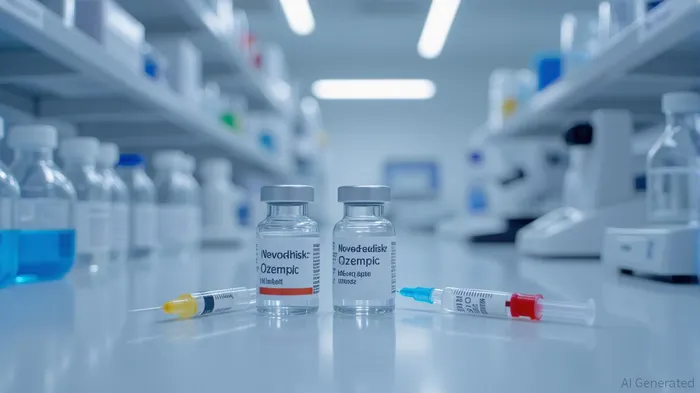
The pharmaceutical industry is no stranger to upheaval, but NovoNVO-- Nordisk's 9,000-job cut in 2025 has sent shockwaves through the obesity therapeutics sector. This move, representing 11.5% of its global workforce, is not merely a cost-cutting exercise—it is a strategic recalibration in response to a rapidly shifting competitive landscape. For investors, the question is whether this restructuring signals a proactive pivot toward long-term resilience or a reactive retreat from mounting pressures.
Strategic Shift or Crisis Response?
Novo Nordisk's decision to slash costs and streamline operations reflects a dual challenge: intensifying competition and organizational complexity. The company's flagship GLP-1 drugs, Wegovy and Ozempic, once dominant in the obesity and diabetes markets, now face headwinds from Eli Lilly's Zepbound and Mounjaro, as well as compounded copycat drugs. These competitors have eroded Novo's pricing power and market share, particularly in the U.S., where obesity drug demand is most acute.
The job cuts, coupled with a hiring freeze and a $16.5 billion acquisition of Catalent to bolster supply chain resilience, suggest a strategic reallocation of resources. CEO Mike Doustdar, who took the helm in May 2025, has emphasized a “performance-based culture” and faster decision-making—hallmarks of a company seeking to regain agility. However, the timing of the restructuring, following three profit warnings and a 46% drop in share price since early 2025, raises questions about whether this is a crisis response rather than a premeditated strategy.
R&D Resilience: A Double-Edged Sword
The annual savings of 8 billion Danish kroner ($1.25 billion) by 2026 will be reinvested into R&D, manufacturing expansion, and patient access. This is critical for a company whose long-term profitability hinges on innovation. Novo's pipeline includes a pill version of Wegovy and expanded applications for its GLP-1 portfolio, such as metabolic-associated fatty liver disease (MASH) and cardiovascular therapies.
Yet, R&D resilience is not guaranteed. The company's recent clinical setbacks—such as the underwhelming performance of its triple-agonist candidate CagriSema—highlight the risks of overreliance on a narrow therapeutic focus. While Novo's reinvestment in R&D is a positive signal, investors must scrutinize whether these funds will accelerate meaningful innovation or merely delay inevitable obsolescence.
Competitive Pressures and Market Realities
The obesity drug market is now a battleground. Eli Lilly's Zepbound has captured significant U.S. market share, while compounded copycats undercut Novo's pricing. These dynamics have forced Novo to adopt a more consumer-driven approach, including direct-to-consumer marketing—a domain where it previously lagged.
The restructuring's success will depend on Novo's ability to differentiate its offerings. For instance, the pill version of Wegovy could address patient adherence issues, a key barrier to GLP-1 adoption. However, Eli Lilly's aggressive innovation pipeline, including Mounjaro's expansion into weight management, means Novo cannot afford to rest on its laurels.
Investment Implications
For investors, the key takeaway is that Novo Nordisk's restructuring is a calculated risk. The company is betting that cost discipline and reinvestment will restore its competitive edge. However, the near-term pain—$1.4 billion in one-off costs and a revised 2025 operating profit growth forecast of 4–10%—underscores the uncertainty.
- Monitor R&D Progress: Track the development of Wegovy's pill version and MASH trials. Delays or failures could erode confidence.
- Assess Market Share Retention: Evaluate Novo's ability to defend its GLP-1 dominance against Eli LillyLLY-- and copycats. Historically, Novo Nordisk's stock has shown strong performance following earnings releases, with an 86.67% win rate over three days and a 6.12% maximum return over 30 days. This suggests that short-to-medium-term investors may benefit from timing their entries around key earnings events.
- Watch for Strategic Acquisitions: Novo's Catalent acquisition is a test of its commitment to supply chain resilience.
Conclusion: A Test of Resilience
Novo Nordisk's job cuts are neither a simple crisis response nor a flawless strategic pivot. They reflect a company at a crossroads, grappling with the dual imperatives of cost control and innovation. For investors, the path forward hinges on whether Novo can transform its streamlined operations into sustainable growth. The obesity therapeutics sector remains lucrative, but only those with the agility to adapt will thrive.
In the end, Novo's restructuring is a high-stakes gamble—one that could redefine its role in the GLP-1 era or expose deeper vulnerabilities. Investors would be wise to watch closely, balancing optimism about reinvestment with skepticism about execution.





Comentarios
Aún no hay comentarios