
Navigating the Storm: EU-US Trade Tensions and Currency Risks in 2025
The escalating trade tensions between the EU and the US, now threatening a full-blown tariff war by August 1, have thrust currency devaluation risks and central bank policy responses into the spotlight. As Brussels and Washington engage in a high-stakes negotiation, the European Central Bank (ECB) faces a delicate balancing act: maintaining price stability while mitigating the economic fallout of protectionism. For investors, this volatile environment demands a nuanced approach to navigate currency fluctuations, sector-specific exposures, and shifting policy landscapes.
The ECB's Policy Tightrope
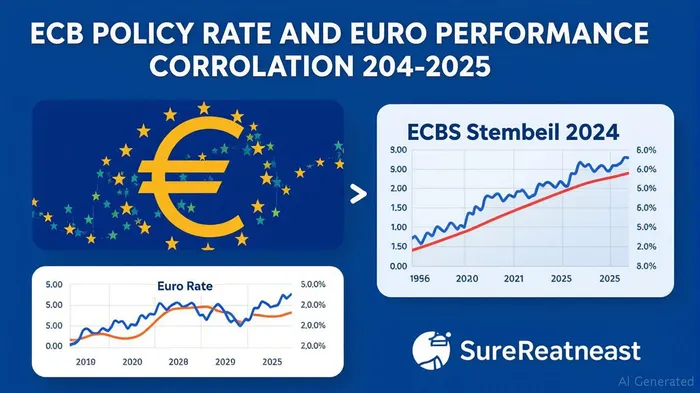
The ECB's June 2025 decision to cut interest rates by 25 basis points—to 2.00% on the deposit facility rate—reflects its dual mandate: countering disinflationary pressures while shielding growth from trade-related headwinds. With inflation projected to dip to 2.0% in 2025 and 1.6% in 2026, the ECB aims to prevent a prolonged slowdown in price growth. However, this rate cut comes amid a strengthening euro, which has appreciated on falling energy costs and geopolitical uncertainty.
The ECB's latest Financial Stability Review underscores the risks of trade policy uncertainty. A one-standard-deviation rise in trade-related volatility could slash eurozone GDP by 0.15% within a year, with a far worse 0.75% contraction in downside scenarios. The ECB has thus adopted a “meeting-by-meeting” approach, avoiding pre-commitments to further easing or tightening. This flexibility is critical as trade talks with the US remain deadlocked.
Currency Devaluation: A Double-Edged Sword
The euro's recent strength—driven by falling oil prices and the greenback's weakening on U.S. fiscal concerns—has paradoxically raised risks for exporters. While a strong euro dampens inflation, it also squeezes profit margins for European firms reliant on U.S. sales. Sectors like automotive, pharmaceuticals, and machinery—key EU exports to the U.S.—face downward pressure on revenues if tariffs escalate.
Conversely, a weaker euro could boost competitiveness but would reignite inflation concerns, complicating the ECB's already challenging task. The ECB's dilemma is compounded by the EU's “two-track” strategy: preparing retaliatory tariffs (€21 billion in U.S. goods) while seeking a negotiated settlement. Investors must weigh the probability of a last-minute deal versus a full-blown trade war, with the euro's trajectory hinging on the outcome.
Sector-Specific Risks and Opportunities
The ECB's Consumer Expectations Survey reveals a structural shift: 44% of EU households now exhibit a strong preference for non-U.S. brands, with discretionary spending sectors like entertainment and luxury goods most affected. This aversion to U.S. products could create long-term opportunities for European firms in these categories.
However, the automotive and aerospace industries—already reeling from U.S. tariffs—face immediate risks. highlights the divergence: Daimler and Renault shares have underperformed compared to Ford and GMGM--, reflecting trade-related anxieties.
Meanwhile, defensive sectors like healthcare and utilities may offer stability. Pharmaceuticals, a €21 billion EU export to the U.S., are particularly vulnerable to tariffs, but companies with diversified supply chains or strong pricing power—such as Roche or Sanofi—could outperform.
Investment Strategies: Hedging and Diversification
Investors should adopt a multi-pronged approach to mitigate risks:
- Currency Hedging: Use EUR/USD futures or options to protect against euro volatility. A weaker euro could benefit exporters but hurt importers, requiring sector-specific hedges.
- Quality Over Yield: Focus on European firms with strong balance sheets and global diversification. Companies like Siemens or LVMH, with non-U.S. revenue streams, offer resilience.
- Bond Market Plays: The ECB's dovish stance supports government and corporate bonds. Consider core European sovereigns (e.g., German Bunds) for capital preservation.
- Structural Shifts: Capitalize on the EU's push for self-sufficiency. Sectors like defense (Thales), semiconductors (ASM International), and renewable energy (Vestas) align with Brussels' post-trade-war industrial policy.
The Geopolitical Wildcard: China and the “Trade Bazooka”
The EU's delayed retaliation and exploration of deeper ties with China (evident in von der Leyen's outreach to Indonesia) suggest a pivot toward diversification. Investors should monitor the EU's Anti-Coercion Instrument (“trade bazooka”), which could be deployed if talks fail. This tool, allowing targeted tariffs on non-U.S. allies complicit in coercive trade practices, adds another layer of geopolitical risk.
Conclusion: A Cautionary Outlook
The ECB's hands are tied by conflicting priorities: supporting growth without reigniting inflation, and navigating trade uncertainty without sacrificing monetary credibility. For investors, the path forward requires a mix of caution and opportunism. Sector selection, currency hedging, and a focus on structural trends—such as EU-China alignment or the digital euro's evolution—will be critical. As August 1 looms, markets may price in both a deal and a breakdown, making agility the defining virtue in this tempest.
In the end, the ECB's policy tools and investor resilience will determine whether the eurozone weathers the storm—or becomes its casualty.







Comentarios
Aún no hay comentarios