
Navigating State-Level Social Security Disparities and Inflation Risk in 2024: A Geographic Diversification Strategy for Retirement Portfolios
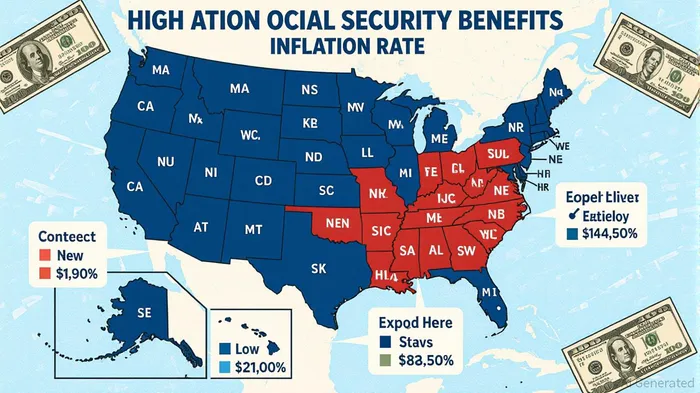
The 2024 Social Security landscape reveals stark geographic disparities in retirement benefits, , respectively, . These differences, however, are not isolated from inflationary pressures. States with higher benefits often face unique economic dynamics—such as elevated housing costs, aging populations, and high-cost-of-living indices—that amplify inflation risk. For retirees and advisors, understanding these regional nuances is critical to preserving purchasing power and optimizing retirement income strategies.
The Inflation-Benefit Paradox: High Payouts, High Exposure
Connecticut and New Jersey, two of the top states for Social Security benefits, also exhibit moderate inflation rates. . While their higher base benefits provide a buffer, the compounding effects of rising housing, healthcare, and utility costs—particularly in urban hubs like New York and Boston—can erode real income. For example, .
Conversely, states like Mississippi, , face a dual challenge: stagnant wages and rising costs. Retirees here must stretch smaller checks to cover essentials like food and housing, , respectively. This disparity underscores the need for tailored hedging strategies that account for both benefit levels and regional inflationary trends.
Actionable Strategies: Hedging Against Inflation with Geographic Diversification
Real Assets as Anchors in High-Inflation States
Real estate and commodities remain foundational hedges. In Connecticut, , real estate investment trusts (REITs) like Cohen & Steers REIT and Preferred Income Fund (RNP) . Similarly, commodities such as gold (via (GLD)) or energy (e.g., (VDE)) offer protection in high-cost-of-living states.Inflation-Protected Securities for Core Stability
. For instance, TIPS with a 2030 maturity (e.g., , . Mississippi retirees, facing steeper inflation, might prioritize I Bonds, , .
- State-Specific Equities for Growth and Resilience
. In New Jersey, the life sciences sector—home to Johnson & . Similarly, Connecticut's healthcare and utilities sectors (e.g., or . For Mississippi, the state's 2024 tax reforms (e.g., full expensing of capital investments) could boost manufacturing and logistics firms like or , .
Geographic Diversification: Balancing Risk and Return
Retirees should avoid overconcentration in their home state's economy. For example, , . Conversely, , .
Conclusion: A Tailored Approach to Inflation Hedging
. , . By combining real assets, , and state-specific equities, investors can build portfolios that adapt to regional economic realities. .







Comentarios
Aún no hay comentarios