
Navigating South Korea's Regional Economic Divergence: Sectoral Shifts and Urbanization as Investment Catalysts
South Korea's economy has entered a new era of divergence since 2020, driven by structural shifts in key sectors and urbanization patterns. While national GDP growth has slowed—projected to average just 1.9% through 2030—regional disparities are creating distinct opportunities for investors. This article explores how sectoral transitions, urbanization dynamics, and government policies are reshaping the investment landscape, offering clues to capitalize on high-growth pockets within South Korea's evolving economy.
Urbanization: A Tale of Sprawl and Smart Growth
South Korea's urbanization rate hovers near 90%, with its population increasingly concentrated around megacities like Seoul. However, the urbanization narrative is now split between densification in core areas and sprawl in satellite regions.
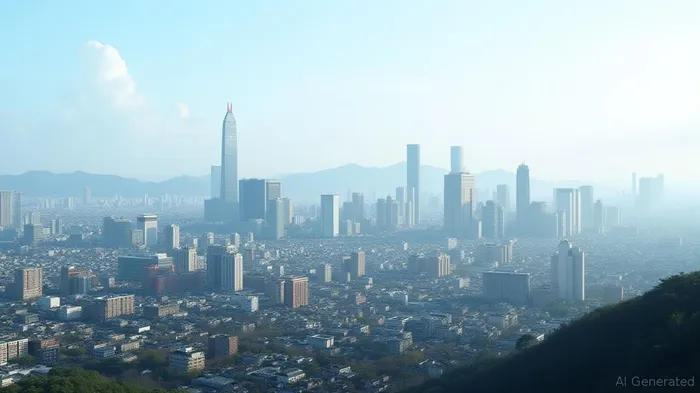
Key trends include:
1. Peripheral Urbanization: Cities like Hwaseong-si and Pyeongtaek-si—adjacent to Seoul—exhibit high urban sprawl (entropy indices above 0.99), driven by housing demand and industrial expansion. These areas are emerging as cost-effective alternatives to Seoul, attracting tech hubs and logistics networks.
2. Smart City Initiatives: Seoul's Smart City Project prioritizes IoT-integrated infrastructure, green energy systems, and data-driven urban planning. Similar projects in Busan and Daegu are creating demand for tech-enabled real estate and utilities.
3. Housing Shortages and Public Policy: The government's push to build 252,000 public housing units by 2025—and relax tax rules for developers—has boosted residential construction. However, rising costs and labor shortages mean only firms with sustainable practices (e.g., zero-energy buildings) will thrive.
Sectoral Shifts: Tech and Infrastructure Lead the Charge
South Korea's traditional reliance on manufacturing and exports is giving way to growth in high-tech industries and green infrastructure—sectors that are unevenly distributed across regions.
1. Construction & Infrastructure: The Engine of Regional Growth
The construction sector is booming, with a CAGR of 2.8% through 2029, fueled by government spending. Key drivers include:
- Semiconductor Manufacturing: Samsung and SK Hynix's $26 trillion government-backed semiconductor factories are concentrated in Gyeonggi and Chungcheong provinces, creating demand for industrial real estate and specialized labor.
- Renewable Energy: Offshore wind farms and hydrogen energy hubs—backed by a $39.5 billion 2024 infrastructure budget—are transforming coastal regions like Jeolla and Gyeongsang provinces.
- Transportation: The GTX high-speed rail network and Seoul's Smart City projects are revitalizing peripheral cities like Incheon and Suwon.
2. Tech and Services: Seoul's Dominance and the Rise of Secondary Hubs
- Seoul: Home to 9.77 million residents and the tech backbone (e.g., Naver, Kakao), it remains the innovation hub. However, rising costs are pushing startups and SMEs to satellite cities like Daejeon and Suwon.
- Secondary Cities: Cities like Busan (ports) and Daegu (biotech) are diversifying economies through specialized industries, reducing Seoul's monopoly on high-value jobs.
Regional Disparities: Risks and Rewards
Despite opportunities, South Korea's regional divide persists, with risks for unwary investors:
- Aging Population: Regions like Gangwon Province face labor shortages and stagnant demand. Investors should prioritize sectors with automation potential (e.g., robotics in construction).
- Export Dependency: Manufacturing-heavy areas (e.g., Ulsan) remain vulnerable to global demand swings.
- Policy Uncertainty: Labor reforms and green mandates could disrupt traditional industries.
Investment Strategies: Where to Deploy Capital
- Smart Infrastructure Firms: Look for companies like Lotte Construction or Samsung C&T involved in green building standards (ZEB) or smart city projects.
- Peripheral Real Estate Developers: Focus on firms like HDC Modern expanding into satellite cities with affordable housing and logistics hubs.
- Tech-Driven Sectors: Invest in SK Hynix (semiconductors) or Kakao Mobility (transport tech), which benefit from Seoul's innovation ecosystem while leveraging secondary cities' lower costs.
- Renewables and Green Tech: Back Korea Hydro & Nuclear Power for hydrogen infrastructure or offshore wind projects in Jeju and Gyeongsang provinces.
Conclusion: Riding the Wave of Divergence
South Korea's regional economic divergence is not a threat but an invitation. Investors who align with sectoral transitions (tech, green energy) and urbanization hotspots (satellite cities, smart infrastructure) can capitalize on a bifurcating economy. While risks like labor shortages and policy shifts exist, the government's $52 trillion infrastructure push ensures that regions with strategic investments will outperform. The next phase of growth belongs to those who see beyond the slowdown and into the geography of innovation.







Comentarios
Aún no hay comentarios