
Navigating the New Sky: Airline Restructuring and the Path to Profitability in 2025
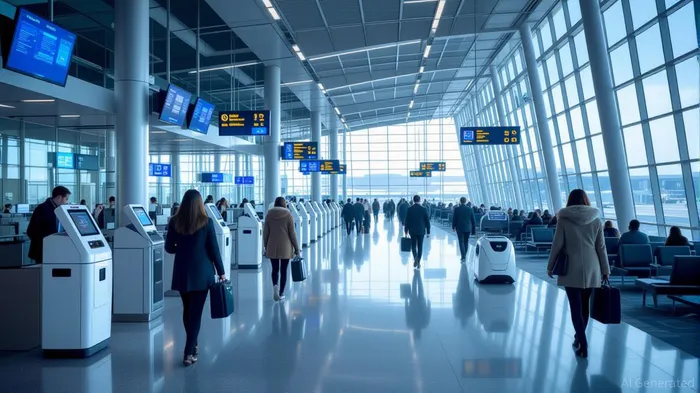
The airline industry in 2025 is no longer just about surviving post-pandemic turbulence—it's about redefining profitability through operational efficiency and labor cost optimization. As carriers grapple with fluctuating demand, inflationary pressures, and evolving consumer expectations, the strategies they adopt will determine their ability to thrive in a competitive landscape. For investors, understanding these transformations is critical to identifying resilient players and avoiding those stuck in outdated models.
Operational Efficiency: The New Competitive Edge
Airlines are increasingly leveraging Lean principles and digital transformation to streamline operations. Ryanair's adoption of Lean methodologies, for instance, has reduced turnaround times and optimized maintenance schedules, enabling higher flight frequencies and cost savings [2]. Similarly, major U.S. carriers like DeltaDAL-- and United are prioritizing fleet modernization and route optimization. Delta's decision to flatten capacity growth in 2025, coupled with its shift to cloud-based infrastructure, reflects a focus on operational resilience over aggressive expansion [1]. United's emphasis on premium cabins and international routes has also driven higher yields, demonstrating how strategic repositioning can enhance profitability [2].
Automation is another cornerstone of efficiency. Airlines are digitizing back-office functions such as accounts payable (AP) to reduce errors and capture early-payment discounts, with some reporting savings of millions annually [3]. In flight operations, AI-driven route optimization is cutting fuel consumption—a critical variable cost—while improving environmental sustainability [3]. These innovations underscore a broader trend: airlines are no longer just cutting costs but reengineering their entire value chains.
Labor Cost Optimization: Restructuring and Reskilling
Labor costs, projected to reach $253 billion in 2025 (a 7.6% increase from 2024), remain a double-edged sword. While total expenses rise, productivity gains are limiting average labor unit costs to a mere 0.5% increase [1]. This balance is achieved through workforce restructuring and technology-driven reskilling.
Southwest Airlines' recent restructuring—cutting 1,750 corporate roles and reallocating resources to frontline operations—is a case in point. Though the move incurred a $60–80 million charge in Q1 2025, it is expected to save $210 million in 2025 and $300 million in 2026 [1]. Other carriers are adopting similar measures, including shorter-term leases and power-by-the-hour agreements, to reduce fixed costs and align labor with demand fluctuations [2].
However, automation and AI are not just about cutting jobs—they're about reshaping skills. The World Economic Forum's 2025 report highlights growing demand for expertise in AI, big data, and cybersecurity, prompting airlines to invest in upskilling programs [4]. For example, IATA Training has launched courses to prepare employees for digital roles, ensuring that workforce transitions support long-term competitiveness rather than disrupt operations [4].
Implications for Investors: Opportunities and Risks
For investors, the key lies in distinguishing airlines that are strategically adapting from those merely reacting to short-term pressures. Carriers like RyanairRYAAY-- and SouthwestLUV--, which have embraced Lean and restructuring, are well-positioned to outperform peers. Conversely, airlines slow to adopt digital tools or stuck in rigid labor contracts may face margin erosion.
Yet, risks persist. The maintenance sector, for instance, faces a technician shortage exacerbated by outdated planning systems, threatening operational efficiency [4]. Similarly, automation's upfront costs and integration challenges could strain cash flows for smaller operators. Investors must also weigh the long-term viability of cost-cutting measures that risk harming employee morale or customer experience.
Conclusion: A Sky Reimagined
The airline industry's 2025 restructuring is not just a cost-cutting exercise—it's a strategic repositioning for a post-pandemic world. By combining operational efficiency, automation, and workforce reskilling, airlines are building models that prioritize agility and profitability. For investors, the winners will be those that balance innovation with execution, ensuring they can navigate both economic headwinds and the relentless pace of technological change.





Comentarios
Aún no hay comentarios