
Navigating the K-Shaped Recovery: Sector Rotation Strategies in a Divergent Labor Market
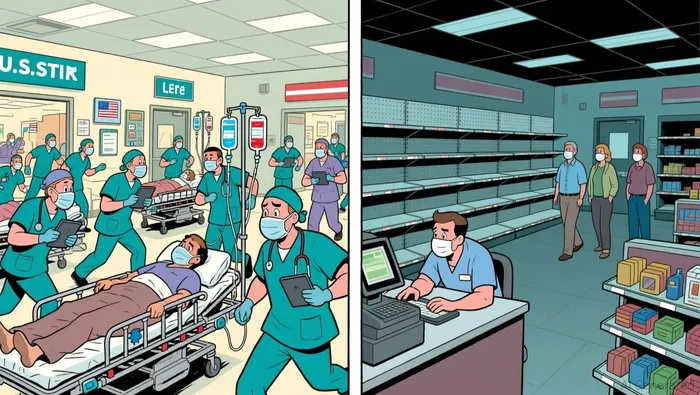
The U.S. labor market in late 2025 has become a textbook example of a "K-shaped" recovery, where growth is unevenly distributed across sectors and firm sizes. While private nonfarm payrolls added 37,000 jobs in December 2025, the underlying data reveals a stark divergence: healthcare and leisure/hospitality sectors surged, while retail and construction faltered. For investors, this divergence demands a recalibration of sector rotation strategies, prioritizing resilience in high-growth areas and hedging against vulnerabilities in struggling industries.
The Employment Data Divergence: A Sectoral Breakdown
The Bureau of Labor Statistics (BLS) and ADP data underscore a fragmented labor market. Healthcare and social assistance added 38,500 jobs in December 2025, driven by hospitals (+16,300) and ambulatory care services (+4,600). Similarly, leisure and hospitality—particularly food services—grew by 47,000 jobs, reflecting pent-up demand for in-person experiences. These sectors now represent 12% of total private-sector employment, a 1.5% increase from mid-2024.
Conversely, retail trade lost 25,000 jobs in December, marking a 4.2% decline in its workforce since 2024. The goods-producing sector, including construction and manufacturing, saw a net loss of 21,000 jobs, with specialty trade contractors and machinery manufacturing bearing the brunt. Meanwhile, medium-sized firms (50–499 employees) accounted for 34,000 of December's private-sector gains, while small businesses (1–19 employees) added just 9,000 jobs—a sign of structural fragility.
Sector Rotation: Aligning Portfolios with Labor Market Signals
The divergence in employment trends offers a roadmap for sector rotation. Investors should overweight sectors with strong labor demand and underweight those facing structural headwinds.
Healthcare and Education Services:
The healthcare sector's 21,000 job gains in December 2025, coupled with a 3.8% year-over-year increase in average hourly earnings, signal sustained demand. Companies like UnitedHealth GroupUNH-- (UNH) and CignaCI-- (CI) have seen their valuations expand, with the S&P 500 Healthcare Sector Index trading at a 23.1 forward P/E in October 2025. Education services, including private educational institutions and training providers, added 2,100 jobs, suggesting long-term tailwinds from workforce upskilling.Leisure and Hospitality:
The 47,000 job increase in leisure and hospitality—led by food services—reflects a shift toward experiential spending. Restaurants and entertainment venues, such as those in the S&P 500 Consumer Discretionary Sector, have outperformed broader markets. Investors should consider exposure to companies like McDonald's (MCD) and Live Nation (LYV), which benefit from rising consumer confidence.Retail and Goods-Producing Sectors:
Retail's 25,000 job loss in December 2025 highlights its vulnerability to e-commerce and shifting consumer behavior. The S&P Retail Select Sector Index has underperformed by 12% year-to-date in 2025, while construction and manufacturing firms face margin pressures from input costs. Defensive positioning or short-term hedging in these sectors may be prudent.
The K-Shaped Recovery and Small-Cap Dynamics
The labor market's divergence extends to firm size. Large corporations (500+ employees) added 2,000 jobs in December 2025, while small businesses added only 9,000. This imbalance has amplified the underperformance of small-cap stocks, with the Russell 2000 trading at a 10% discount to the S&P 500 as of October 2025. However, small-cap fundamentals remain mixed: while some firms in healthcare and tech show strong ROA (0.9%), others in manufacturing and retail struggle with negative returns.
Investors should adopt a quality-focused approach to small-cap exposure, prioritizing companies with robust balance sheets and exposure to resilient sectors. For example, regional healthcare providers and niche tech firms with recurring revenue models may outperform in a low-growth environment.
Policy Implications and the Fed's Dilemma
The Federal Reserve faces a policy tightrope: addressing wage inflation from large-firm-driven job gains while avoiding a small-firm-led slowdown. With average hourly earnings rising 4.0% annually, the Fed may maintain restrictive rates, which could exacerbate challenges for small businesses. Investors should monitor the Fed's stance on labor market data and consider sector-specific hedging strategies, such as shorting cyclical sectors (e.g., construction) or buying long-dated puts on the Russell 2000.
Conclusion: A Strategic Pivot in a Fragmented Market
The U.S. labor market's divergence demands a nuanced sector rotation strategy. By aligning portfolios with high-growth sectors like healthcare and leisure/hospitality, while hedging against retail and construction, investors can capitalize on the K-shaped recovery. For small-cap exposure, a quality-driven, sector-specific approach is essential. As the Fed navigates its policy challenges, agility and data-driven decision-making will be key to outperforming in this asymmetric economic landscape.





Comentarios
Aún no hay comentarios