
Navigating Securities Litigation Risks in Biotech: A Case Study of Cytokinetics and the Importance of Governance Due Diligence
In the high-stakes world of biotechnology, where regulatory approvals can make or break a company's valuation, corporate governance and transparency are not just ethical imperatives—they are survival mechanisms. Recent developments at CytokineticsCYTK--, Incorporated (NASDAQ: CYTK) underscore this reality, as the firm faces multiple securities lawsuits over alleged misrepresentations regarding its New Drug Application (NDA) timeline for aficamten, a drug candidate for hypertrophic cardiomyopathy. These lawsuits, filed by law firms including Portnoy Law Firm and Robbins LLP, highlight the critical intersection of governance failures, regulatory compliance, and investor trust in an industry where optimism often outpaces certainty[1].
The Cytokinetics Litigation: A Governance Breach in Regulatory Context
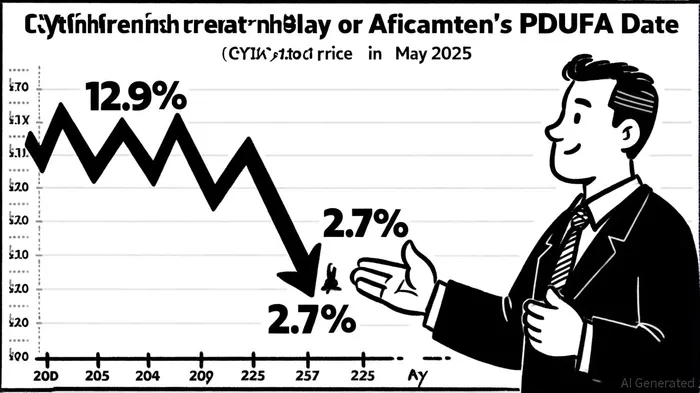
At the heart of the litigation is Cytokinetics' decision to submit the aficamten NDA without a Risk Evaluation and Mitigation Strategy (REMS), despite prior discussions with the U.S. Food and Drug Administration (FDA) about its necessity[4]. The company had publicly projected FDA approval by the second half of 2025, citing a September 26, 2025 PDUFA date. However, the absence of a REMS—a regulatory tool designed to manage drug risks—led the FDA to extend its review by three months, pushing the PDUFA date to December 26, 2025[1]. This revelation triggered a 12.9% stock price drop on May 2, 2025, followed by a further 2.7% decline on May 7 after the company admitted the REMS omission[1].
The lawsuits allege that Cytokinetics' executives misled investors by failing to disclose material risks related to the REMS, creating an artificial inflation in the stock price[2]. This case exemplifies a broader governance issue in biotech: the tension between aggressive regulatory timelines and the need for transparent risk communication. As one legal expert notes, “Biotech firms often walk a tightrope between optimism and overpromising. When governance fails to align with regulatory realities, the consequences are severe for shareholders”[5].
Governance in Theory vs. Practice: Cytokinetics' Contradictions
Cytokinetics has publicly emphasized corporate responsibility, publishing its inaugural Corporate Responsibility Report in 2023 and releasing governance documents in 2025 that highlight commitments to transparency, sustainability, and ethical leadership[2]. However, the recent litigation reveals a stark disconnect between these stated values and the company's actions. The omission of a REMS—a critical regulatory requirement for high-risk drugs—suggests a governance culture that prioritized short-term market expectations over long-term compliance and stakeholder trust[4].
This contradiction is emblematic of a broader challenge in biotech governance. While firms increasingly adopt ESG (Environmental, Social, and Governance) frameworks, the pressure to deliver breakthroughs in drug development can lead to ethical compromises. As a 2025 Forbes analysis notes, “Strong governance in biotech requires not just strategic pillars but a culture of accountability—one that resists the temptation to overstate progress in pursuit of investor confidence”[1].
Industry Trends and the Evolving Governance Landscape
The biotech sector's governance landscape has evolved significantly since 2020, shaped by heightened regulatory scrutiny, geopolitical uncertainties, and the rise of AI-driven drug discovery[3]. Companies are now expected to balance innovation with rigorous risk assessments and ethical oversight. For instance, global frameworks are streamlining reporting requirements while emphasizing transparency in third-party relationships and supply chain practices[3].
Yet, as Cytokinetics' case demonstrates, even firms with governance rhetoric can falter under pressure. The litigation against CYTKCYTK-- reflects a growing investor demand for alignment between corporate values and operational practices. A 2025 report by Aaron Hall underscores this shift: “Biotech governance must now address not only regulatory compliance but also the ethical implications of emerging technologies and the societal impact of pharmaceutical innovation”[2].
Financial Performance vs. Legal Volatility: A Double-Edged Sword
Cytokinetics' financials present a paradox. In Q2 2025, the company reported a staggering 26,714.86% year-on-year revenue increase, driven by partnerships and licensing deals[2]. However, this growth coexists with a net loss during the same period and a sharp decline in market share—from 0.18% in Q2 2024 to 0.01% in Q3 2024[2]. Such volatility raises questions about the sustainability of revenue gains in the face of legal and regulatory headwinds.
For investors, this juxtaposition highlights the importance of scrutinizing not just financial metrics but also governance structures. As one analyst observes, “A biotech firm's ability to innovate is meaningless if its governance practices cannot withstand legal scrutiny. CYTK's case is a cautionary tale for investors who prioritize revenue growth over due diligence”[5].
Investor Due Diligence: Lessons from CYTK
The Cytokinetics litigation offers critical lessons for investors navigating biotech's legal and governance risks. First, it underscores the need to analyze SEC filings for gaps in risk disclosure. CYTK's 10-K and 10-Q reports from 2024–2025, for instance, failed to adequately address REMS-related challenges—a red flag for diligent investors[1]. Second, it highlights the importance of monitoring regulatory timelines and understanding the technical requirements for drug approvals. A REMS is not a peripheral detail; it is a cornerstone of FDA risk management for high-risk therapies[4].
Finally, the case reinforces the value of tracking lead plaintiff deadlines in securities lawsuits. With the November 17, 2025, deadline for CYTK's litigation, investors must act swiftly to assert their rights while remaining cognizant of the company's ongoing legal exposure[1].
Conclusion: Governance as a Competitive Advantage
Cytokinetics' struggles with securities litigation and governance misalignment serve as a microcosm of the challenges facing biotech firms in 2025. For investors, the takeaway is clear: in an industry where regulatory outcomes can redefine a company's future, governance is not a peripheral concern—it is a core determinant of long-term value. As the biotech sector continues to evolve, firms that prioritize ethical leadership, transparent communication, and regulatory rigor will not only avoid litigation but also build the trust necessary to thrive in an increasingly complex landscape.





Comentarios
Aún no hay comentarios