
Navigating Risks and Opportunities in Tokenized Precious Metals: The CircleMetals Controversy
The tokenized commodities market has emerged as a transformative force in global finance, blending blockchain technology with traditional assets like gold and silver. At the center of this evolution is CircleMetals, a platform launched by CircleCRCL--, the issuer of USDCUSDC-- stablecoin. However, the platform's journey has been marked by controversy, regulatory scrutiny, and a surge in market adoption. This article dissects the credibility, market impact, and investment risks of tokenized precious metals through the lens of CircleMetals' 2025 developments, offering a roadmap for investors navigating this nascent sector.
Credibility: Regulatory Compliance and Crisis Management
CircleMetals' credibility has been tested by both technical failures and regulatory challenges. In March 2025, a server malfunction triggered a "flash crash" in the ETH/USDT trading pair. The platform responded swiftly, activating a 1,000 BTC Investor Protection Fund to compensate affected users, disbursing over $6 million in payouts. This action underscored its commitment to user protection, a critical factor in building trust in decentralized markets.
Regulatory alignment has further bolstered CircleMetals' legitimacy. The platform obtained a Bitcoin Services Provider (BSP) license from El Salvador, adhering to strict financial regulations. Additionally, Circle's proactive compliance with the EU's Markets in Crypto-Assets (MiCA) framework in 2024 positioned it as a trusted player in global markets. These steps contrast sharply with earlier unverified reports of a "CircleMetals" platform, which were later debunked as fraudulent.
Market Impact: Growth Amid Controversy
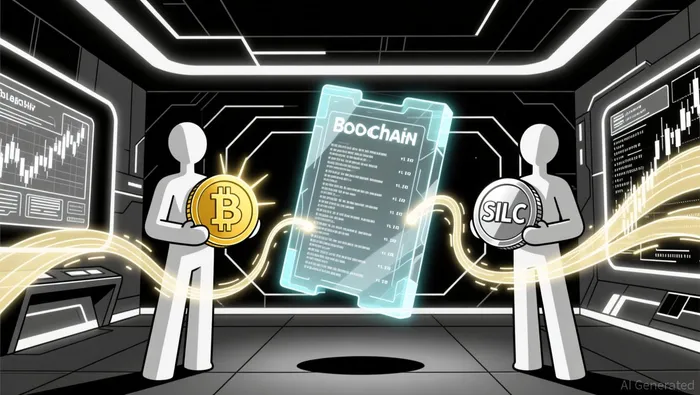
Despite the March 2025 incident, the tokenized commodities market has shown remarkable resilience. Digital gold tokens, in particular, have dominated the sector, with a market value of $2.57 billion in 2025. Circle's introduction of tokenized gold (GLDC) and silver (SILC) via USDC swaps has expanded accessibility, enabling seamless integration with DeFi and payment apps.
The incident also catalyzed a surge in gold prices, which rose 62% in 2025, marking its best annual performance since 1979. This trend highlights the growing role of tokenized commodities as safe-haven assets amid macroeconomic uncertainty. Platforms like CircleMetals have bridged traditional markets with blockchain, attracting both retail and institutional investors.
Investment Risks: Systemic Vulnerabilities and Counterparty Exposure
While tokenization offers liquidity and transparency, it introduces unique risks. Counterparty risk remains a concern, as third-party issuers may obscure ownership of underlying assets. The interconnectedness of tokenized commodities with crypto markets also amplifies volatility. For instance, the March 2025 incident demonstrated how technical failures in one segment can ripple across asset classes, as highlighted by financial analysts.
Regulatory inconsistencies further complicate the landscape. While the EU's MiCA framework provides clarity, global standards remain fragmented. The International Monetary Fund (IMF) has warned that tokenized markets could face systemic shocks due to automated trading and smart contract dependencies, as reported by financial analysts. Additionally, the IOSCO has highlighted uncertainties in investor ownership rights, urging caution in asset tokenization.
Conclusion: Balancing Innovation and Caution
The CircleMetals controversy underscores the dual-edged nature of tokenized commodities. On one hand, platforms like CircleMetals are democratizing access to precious metals and aligning with regulatory frameworks. On the other, they expose investors to systemic risks and counterparty vulnerabilities.
For investors, the key lies in due diligence: assessing issuer credibility, understanding regulatory alignment, and diversifying exposure. As the market matures, the interplay between innovation and oversight will define the trajectory of tokenized commodities. In this evolving space, the lessons from CircleMetals serve as both a cautionary tale and a blueprint for responsible growth.





Comentarios
Aún no hay comentarios