
Navigating Regulatory Shifts in Asia-Pacific Equity Markets: Investor Adaptation Strategies in 2025
Key Regulatory Developments Reshaping the Landscape
China's Market Risk Overhaul
Mainland China's National Financial Regulatory Administration (NFRA) introduced comprehensive guidelines for commercial banks in Q2 2025, mandating enhanced risk identification, internal modeling, and stress testing protocols, according to Deloitte's Q2 2025 update. These measures aim to fortify banks against systemic shocks but have prompted investors to reassess lending strategies and capital allocation models to ensure compliance, the Deloitte update adds.
Japan's Shift to Cash Flow-Based Lending
Japan's Financial Services Agency (JFSA) advanced its agenda to reduce reliance on collateral-dependent lending by promoting cash flow and enterprise value-based methods under the Act on the Promotion of Cash Flow-Based Lending, as highlighted in the Deloitte update. This shift has led investors to prioritize companies with robust cash flow generation, particularly in sectors like manufacturing and technology.
Singapore's Governance and AI Framework
The Monetary Authority of Singapore (MAS) is revising its Code of Corporate Governance to address AI-related risks and improve board accountability, a development noted in the Deloitte update. Institutional investors are increasingly scrutinizing corporate culture and ethical AI practices, favoring firms with transparent governance structures.
Hong Kong's Virtual Asset Regulations
Hong Kong's Securities and Futures Commission (SFC) and Financial Services and Treasury Bureau (FSTB) launched joint consultations to establish a regulatory framework for virtual asset dealers and custodians, a move detailed in the Deloitte update. This has spurred heightened due diligence in cryptocurrency-related investments, with investors prioritizing compliance with emerging stablecoin and staking principles.
Investor Adaptation: From Compliance to Opportunity
Climate Resilience and Innovation
As Asia warms at triple the global average, investors are pivoting toward climate adaptation. Frameworks like the Climate Resilience Investments in Solutions Principles (CRISP) are guiding capital toward sectors such as heat-reflective materials and energy-efficient infrastructure, according to the MSCI Institute. For instance, AkzoNobel India and KCC Glass Corporation have seen increased demand for their climate-resilient products.
Synthetic Gloves Market: A Regulatory-Driven Growth Story
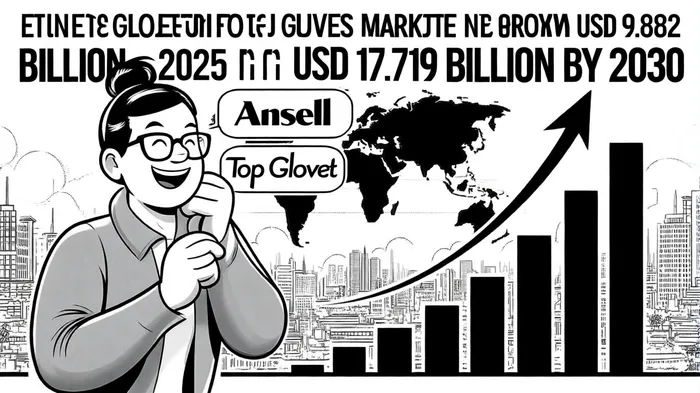
Regulatory shifts banning latex gloves in healthcare and food processing have accelerated demand for synthetic alternatives. The global synthetic gloves market, valued at USD 9.882 billion in 2025, is projected to grow at a 12.39% CAGR, reaching USD 17.719 billion by 2030, according to a GlobeNewswire report. Investors are capitalizing on this trend by targeting firms like Ansell Limited and Top Glove Corp, which lead in nitrile and vinyl glove production.
Exchange Policy Adjustments and Market Access
Singapore's S$5 billion Equity Market Development Programme, launched in Q2 2025, aims to democratize access to private market funds and attract quality listings, as outlined in Kroll's Global Regulatory Pulse. This initiative has spurred retail and institutional investors to explore previously illiquid assets, such as private equity and venture capital funds. Meanwhile, Japan's updated Securities Listing Regulations emphasize transparency, pushing investors to favor companies with strong ESG disclosures, as set out in the JPX rules.
Geopolitical and Technological Crosscurrents
The U.S.-China trade tensions and the U.S. Treasury's Outbound Investment Security Program (OISP) have added layers of complexity to regulatory compliance, according to Ropes & Gray. Investors with exposure to Chinese markets are now prioritizing due diligence on supply chain diversification and data localization requirements, a point emphasized in the Ropes & Gray analysis. Similarly, Japan's first AI regulation has prompted a cautious approach to AI-driven financial tools, with investors favoring firms that demonstrate ethical AI governance, as noted in the Deloitte update.
Conclusion: Agility in a Fragmented Regulatory Environment
The Asia-Pacific regulatory landscape in 2025 is marked by fragmentation and rapid innovation. Investors must balance compliance with strategic foresight, leveraging frameworks like CRISP and adapting to sector-specific mandates. As Deloitte's 2025 Regulatory Outlook notes, the key to success lies in fostering a "balanced regulatory approach" that supports innovation while safeguarding financial stability. For those who navigate these shifts adeptly, the region's evolving policies present not just risks, but a mosaic of opportunities in resilience-driven sectors and next-generation technologies.







Comentarios
Aún no hay comentarios