
Navigating Regulatory Risks in the U.S. Nuclear Energy Sector: Political Influence and Executive Conflict of Interest
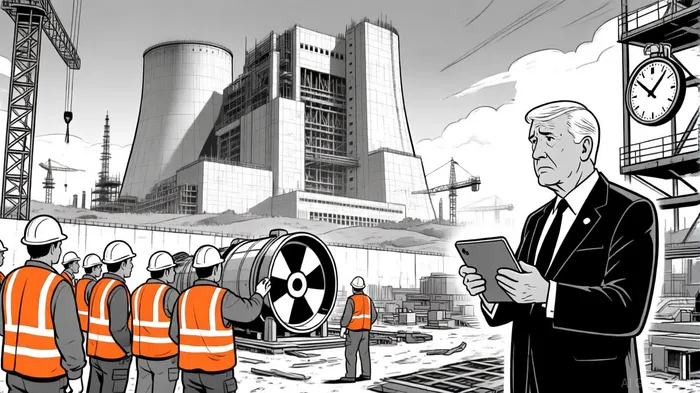
The U.S. nuclear energy sector is undergoing a seismic shift, driven by legislative and executive actions aimed at accelerating deployment of advanced reactors while raising critical questions about regulatory independence and political influence. Investors must now weigh the sector's growth potential against the risks of politicized oversight, as recent reforms have sparked debates over safety, transparency, and long-term viability.
Regulatory Reforms and Political Leverage
The ADVANCE Act of 2024 and President Trump's May 2025 executive orders have redefined the regulatory landscape. The Act mandates the Nuclear Regulatory Commission (NRC) to streamline licensing, reduce fees, and adopt a “graded approach” to environmental reviews, while the executive orders grant the Department of Energy (DOE) and Department of Defense (DOD) authority to conduct reactor design reviews with findings binding on the NRC [1]. These measures aim to position the U.S. as a global nuclear leader by 2050 but have drawn sharp criticism for undermining the NRC's independence.
According to a report by The Bulletin of the Atomic Scientists, the executive orders “grant the Office of Management and Budget (OMB) unprecedented oversight of the NRC's regulatory process,” a move critics argue opens the door to political interference in technical decisions [2]. Former NRC chairs have warned that such interference could erode public trust, citing parallels to the Fukushima disaster, where regulatory capture contributed to catastrophic failures [3].
The ADVANCE Act: Efficiency vs. Integrity
While the ADVANCE Act is lauded for reducing barriers to advanced reactor development, its provisions have sparked controversy. For instance, the Act allows foreign ownership of certain licensed facilities, a provision industry advocates call “a step toward global competitiveness” but critics view as a risk to national security [4]. Additionally, the NRC's reliance on industry fees for 90% of its budget—a practice unchanged since the 1970s—has raised concerns about conflicts of interest, particularly as the Act reduces fees for advanced reactor applicants [5].
Supporters, including the Harvard Law Review, argue the Act “strikes the right balance” by providing the NRC with tools to reduce costs without compromising safety [6]. However, detractors counter that the NRC's mission to enforce near-zero risk standards—such as requiring reactors to withstand commercial airliner impacts—creates an uneven playing field compared to other energy sectors [7].
Executive Orders and the Erosion of NRC Autonomy
President Trump's May 2025 executive orders further intensified concerns. By setting 18-month deadlines for reactor licensing and granting the DOE/DoD authority to conduct binding design reviews, the administration has effectively bypassed the NRC's traditional role as an independent regulator [8]. As stated by CNBC, “this shift risks prioritizing speed over caution, particularly for advanced reactor technologies that lack extensive testing” [9].
The White House defends these changes as necessary to modernize regulations and address energy security, but former officials warn of unintended consequences. For example, reducing NRC staff to meet expedited timelines could weaken oversight capacity, while the OMB's expanded role may politicize safety evaluations [10].
Implications for Investors
For investors, the nuclear sector's potential is undeniable: NuScale PowerSMR-- and Kairos Power have achieved significant milestones in 2025, and tech giants like Google and Amazon are investing in nuclear to power AI infrastructure [11]. However, the regulatory environment's politicization introduces volatility.
Key risks include:
1. Safety Reputational Damage: A single incident could trigger public backlash and regulatory rollbacks.
2. Legal and Political Reversals: Future administrations may reverse Trump-era policies, creating uncertainty.
3. Global Competitiveness: While the U.S. aims to lead, countries like China and Russia are advancing their nuclear programs with less regulatory friction.
Conversely, the sector's strategic importance to energy security and AI infrastructure may attract sustained government support, even amid regulatory turbulence.
Conclusion
The U.S. nuclear energy sector stands at a crossroads. While regulatory reforms promise to unlock innovation and investment, they also expose the industry to political risks that could compromise safety and public confidence. Investors must remain vigilant, monitoring both technological progress and the evolving regulatory landscape. As the sector navigates this complex terrain, the balance between political ambition and regulatory integrity will determine its long-term success.







Comentarios
Aún no hay comentarios