
Navigating Regulatory Risks: Why Energy Transfer's Ethane Exports Remain a Buy Despite China Licensing Hurdles
The U.S. Bureau of Industry and Security's (BIS) May 2025 licensing requirements for ethane exports to China have introduced uncertainty into the energy sector. For Energy Transfer LPET-- (ET), the world's largest diversified energy infrastructure company, the stakes are high: China accounts for 46% of U.S. ethane exports, and ET's ethane export volumes to the region are projected to hit 150,000 barrels per day (BPD) by late 2025 via its new Nederland Flex Port terminal. Yet, despite near-term headwinds, ET's strategic infrastructure, contractual protections, and market diversification position it to weather regulatory turbulence while capitalizing on ethane's long-term growth. Here's why investors should view current volatility as an opportunity.
Infrastructure Resilience: Buffering Against Regulatory Delays
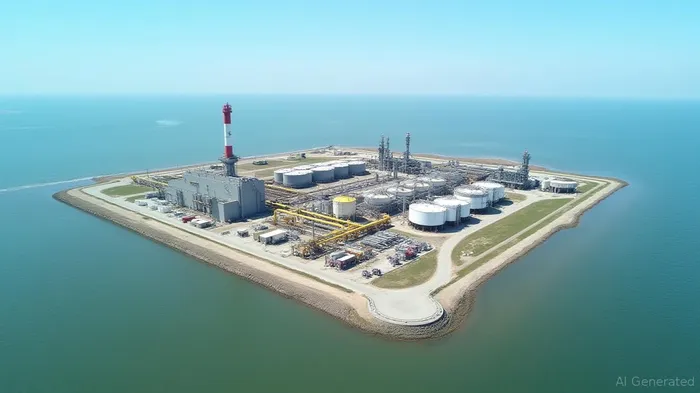
Energy Transfer's Mont Belvieu terminal and Nederland Flex Port are the linchpins of its ethane export strategy. Mont Belvieu, the global benchmark for ethane pricing, boasts 100 million barrels of storage capacity—30% of U.S. total—allowing ET to absorb temporary supply disruptions. The Nederland terminal, slated for completion in late 2025, will add 150,000 BPD of ethane export capacity, directly targeting both China and alternative markets.
The licensing delays, which could reduce Chinese ethane imports by up to 30,000 BPD in 2025, are unlikely to cripple ET's operations. The company's 50,000-mile pipeline network and salt cavern storage facilities provide unmatched flexibility to reroute ethane to other markets or store it during compliance delays. Even if licenses are delayed, ET can leverage storage to stabilize cash flows until resolutions are reached.
The chart highlights a critical advantage: European ethane prices are ~$20/ton cheaper than naphtha, making U.S. ethane exports to Europe economically compelling. This flexibility ensures ET can pivot shipments if Chinese volumes slow—a stark contrast to competitors without such infrastructure depth.
Take-or-Pay Contracts: Shielding Revenue from Regulatory Whiplash
ET's take-or-pay contracts, which account for 90% of its distributable cash flow (DCF), act as a financial moat. These agreements obligate customers to pay for minimum volumes regardless of take-or-ship decisions. For example, its long-term deals with Chinese petrochemical giants like Wanhua Chemical lock in revenue even if exports face temporary halts.
While BIS's June 3 notice to Enterprise Products Partners (EPD) about denied ethane shipments to China signals regulatory risks, ET's robust contract portfolio reduces downside exposure. The company's 2025 capital plan ($4.0–4.5 billion) remains on track, with projects like the Nederland terminal funded through its strong balance sheet (investment-grade credit rating) and stable cash flows.
Market Diversification: China Isn't the Only Game in Town
ET isn't betting solely on China. The company is aggressively expanding access to Europe (via Rotterdam's new ethane import terminal) and Mexico (via the TQPM terminal, handling 80,000 BPD). These markets offer untapped demand: European crackers could switch to cheaper U.S. ethane from Russian propane, while Mexico's petrochemical sector is growing at 6% annually.
Even in Asia, ET can redirect ethane to India and Southeast Asia, where U.S. ethane's $25/ton cost advantage over Middle Eastern naphtha is driving demand. The search for alternatives to China's 125% retaliatory tariffs—now reportedly under review for exemptions—adds urgency to ET's diversification efforts.
Near-Term Challenges vs. Long-Term Growth
The immediate risks are clear: delayed licenses could reduce 2025 ethane export volumes by 10–15%, temporarily pressuring ET's margins. Storage build-ups at Mont Belvieu might also depress ethane prices in the short term. However, these headwinds are transient.
Long-term, U.S. ethane production is projected to hit 630,000 BPD by 2026, driven by shale gas growth. ET's strategic pipeline expansions (e.g., the 120,000 BPD ethane train from Mont Belvieu to Nederland) will capture this volume, while its flexi-cracker partnerships with European chemical firms lock in demand.
Valuation: A Buying Opportunity at 7.5x EV/EBITDA
ET's current EV/EBITDA multiple of 7.5x is 30% below its five-year average and 20% below its peer median. This discount ignores its fortress balance sheet ($5.4 billion liquidity) and the structural tailwinds of ethane's cost advantage over naphtha (the E/W spread is at $15/ton, a 20-year high).
The chart underscores ET's undervaluation: peers like Enterprise Products (EV/EBITDA: 9.2x) and MPLX (9.8x) trade at premiums despite less diversified portfolios. For investors, ET's discount reflects short-term regulatory fears, not its underlying strength.
Investment Thesis: Buy the Dip, Hold for the Cycle
The regulatory storm is a temporary setback for ET, not a terminal threat. Its infrastructure scale, contractual protections, and market diversification form a moat that few rivals can match. With ethane's structural growth and a valuation at cyclical lows, now is the time to position for the rebound.
Recommendation: Accumulate ET on dips below $25/share, targeting a 12-month price target of $32–$35 based on a normalized EV/EBITDA of 8.5x and 2026 EBITDA growth of 8%.
In a world where ethane is becoming the “oil of petrochemicals,” Energy Transfer's resilience and strategic vision make it a cornerstone for energy infrastructure portfolios. The licensing clouds may linger, but the sun is rising on a multiyear growth cycle.





Comentarios
Aún no hay comentarios