
Navigating Regulatory Risk in Emerging Crypto Markets: Investor Protection and Systemic Vulnerability in India, Brazil, and Nigeria
The Divergence of Regulatory Frameworks
Brazil has emerged as a model of regulatory clarity. The 2022 passage of Law No 14.478/2022 (BVAL) established a comprehensive legal framework for virtualCYBER-- assets, mandating anti-money laundering (AML) compliance, asset segregation, and minimum capital requirements for Virtual Asset Service Providers (VASPs), according to an IBANET analysis. By 2025, Brazil had licensed over 150 crypto exchanges, reflecting a 29% growth in registered platforms compared to 2023, according to Coinlaw statistics. This structured approach has not only boosted investor confidence-evidenced by a 150% surge in trading volume post-2022, according to a ResearchGate study-but also aligned the country with international standards, attracting institutional capital.
In contrast, Nigeria's regulatory journey has been marked by abrupt reversals. The 2021 Central Bank of Nigeria (CBN) crypto ban caused a 60% drop in centralized exchange trading volumes, pushing users toward peer-to-peer (P2P) platforms, the ResearchGate study found. However, the 2024 reversal of this ban, coupled with the introduction of investor compensation schemes (up to $10,000 coverage for platform insolvency), as reported by Coinlaw, has begun to restore trust. Nigeria's Securities and Exchange Commission (SEC) has also introduced token classification and VASP regulations, aiming to balance innovation with oversight, the IBANET analysis notes.
India's approach remains cautious. While the Reserve Bank of India (RBI) lifted its 2018 banking ban in 2020, it has resisted a full legislative framework, opting instead for partial oversight to mitigate systemic risks, according to a Reuters report. A 30% tax on crypto profits and a 1% Tax Deducted at Source (TDS) initially caused a 68% drop in trading volumes in 2025, though a 27% recovery followed after regulatory clarifications reported by Coinlaw. India's regulatory sandbox, which engaged 40 blockchain startups in 2025, signals a tentative embrace of innovation (Coinlaw statistics).
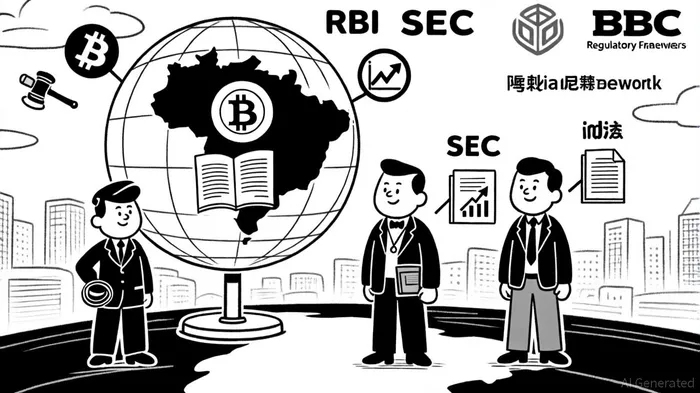
Investor Protection: A Fragile Shield
Investor protection mechanisms in these markets remain uneven. Brazil's BVAL mandates segregation of client and company assets, with capital requirements of R$1m for intermediaries and R$3m for brokers, the IBANET analysis states. These measures aim to prevent insolvency risks and ensure transparency. Nigeria's SEC has taken a proactive stance, establishing a digital exchanges division and enforcing token classification to safeguard retail investors, as the IBANET analysis observes. However, India's fragmented approach-lacking a unified legal framework-leaves gaps in dispute resolution and insurance models, a Reuters report notes.
The IMF has highlighted the systemic risks posed by unregulated crypto platforms, particularly in markets like Nigeria, where P2P trading bypasses traditional safeguards, in an IMF report on Nigeria. In Brazil, the growth of nonbank financial institutions as crypto intermediaries has amplified interconnectedness, with stress tests showing that adverse developments in these entities could ripple through the banking system, as discussed in an IMF blog on nonbanks.
Systemic Risks and the Shadow of Nonbanks
The rise of nonbank financial institutions in crypto markets has introduced new vulnerabilities. According to the IMF's Global Financial Stability Report, nonbanks-acting as liquidity providers and market makers-can amplify systemic risks through interconnectedness with traditional banks; the IMF blog on nonbanks expands on these dynamics. A 10% capital ratio decline in U.S. banks and 30% in European banks could result from nonbank-related shocks, underscoring the need for cross-border stress testing, the IMF analysis warns.
In emerging markets, stablecoins further complicate the landscape. The U.S. market's integration of stablecoins into Treasury and repo markets has set a precedent, prompting regulatory responses like the TD Securities note. While Brazil and Nigeria have yet to adopt similar measures, their growing reliance on stablecoins for cross-border transactions could expose them to liquidity crises if reserves are mismanaged.
The Path Forward
For investors, the lesson is clear: regulatory clarity is a prerequisite for sustainable growth. Brazil's structured approach has demonstrated that balanced frameworks can drive both innovation and stability. Nigeria's post-ban recovery and India's cautious sandbox model suggest that even in volatile environments, targeted interventions can mitigate risks.
However, systemic vulnerabilities persist. As nonbanks and stablecoins become more entrenched, regulators must prioritize stress testing and cross-border collaboration. The IMF's emphasis on analytical tools for market surveillance in its report on Nigeria and the World Bank's focus on capital flow monitoring cited in Coinlaw's statistics provide a blueprint for addressing these challenges.
Conclusion
Emerging crypto markets are no longer peripheral to global finance. The regulatory choices made by India, Brazil, and Nigeria will shape the sector's trajectory for years to come. While Brazil's proactive policies offer a template for success, Nigeria and India must navigate the fine line between fostering innovation and safeguarding stability. For investors, the key is to align portfolios with jurisdictions that prioritize both investor protection and systemic resilience.







Comentarios
Aún no hay comentarios