
Navigating Regulatory Risk in Crypto Lending: Investor Due Diligence and Systemic Stability in 2025
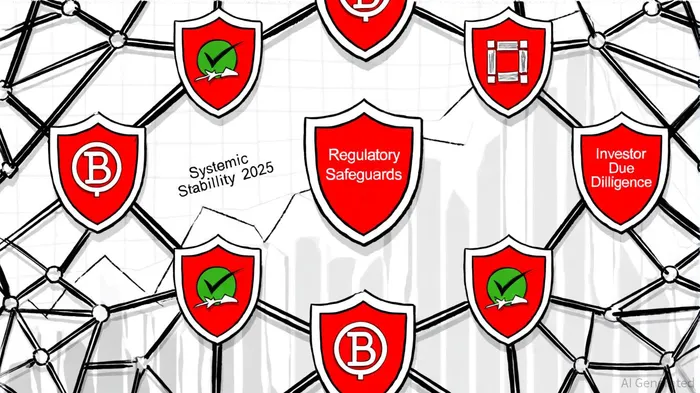
The crypto lending sector, once a Wild West of unregulated innovation, has entered a new era of scrutiny in 2025. Regulatory frameworks are tightening, enforcement actions are escalating, and systemic risks are being addressed through legislative measures like the GENIUS Act. For investors, this evolving landscape demands a recalibration of due diligence practices and a deeper understanding of how regulatory shifts mitigate—or exacerbate—systemic instability.
The Regulatory Tightrope: Enforcement and Frameworks
In 2025, the U.S. Department of Justice (DOJ) and state-level regulators have intensified their focus on crypto lending platforms. The collapse of Celsius Network, which left billions in losses for investors, culminated in criminal charges against its executives for orchestrating a Ponzi-like scheme[1]. Similarly, the DOJ dismantled Grinex, a cryptocurrency exchange linked to ransomware facilitation and money laundering, underscoring a zero-tolerance approach to illicit activity[3]. These cases reflect a broader trend: regulators are no longer tolerating opaque practices or misrepresentation in the sector[5].
Meanwhile, the UK's Financial Conduct Authority (FCA) has updated its safeguarding regime for payments and e-money firms, mandating daily reconciliations and stricter audit requirements[1]. These changes, while aimed at traditional finance, have ripple effects for crypto lenders operating in or targeting the UK market. The U.S. Consumer Financial Protection Bureau (CFPB) has also reignited its open banking rulemaking process under the Dodd-Frank Act, signaling a push to democratize financial data and curb monopolistic tendencies[1].
Investor Due Diligence: Beyond the Hype
For investors, the 2025 playbook for due diligence in crypto lending is no longer optional—it's existential. Founders and institutional investors are now expected to deploy Know Your Wallet (KYW) protocols, leveraging blockchain analytics to screen for sanctioned addresses and flag suspicious activity[1]. Third-party smart contract audits have become non-negotiable, as vulnerabilities in code remain a primary attack vector for hackers[1].
Regulatory compliance is equally critical. The GENIUS Act, enacted in 2025, requires payment stablecoin issuers to maintain 1:1 USD-backed reserves in low-risk assets like short-term Treasuries and overnight repurchase agreements[4]. This framework not only prevents depegging but also mandates monthly reserve disclosures and annual audits for issuers with over $50 billion in stablecoins[4]. For investors, this transparency reduces the risk of sudden liquidity crises—a lesson learned from the Terra UST collapse.
Operational due diligence (ODD) has also gained prominence. Institutional investors now demand proof of fund separation, source-of-funds verification, and robust risk control mechanisms[1]. Financial advisors, meanwhile, are advised to move beyond historical returns and evaluate technical details, market dynamics, and regulatory alignment[2]. This holistic approach ensures that crypto lending investments are not just profitable but resilient.
Systemic Stability: The Role of 2025 Frameworks
The GENIUS Act's reserve requirements and transparency mandates are pivotal in addressing systemic risks. By mandating that stablecoins be fully backed by low-risk assets, the Act curtails the contagion potential of a depegging event[4]. Interagency coordination, with the Office of the Comptroller of the Currency (OCC) overseeing permitted stablecoin issuers, further ensures that no single entity can destabilize the broader financial system[4].
The White House's digital asset policy report complements these efforts by clarifying the roles of the SEC, CFTC, and banking regulators[3]. This realignment prevents regulatory arbitrage and creates a cohesive framework for addressing cross-platform risks. For example, the report emphasizes the need for stress-testing crypto lending platforms to identify vulnerabilities in interconnected systems—a step that could prevent a 2025 repeat of the 2022 FTX collapse.
The Path Forward: Balancing Innovation and Caution
While 2025's regulatory environment introduces friction, it also creates a foundation for sustainable growth. On-chain solutions are gaining traction as corporate adoption of crypto accelerates, driven by a more optimistic U.S. economic outlook[2]. However, investors must remain vigilant. Market volatility, technological risks, and regulatory uncertainty persist, necessitating weekly risk checks and annual audits[5].
For the crypto lending sector to mature, collaboration between regulators and innovators is essential. The GENIUS Act and similar frameworks demonstrate that it is possible to foster innovation while safeguarding systemic stability. Investors who prioritize due diligence and align with compliant platforms will be best positioned to navigate this high-stakes landscape.







Comentarios
Aún no hay comentarios