
Navigating the Post-Shutdown Market: Strategic Entry Points in a Dislocated Economy
The 2025 U.S. government shutdown, the longest in history, has left a profound imprint on the economy, disrupting critical sectors and creating dislocations that savvy investors can exploit. With GDP reduced by 1.5 percentage points in Q4 2025 and key industries like healthcare and transportation reeling from operational halts, the market now presents opportunities for those who can identify undervalued assets poised for recovery. This analysis explores the sectors most impacted by the shutdown and highlights specific stocks that offer compelling entry points amid the post-shutdown rebound.
Healthcare: A Sector of Resilience and Rebound
The healthcare sector, while deeply affected by the shutdown, has demonstrated surprising resilience. Programs such as Medicare, Medicaid, and Veterans Affairs hospitals continued operations, but critical functions like hospital-at-home programs, telehealth reimbursements, and FDA drug approvals were delayed according to industry reports. The expiration of ACA premium tax credits further strained providers, with the Urban Institute estimating an $7.7 billion increase in uncompensated care nationwide. However, these disruptions have created a setup for a post-shutdown rebound.
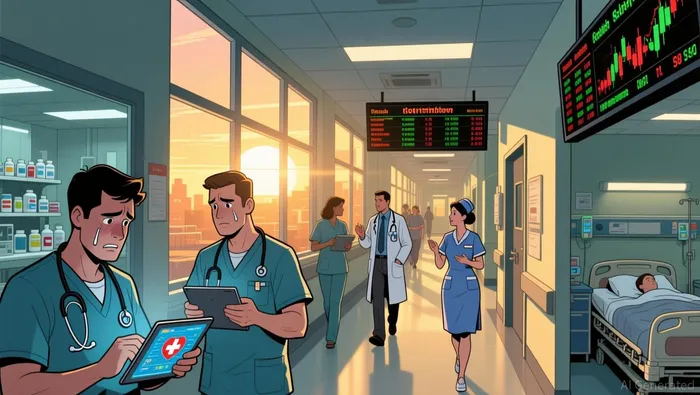 Defensive positioning by investors has already driven the healthcare sector to a five-month high during the early days of the shutdown. Companies like Novartis (NVS), Novo Nordisk (NVO), and Merck (MRK) are trading below intrinsic value due to temporary market pessimism, despite robust fundamentals and strong pipelines according to market analysis. For instance, Merck's oncology portfolio and Novo Nordisk's diabetes treatments remain critical to global healthcare demand, making their current valuations attractive for long-term investors.
Transportation: Navigating Disruptions and Recovery Potential
The transportation sector faced severe headwinds during the shutdown, with air traffic delays, halted infrastructure projects, and disrupted customs operations. Regulatory delays at the Federal Motor Carrier Safety Administration (FMCSA) and slowed licensing processes for commercial drivers exacerbated existing challenges in the trucking industry. However, the sector's post-shutdown recovery is already showing signs of stabilization, driven by pent-up demand and infrastructure spending.
Undervalued Transportation Stocks: ZIM, GBX, WAB, and CHRW
- ZIM Integrated Shipping Services (ZIM): ZIM's focus on niche markets and high freight rates have driven a 5.6% improvement in 2025 earnings estimates. With a strong backlog and exposure to e-commerce growth, ZIM is well-positioned to capitalize on the post-shutdown rebound.
- The Greenbrier Companies (GBX): GBX, a manufacturer of railroad freight cars, trades at a 30% discount to its relative valuation of 2,450.57 GBX under a base-case scenario according to valuation analysis. Its P/E ratio of 26.1 is below both historical and industry averages, suggesting undervaluation according to valuation analysis.
- Wabtec Corporation (WAB): WAB's third-quarter 2025 results showed 16% year-over-year earnings growth and a $25.6 billion multi-year backlog. While its P/E ratio of 31.7x exceeds the industry average according to market data, DCF analyses suggest intrinsic values between $137.81 and $175.39, indicating potential upside if the stock corrects to these levels according to financial modeling.
- C.H. Robinson (CHRW): CHRW's logistics expertise and 11.1% projected earnings growth for 2025 make it a compelling play on e-commerce normalization according to market analysis. However, its high valuation and declining sales warrant caution.
Valuation Metrics and Strategic Entry Points
For investors seeking precise entry points, valuation metrics provide critical insights. WAB's DCF analysis reveals a mixed picture: while some models suggest overvaluation (e.g., $213.6 vs. intrinsic value of $175.39), others project fair value at $211.21 according to financial modeling. This discrepancy underscores the importance of monitoring updated cash flow projections and margin expansion trends, particularly as WAB's digital technology investments drive efficiency according to operational reports.
GBX's undervaluation is more straightforward. Its P/E and P/B ratios are below industry benchmarks according to valuation analysis, and its backlog growth (up 15% year-over-year) according to earnings data signals strong demand for rail infrastructure. Investors may consider GBX as a long-term hold, given its exposure to global supply chain recovery.
Conclusion: Positioning for the Post-Shutdown Rebound
The 2025 government shutdown has created a dislocated market, but it also offers strategic entry points for investors with a medium-term horizon. In healthcare, companies like MerckMRK-- and Novo NordiskNVO-- are undervalued by temporary pessimism, while the transportation sector's ZIM, GBX, and WAB present opportunities tied to infrastructure and logistics normalization. As federal operations resume and liquidity improves, these sectors are likely to outperform, particularly if policy uncertainties resolve in favor of healthcare subsidy extensions and infrastructure funding.
For those willing to navigate the near-term volatility, the post-shutdown landscape is ripe for value-driven investments. The key lies in balancing sector-specific fundamentals with disciplined valuation analysis to capture the rebound.





Comentarios
Aún no hay comentarios