
Navigating Political Uncertainty: Portfolio Strategies for Trump's Fiscal Policies and Government Shutdowns
In the wake of Donald Trump's return to the White House, U.S. investors face a complex landscape of fiscal policy shifts and heightened political uncertainty. From aggressive tax cuts and protectionist tariffs to potential government shutdowns, the administration's agenda demands a recalibration of investment strategies. This article examines the economic implications of Trump's 2025 fiscal policies and outlines actionable tactics for mitigating risks while capitalizing on emerging opportunities.
Fiscal Policy and Economic Implications
Trump's 2025 tax agenda, encapsulated in the One Big Beautiful Bill Act, extends the 2017 Tax Cuts and Jobs Act (TCJA) permanently, reduces corporate tax rates to 15% for manufacturers, and introduces temporary exemptions for tips, overtime pay, and Social Security benefits[1]. While these measures aim to stimulate growth, analyses from the Penn Wharton Budget Model and the Congressional Budget Office (CBO) highlight significant trade-offs. For instance, the CBO projects that Trump's policies will initially slow 2025 GDP growth to 1.4% due to tariffs and immigration crackdowns before a rebound in 2026[2]. Over the long term, however, deficits are expected to balloon by $7.75 trillion through 2035, with the debt-to-GDP ratio rising to 223.1%[3].
The administration's protectionist trade policies further complicate the outlook. A proposed 10% universal tariff on imports, particularly targeting Chinese and Mexican goods, could raise household costs by $1,900–$7,600 annually and disrupt global supply chains[4]. While these tariffs aim to bolster domestic manufacturing, they risk retaliatory measures and inflationary pressures, as noted by the Stanford Institute for Economic Policy Research[5].
Investment Strategies for Uncertainty
To navigate this environment, investors must adopt a dual approach: hedging against short-term volatility while positioning for long-term policy-driven opportunities.
1. Sector Rotation and Defensive Plays
Historical data from government shutdowns—such as the 2013 and 2018-2019 episodes—shows that defensive sectors like consumer staples, utilities, and healthcare outperform during periods of political gridlock[6]. Companies such as Procter & Gamble, Walmart, and Johnson & Johnson, which provide essential goods and services, are likely to maintain stable demand even amid economic turbulence[7]. Conversely, sectors reliant on government contracts (e.g., defense, technology) or global supply chains (e.g., industrials) may face revenue volatility due to tariffs and regulatory shifts[8].
2. Asset Allocation and Hedging Mechanisms
- Fixed Income: Short-duration bonds and Treasury Inflation-Protected Securities (TIPS) can mitigate inflation risks tied to tariffs and fiscal deficits[9]. For example, the Federal Reserve's dovish stance in 2025 may drive yields lower, making high-quality corporate bonds with short maturities an attractive option[10].
- Equities: A focus on U.S. value stocks and small-cap companies aligns with Trump's deregulatory and protectionist agenda, which favors domestic production[11]. However, investors should balance this with exposure to global equities, particularly in Europe and the UK, which may benefit from reduced U.S. trade tensions[12].
- Commodities and Real Assets: Energy and metals equities could act as inflation hedges, though near-term economic weakness may temper gains[13]. Gold and real estate investment trusts (REITs) also offer diversification benefits during periods of policy uncertainty[14].
3. Scenario Planning for Government Shutdowns
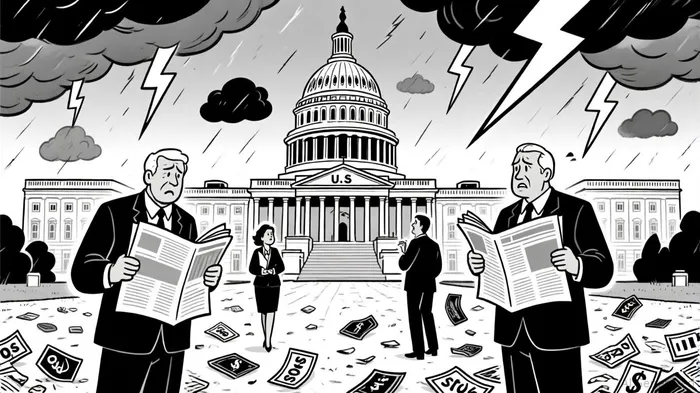
While shutdowns are historically short-lived, they can disrupt regulatory functions and delay economic data releases, increasing market volatility[15]. Investors should maintain liquidity by holding 10–15% of their portfolio in cash or cash equivalents. Additionally, multi-asset strategies that blend equities, bonds, and alternatives can buffer against sudden market corrections[16].
Data Visualization
Conclusion
Trump's fiscal policies present a paradox: short-term growth from tax cuts and deregulation clashes with long-term risks from rising deficits and trade conflicts. By prioritizing defensive sectors, hedging inflationary pressures, and maintaining liquidity, investors can navigate this volatile landscape. As the administration's agenda unfolds, flexibility and a long-term perspective will remain critical to preserving capital and capturing value.







Comentarios
Aún no hay comentarios