
Navigating Political Uncertainty: Investment Strategies Amid the Looming Government Shutdown
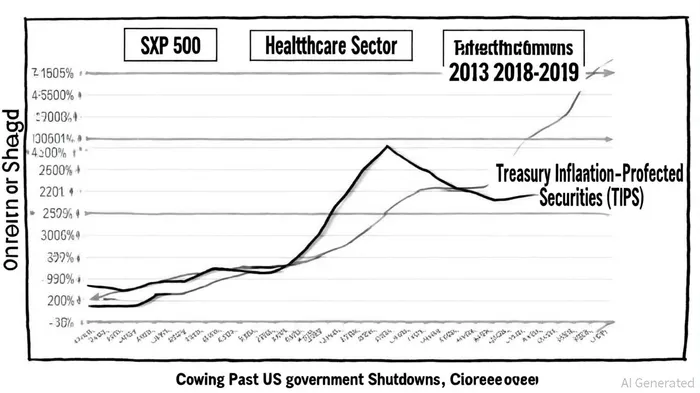
As political gridlock in Washington, D.C., intensifies, investors face the looming threat of another government shutdown. Historical precedents reveal a complex interplay between sectoral resilience and hedging strategies during such events. This analysis synthesizes empirical data from past shutdowns to outline actionable insights for navigating fiscal uncertainty.
Sectoral Resilience: Defensive Sectors as Anchors
Government shutdowns disproportionately impact discretionary spending and non-essential services, but certain sectors demonstrate remarkable resilience. Healthcare, for instance, has historically outperformed during shutdowns. In 2013, the sector returned 17.9%, and in 2019, it gained 13.5%, despite disruptions in federal programs like Medicare and Medicaid[1]. This resilience stems from the continuity of payments to providers and insurers, which insulates them from short-term fiscal volatility[5].
Similarly, defense and aerospace sectors have shown mixed but recoverable performance. During the 2018–2019 shutdown, the defense sector rose 5.2%, outpacing the S&P 500's 3% return[5]. While contract delays and furloughs create near-term headwinds, the sector's reliance on government funding ensures eventual stabilization once operations resume.
Utilities emerge as another defensive pillar. As a low-volatility sector, utilities tend to outperform during market downturns, including shutdowns[3]. Their role in providing essential services—such as electricity and water—ensures steady demand, making them a logical addition to portfolios seeking stability[1].
Hedging Strategies: Balancing Risk and Reward
While resilient sectors offer stability, hedging instruments remain critical for mitigating downside risk. Treasury Inflation-Protected Securities (TIPS) have historically served as a buffer against inflation and fiscal uncertainty. During the 2013 shutdown, TIPS yields rose as investors sought safety, though the U.S. Treasury temporarily suspended new TIPS auctions, reducing liquidity[4]. Post-shutdown, TIPS resumed normal operations, underscoring their role as a reliable hedge[1].
Gold, however, presents a more nuanced picture. Despite heightened uncertainty during the 2013 and 2018–2019 shutdowns, gold prices showed limited correlation with shutdown duration. For example, during the 35-day 2018–2019 shutdown, gold prices increased by only $20, suggesting that broader macroeconomic factors—such as Federal Reserve policy—often overshadow shutdown-specific volatility[2]. Investors may still consider gold as part of a diversified hedging strategy, but its effectiveness during fiscal crises appears inconsistent[2].
Short-term Treasury bonds and cash equivalents remain the most reliable hedges. During the 2013 shutdown, the yield on four-week Treasury bills surged 21 basis points, reflecting a flight to quality[1]. Vanguard and MorningstarMORN-- both emphasize that maintaining a portion of the portfolio in high-quality fixed income can cushion against market jitters[3].
The Case for Long-Term Discipline
Historical data underscores the importance of maintaining a long-term investment horizon. The S&P 500 has gained in four of the most recent shutdowns since 1978[1], and markets have historically recovered swiftly post-shutdown. For instance, the 2013 shutdown saw the index rebound before the government reopened, erasing initial losses[1]. Investors who panic-sell during shutdowns often miss these rebounds, underscoring the value of disciplined, diversified strategies[2].
Conclusion
Navigating political uncertainty requires a dual focus on sectoral resilience and strategic hedging. Defensive sectors like healthcare, defense, and utilities offer stability, while TIPS and Treasury bonds provide liquidity and inflation protection. By combining these elements with a long-term perspective, investors can mitigate the risks of fiscal instability without sacrificing growth potential.







Comentarios
Aún no hay comentarios