
Navigating Oil Volatility: Ceasefire Calm vs. Fed Rate Realities
The Iran-Israel ceasefire, brokered in late June 2025, has injected a fragile calm into one of the world's most volatile geopolitical flashpoints. This respite, coupled with shifting Federal Reserve rate expectations, has created a critical crossroads for oil markets. Investors now face a balancing act: capitalizing on reduced supply risks while navigating the uncertain economic trajectory shaped by Fed policy. Let's dissect the dynamics and what they mean for your portfolio.
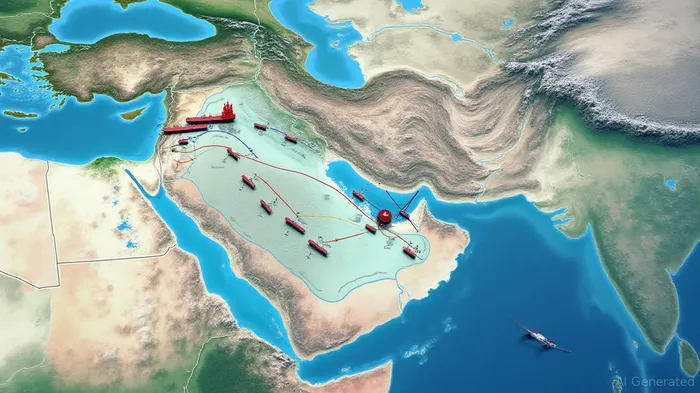
Geopolitical Risk Reduction: The Ceasefire's Impact
The truce has already had a measurable impact on crude prices. Brent crude dropped by 9% the day before the ceasefire was announced and fell a further 4% afterward, erasing the “conflict premium” that had inflated prices. This reflects traders' relief that the Strait of Hormuz, which carries 20% of global oil shipments, remains open. However, the ceasefire's fragility—marked by early accusations of violations—means investors must remain vigilant. A would reveal sharp dips coinciding with truce announcements and spikes during escalation.
While the immediate threat of supply disruption has abated, Iran's long-term ambitions remain unresolved. Analysts warn that a full-blown conflict or Strait closure could still push prices to $90–$130/bbl. For now, OPEC+ spare capacity (5.39 mb/d in May) acts as a buffer, but geopolitical tail risks remain a wildcard.
Macroeconomic Signals: Fed Policy and Oil Demand
The Federal Reserve's June 2025 projections highlight a median federal funds rate of 3.9% for 2025, easing to 3.0% in the long term. This policy pathPATH-- has dual implications for oil:
1. USD Strength: Higher rates typically boost the U.S. dollar, making oil—priced in USD—more expensive for other currencies. This could curb global demand.
2. Economic Growth: A Fed tightening cycle risks slowing global growth, reducing oil consumption. The EIA projects U.S. crude production to drop to 13.3 mb/d by late 2026 as rig counts fall and drillers scale back.
A would illustrate the inverse relationship between Fed hikes and oil demand. Meanwhile, the Fed's focus on inflation (projected at 3.2% in 2025) may limit its dovish pivot, keeping a lid on oil's upside unless supply shocks return.
Balancing Act: Geopolitical Calm vs. Macroeconomic Headwinds
Investors must weigh two competing forces:
- Bullish Case: A sustained ceasefire reduces supply risks, while OPEC+ manages output to avoid overproduction. This scenario supports prices around $60–$70/bbl.
- Bearish Case: Fed-driven economic slowdowns and a stronger USD could push prices below $60/bbl, especially if U.S. inventories (now at 7.7 billion barrels) keep rising.
The Strait of Hormuz remains the linchpin. Even a partial disruption—say, Iranian drone attacks on tankers—could trigger a $10–$20/bbl spike. Conversely, a full-blown closure would send prices soaring, as seen in the 2022 Russia-Ukraine war parallels.
Investment Strategy: Hedging the Uncertainty
- Oil ETFs:
- Long Exposure: Consider the United States Oil Fund (USO) if you believe geopolitical calm is temporary.
Hedged Plays: The ProShares UltraShort Oil & Gas (DUG) could profit from a Fed-driven downturn.
Geopolitical Safeguards:
Allocate a small portion of your portfolio to gold (GLD) or inverse USD ETFs (UUP), which act as hedges against Strait disruptions or Fed policy missteps.
Commodity-Linked Stocks:
Energy majors like ChevronCVX-- (CVX) and ExxonMobil (XOM) offer dividends and operational resilience. Avoid pure-play drillers, which are more sensitive to price swings.
Monitor Key Metrics:
- Track Strait of Hormuz tanker traffic via platforms like TankerTrackers.
- Watch the Fed's quarterly dot plot for rate shifts and their impact on USD strength.
Conclusion
The ceasefire has bought time for oil markets, but investors must stay alert. Geopolitical calm has reduced the immediate supply threat, while the Fed's rate path will dictate demand resilience. A balanced approach—using ETFs to capture price movements and hedging against tail risks—offers the best path forward. Stay disciplined: this is a game of inches until the next shock hits.
This visualization would underscore the inverse relationship between Fed rate hikes and oil demand, guiding short-term positioning.





Comentarios
Aún no hay comentarios