
Navigating Northeast Asia's Geopolitical Crossroads: How Diplomacy Shapes Investment Horizons
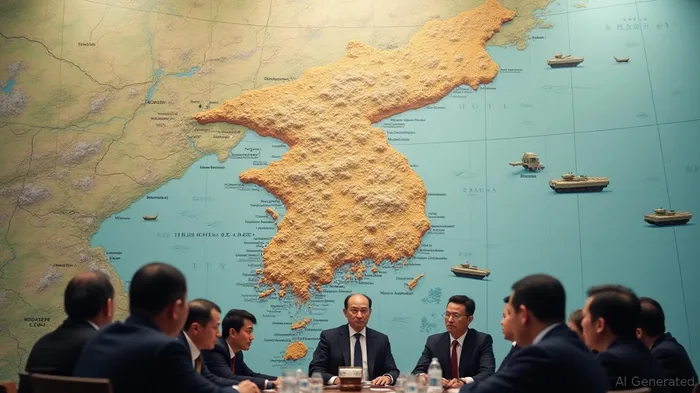
The Korean Peninsula remains a geopolitical tinderbox, with South Korea's newly appointed Foreign Minister Cho Hyun at the helm of efforts to stabilize U.S.-North Korea relations. As Cho balances dialogue with deterrence, investors must dissect how his policies could reshape trade flows, defense spending, and cross-border investments in Northeast Asia. This article explores the dual pathways of escalation and de-escalation, offering actionable insights for portfolio management.
Defense Sector Dynamics: A Hedge Against Tensions
Cho's pragmatic approach to U.S.-South Korea allianceAENT-- management—particularly on defense cost-sharing—suggests sustained military spending. South Korea's defense budget is projected to grow at 5-7% annually through 2027, driven by modernization of naval assets (e.g., anti-submarine warfare systems) and missile defense.
Investment Implications:
- Sector Focus: Defense contractors like Samsung Heavy Industries (shipbuilding for naval vessels) and Hanwha Defense (missile systems) benefit from budgetary tailwinds.
- Risk Factor: Overexposure to defense stocks could backfire if Cho's diplomacy reduces perceived threats. Monitor U.S.-ROK burden-sharing negotiations closely.
Trade & Cross-Border Investments: The Double-Edged Sword of Diplomacy
Cho's dual-track strategy—dialogue with North Korea paired with strengthened alliances with the U.S. and Japan—creates conflicting pressures on regional trade.
Scenario 1: Escalation (Higher Tensions)
- Automotive & Tech Sectors: Sanctions on North Korea could disrupt supply chains for South Korean automakers like Hyundai and tech giants like Samsung, which rely on China for components.
- Energy: Japan's liquefied natural gas (LNG) exports to South Korea may surge if cross-border disputes with China intensify.
Scenario 2: De-escalation (Dialogue Progress)
- Infrastructure & Logistics: A thaw in inter-Korean relations could revive projects like the Kaesong Industrial Complex, benefiting construction firms like Doosan Heavy.
- Consumer Goods: Reduced sanctions could open North Korean markets to South Korean brands, though regulatory risks persist.
Sector-Specific Opportunities: Where to Bet Now
- Tech & Telecom: If dialogue succeeds, SK Hynix and LG Innotek could benefit from expanded semiconductor partnerships with U.S. firms. However, U.S. export controls on AI chips remain a wildcard.
- Utilities: Defensive plays like Korea Electric Power Corp. (KEPCO) offer stability amid geopolitical volatility.
- Healthcare: Companies like Celltrion (biopharmaceuticals) are less sensitive to sanctions and benefit from aging populations across the region.
Hedging Strategies for Portfolio Resilience
- Diversify Regionally: Pair exposure to South Korean equities (e.g., EWY ETF) with Chinese tech stocks (e.g., MCHI ETF) to balance geopolitical risks.
- Currency Hedging: Use FX forwards to mitigate volatility in the won and yuan, especially if U.S.-China trade tensions resurface.
- Geopolitical ETFs: Consider PGJ (MSCI Pacific ex-Japan) for broad regional exposure or KORDEP (Korea Defense ETF) for targeted defense plays.
- Options: Buy puts on cyclical sectors (e.g., automotive) to protect against sudden sanctions or military posturing.
Final Call: Stay Nimble, Stay Informed
Cho Hyun's tenure hinges on navigating a precarious balance between dialogue and deterrence. Investors should treat Northeast Asian equities as a tactical allocation rather than a core holding. Monitor three key triggers:
1. Progress in U.S.-North Korea talks (next expected in Q4 2025).
2. U.S.-ROK SMA renegotiations (due by early 2026).
3. Cross-border trade disputes (e.g., Japan-South Korea semiconductor tariffs).
Recommendation: Adopt a "barbell" strategy—allocate 30% to defensive healthcare/utilities and 20% to cyclical defense/tech, while hedging currency risks. Avoid overcommitting to sectors like automotive until sanctions regimes stabilize.
The Korean Peninsula's geopolitical dance is far from over. Investors who blend sector-specific exposure with disciplined hedging will be best positioned to capitalize—or weather—the storm.
Data sources: South Korean Ministry of Defense, Bloomberg TradeFlow, IMF Economic Outlook.







Comentarios
Aún no hay comentarios