
Navigating the New Normal: Higher Education's Resilience and Insurance Demand in a Post-Crisis Era
The higher education sector has emerged as a microcosm of broader economic and societal shifts in the post-pandemic era. From 2020 to 2025, institutions have grappled with a perfect storm of financial instability, enrollment declines, and regulatory turbulence, all while recalibrating risk management strategies to survive a rapidly evolving landscape. For investors, understanding these dynamics-and the insurance sector's role in mitigating institutional vulnerabilities-is critical to assessing long-term opportunities and risks.
Financial Pressures and the Insurance Imperative
The financial strain on colleges and universities has intensified as operational costs-ranging from healthcare to cybersecurity-have outpaced revenue growth. Rising tuition discounting and budget cuts have become standard responses to enrollment declines, particularly for institutions with weaker brand equity or geographic exposure to shrinking demographics according to NEAM Group insights. Meanwhile, federal funding uncertainties, compounded by the One Big Beautiful Bill Act (OBBBA), have forced institutions to adopt centralized budgeting and alternative funding models to align resources with strategic priorities as Deloitte reports.
Insurance has become a cornerstone of institutional resilience. Property and casualty insurers have recalibrated underwriting practices in response to rising large losses and liability claims. For example, casualty insurance premiums have surged due to "nuclear verdicts" and litigation costs, with insurers imposing stricter terms and higher retentions as Risk Strategies notes. Cybersecurity threats, meanwhile, have emerged as a top priority, with educational institutions increasingly targeted by sophisticated attacks. According to a 2025 report, institutions are now prioritizing digital transformation and data-driven risk assessments to address these vulnerabilities.
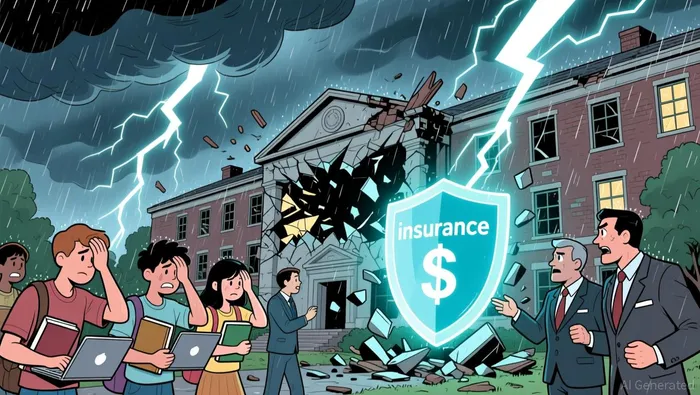 Market sentiment toward higher education has shown tentative signs of recovery. A 2025 survey by HigherEdDive found that public confidence in the sector rose to 42%, up from 36% in 2023, driven by perceptions of education's practical value according to HigherEdDive data. However, this optimism is tempered by systemic risks. Moodys, Fitch, and S&P have all highlighted a bifurcated risk environment: elite institutions with strong endowments and brand recognition remain resilient, while weaker institutions face closures or mergers as NEAM Group observes.
The insurance sector reflects this duality. While property insurance rates have stabilized with moderate increases, casualty markets remain volatile. Social inflation and complex legal environments-particularly around diversity, equity, and inclusion (DEI) compliance-have heightened exposure for institutions. Non-compliance risks, including potential loss of federal funding, have pushed schools to invest in regulatory expertise and proactive risk management according to IMACorp insights.
Strategic Adaptations and Investor Implications
Institutions are adopting aggressive strategies to navigate these challenges. Consolidation and mergers have accelerated, with smaller colleges partnering with larger systems to share resources and reduce costs as Deloitte reports. Innovations in educational delivery, such as hybrid learning models and workforce-aligned programs, are also gaining traction.
Conclusion
The higher education sector's post-crisis trajectory underscores the interplay between institutional resilience and market sentiment. While financial pressures and regulatory shifts pose significant challenges, the surge in insurance demand and strategic adaptations highlight a sector in transition. For investors, the key lies in identifying institutions and insurers that can navigate this complexity with agility and foresight.







Comentarios
Aún no hay comentarios