
Navigating Nigeria's 2025 Fintech Regulatory Shifts: Opportunities in Compliance-Driven Innovation
Nigeria's fintech sector is undergoing a seismic transformation in 2025, driven by a regulatory overhaul that is reshaping the landscape for investors, entrepreneurs, and consumers alike. As the Central Bank of Nigeria (CBN), Federal Competition and Consumer Protection Commission (FCCPC), and Nigeria Data Protection Commission (NDPC) tighten their grip on compliance, the country's fintech ecosystem is evolving from a Wild West of innovation to a more structured, investor-friendly environment. For strategic investors, this regulatory shift is not a barrier but a catalyst for identifying high-impact opportunities in compliance-driven innovation.
The Regulatory Tightrope: Compliance as a Strategic Lever
The FCCPC's 2025 Digital, Electronic, Online, or Non-Traditional Consumer Lending Regulations (DEON) has redefined the digital lending space, mandating full registration, transparency in interest rates, and the use of licensed recovery agents. These rules, while imposing stricter reporting obligations, have also created a level playing field by eliminating predatory practices. For instance, platforms like Flutterwave and Paga have leveraged their Payment Service Provider (PSP) licenses and Super-Agent frameworks to scale operations across 30 African countries and 33,000 rural agents, respectively according to recent analysis. Such regulatory alignment has not only boosted consumer trust but also attracted institutional capital, with Nigeria securing 47% of Africa's fintech deals in 2024.
Simultaneously, the CBN's 2025 Reviewed Guidelines of International Money Transfer Services and the Cybercrimes (Prohibition and Prevention) (Amendment) Act 2024 have intensified cybersecurity and data protection requirements according to legal experts. Fintechs must now implement end-to-end encryption, consent-based APIs, and breach notifications within 72 hours as required by new regulations. While these measures increase operational costs, they also serve as a competitive differentiator. For example, OPay and Interswitch have integrated AI-driven fraud detection systems to meet these standards, enhancing their appeal to risk-averse investors as reported in industry analysis.
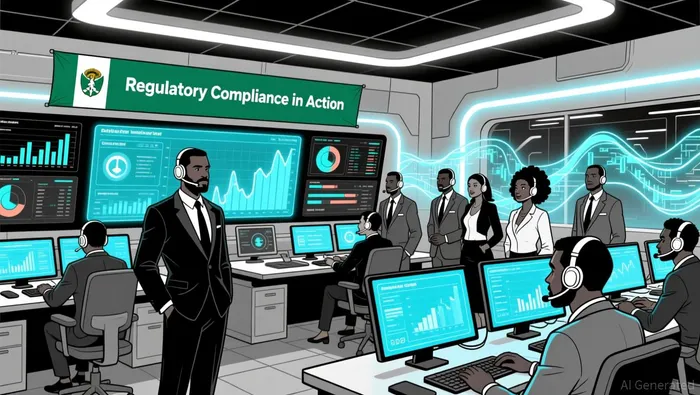
The investment imperative is clear: compliance is now a strategic lever for innovation. The CBN's Regulatory Sandbox Framework, which allows fintechs to test innovations in a controlled environment, has become a launchpad for compliant solutions. Moniepoint, for instance, expanded its POS terminal and business account offerings by navigating sandbox requirements, now serving over 10 million users. Similarly, FairMoney and Cowrywise have embedded compliance into their neobanking and investment platforms, attracting over 50 million users combined.
Investor confidence is further bolstered by the CBN's 2025 decision to lift restrictions on banks opening accounts for Virtual Asset Service Providers (VASPs) as detailed in regulatory updates. This move aligns Nigeria's capital market with global standards, as the Investments and Securities Act (ISA) 2025 now recognizes virtual assets as securities. The result? A surge in venture capital funding, with Nigeria securing 72% of its total equity funding within the fintech sector in 2024.
Navigating the Risks: Compliance Costs and Cross-Border Challenges
Despite the optimism, challenges persist. The CBN's 2026 cash-handling policies-weekly withdrawal caps and penalties for excess withdrawals- threaten to increase operational costs for fintechs. Additionally, cross-border compliance is becoming more complex as Nigerian startups align with global standards like the EU's Digital Operational Resilience Act (DORA) as highlighted in industry reports. For example, Chipper Cash faced hurdles in 2025 when expanding its virtual dollar cards to international markets, necessitating multi-jurisdictional compliance mapping.
However, these challenges are not insurmountable. The proposed National Fintech Regulatory Commission Bill aims to unify oversight under a single body, reducing arbitrage and streamlining compliance. Early adopters of this framework, such as Interswitch and OPay, are already positioning themselves to benefit from the anticipated regulatory clarity.
The Road Ahead: Strategic Entry Points for Investors
For investors, the key lies in identifying fintechs that treat compliance as a core competency rather than a cost center. Startups that integrate AI and blockchain for real-time KYC/AML checks, like Moniepoint and FairMoney, are prime candidates. Similarly, platforms leveraging the CBN's sandbox to pilot green fintech solutions-such as carbon credit trading or sustainable microloans-could capture emerging ESG-driven capital flows.
The economic impact of these innovations is already evident. A 2025 study found that fintech-driven financial inclusion contributes positively to Nigeria's GDP growth, particularly in rural areas. As the sector matures, strategic investors must balance short-term compliance costs with long-term gains in market share and regulatory resilience.
Conclusion
Nigeria's 2025 fintech regulatory shifts are a double-edged sword: they impose stricter compliance demands but also create a fertile ground for innovation. For investors, the path forward lies in partnering with fintechs that view regulation as a strategic enabler rather than a constraint. As the country's fintech ecosystem continues to evolve, those who navigate the compliance landscape with foresight will find themselves at the forefront of Africa's next financial revolution.







Comentarios
Aún no hay comentarios