
Navigating Natural Disaster Risks in Mining: Strategic Insights on Supply Chain Resilience and Market Entry Timing
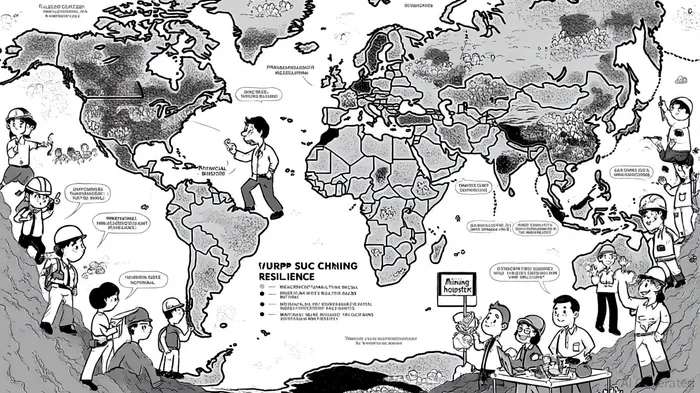
Natural disasters have increasingly disrupted mining supply chains, exposing vulnerabilities in critical mineral production and transportation. From the 2024 earthquake in Japan, which temporarily halted semiconductor manufacturing, to the 2023 typhoon in Vietnam that delayed electronics shipments, the mining sector faces unprecedented challenges[1]. These events underscore the need for robust supply chain resilience and strategic market entry timing to mitigate risks and capitalize on post-disaster opportunities.
Supply Chain Resilience: Lessons from Industry Leaders
Mining companies are adopting multifaceted strategies to enhance resilience. Toyota's response to the 2011 Tohoku earthquake—diversifying suppliers, strengthening relationships, and implementing real-time monitoring—enabled faster recovery than competitors[2]. Similarly, Apple's use of supply chain mapping during the 2011 Thailand floods allowed it to identify vulnerabilities, source alternatives, and rebuild resilience[2]. These case studies highlight the importance of diversification and proactive risk management.
Recent studies emphasize addressing four key risk dimensions: machine/systems, human, general, and environmental factors[3]. For instance, the 2024 wildfires in Russia disrupted rare earth metal extraction, revealing gaps in raw material sourcing strategies[1]. To counter such risks, firms are investing in end-to-end visibility, integrated scenario planning, and strategic inventory buffers[3]. Digital tools like AI-driven simulations and digital twins are also being leveraged to anticipate disruptions[4].
Market Entry Timing: Balancing Risk and Opportunity
Natural disaster risks significantly influence market entry timing. Companies are increasingly using geographic information systems (GIS), remote sensing, and data analytics to assess risks and optimize entry decisions[5]. For example, post-disaster recovery in Brazil's mining sector revealed that governance frameworks—such as judicial arbitration and community participation—directly impacted economic recovery timelines[6]. In Brumadinho, swift judicial action and transparent technical expertise facilitated a structured recovery, whereas Mariana's privatized approach led to delays and mistrust[6].
Investment opportunities often emerge during recovery periods. The 2025 gold exploration rebound, driven by favorable market conditions and project milestones, illustrates how post-disaster environments can attract capital[7]. However, broader mining sectors face challenges, including reduced fundraising and geopolitical tensions, which complicate recovery timelines[7].
Case Studies: Post-Disaster Recovery and Investment Outcomes
The Mariana (2015) and Brumadinho (2019) dam failures in Brazil offer contrasting lessons. Mariana's privatized recovery through the Renova Foundation faced criticism for opaque processes, while Brumadinho's community-centric approach accelerated trust-building and economic revival[6]. These cases highlight the role of governance in shaping investment outcomes.
In Southeast Asia, Typhoon Yagi's 2023 impact on Vietnam and Thailand disrupted port operations, but companies that prioritized ESG frameworks and local supplier partnerships mitigated long-term damage[1]. Similarly, the 2024 Spruce Pine quartz mine shutdown in North Carolina demonstrated how strategic inventories can buffer against short-term disruptions[1].
Strategic Recommendations for Investors
- Prioritize Resilience-Driven Investments: Allocate capital to firms with diversified supply chains, real-time monitoring systems, and ESG-aligned practices.
- Leverage Post-Disaster Opportunities: Target regions with clear governance frameworks and community engagement strategies, such as Brumadinho's model.
- Adopt Dynamic Market Entry Timelines: Use GIS and predictive analytics to time entries during recovery phases, balancing risk with potential returns.
Conclusion
Natural disasters are reshaping the mining sector's risk landscape, but they also present opportunities for resilient, forward-thinking investors. By integrating supply chain innovations, governance best practices, and data-driven timing strategies, stakeholders can navigate volatility and secure long-term value. As the industry evolves, adaptability and proactive planning will remain critical to thriving in an era of uncertainty.





Comentarios
Aún no hay comentarios