
Navigating Middle East Geopolitical Crossroads: Infrastructure and Defense Plays in a Post-Ceasefire Era
The recent U.S.-brokered ceasefire between Israel and Iran has introduced a fragile pause in a conflict that has roiled the Middle East for decades. Yet beneath the surface, the region remains a tinderbox of unresolved tensions, from Iran's nuclear ambitions to Qatar's strategic role as a U.S. military hub. For investors, this volatility presents a paradoxical opportunity: sectors tied to strategic infrastructure, defense, and cybersecurity are poised to thrive amid geopolitical uncertainty.
The Geopolitical Backdrop: Ceasefire ≠ Stability
The June 2025 ceasefire, while halting direct hostilities, has not erased the underlying drivers of conflict. Iran's uranium enrichment program continues unchecked, while Israel's demands for regime change in Tehran linger. Meanwhile, Qatar's AlAL-- Udeid Air Base—a linchpin of U.S. military operations in the region—has emerged as both a symbol of regional power dynamics and a critical node for energy and defense infrastructure.
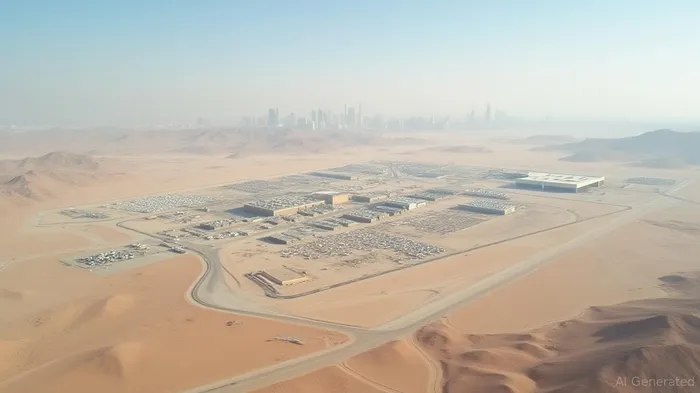
Energy Logistics: Qatar's Strategic Gambit
Qatar's status as the world's largest LNG exporter positions it to capitalize on post-ceasefire economic reshaping. The Al Udeid Air Base's expansion—funded partly by U.S. defense spending—has created a logistical nexus for energy infrastructure projects. Companies involved in LNG terminal construction, pipeline security, and port modernization stand to benefit.
- Key Catalyst: Qatar's planned $28.7 billion expansion of its North Field LNG project, which requires advanced logistics networks to avoid supply chain disruptions.
- Investment Play: Firms like Schlumberger (SLB) or Halliburton (HAL), with expertise in energy infrastructure, could secure contracts tied to Qatar's LNG ambitions.
Defense Contractors: Profiting from Perpetual Vigilance
The Middle East's “cold war” dynamic—marked by proxy conflicts, cyberattacks, and missile tests—ensures sustained demand for defense technologies. Israel's acceptance of the ceasefire has not reduced its need for advanced systems to counter Iranian threats, while Gulf states like Saudi Arabia and the UAE are accelerating military modernization.
- Key Catalyst: Iran's continued missile tests and its nuclear program uncertainty will drive demand for U.S. and Israeli-made systems like Raytheon's (RTX) Patriot missile defense or Lockheed Martin's (LMT) F-35 stealth jets.
- Investment Play: Defense contractors with exposure to missile defense, drone swarms, and electronic warfare systems are likely to see robust order backlogs.
Cybersecurity: The Silent Frontline
The region's geopolitical rivalry has spilled into cyberspace, with state-sponsored groups targeting energy grids, ports, and defense systems. The 2025 missile strike on Al Udeid, intercepted by Qatar's advanced defenses, highlights the need for real-time threat detection and critical infrastructure protection.
- Key Catalyst: Iran's alleged cyberattacks on Israeli water facilities and Saudi oil refineries have accelerated demand for industrial control system (ICS) security solutions.
- Investment Play: Firms like Palo Alto Networks (PANW) or CrowdStrike (CRWD), specializing in threat intelligence and ICS protection, are well-positioned to secure contracts from energy firms and governments.
Risk Considerations & Long-Term Themes
While the ceasefire reduces immediate kinetic risks, investors must account for:
1. Nuclear Program Uncertainty: A sudden escalation over Iran's uranium stockpiles could reignite conflict.
2. Energy Volatility: Qatar's LNG dominance hinges on geopolitical stability—any disruption to Al Udeid's operations could spike oil prices.
3. Regional Alliances: The UAE-led Abraham Accords may open new markets for defense and infrastructure firms.
Final Take: Position for Resilience, Not Calm
The Middle East's post-ceasefire era is less about peace than about managing perpetual tension. Investors should prioritize sector-specific resilience:
- Energy Logistics: Bet on firms with long-term contracts tied to Qatar's LNG projects.
- Defense: Focus on companies with diversified portfolios in missile defense and cyber-hardware.
- Cybersecurity: Target firms with ICS expertise, as critical infrastructure becomes a primary battleground.
The Al Udeid Air Base's expansion and Iran's nuclear program are not just geopolitical flashpoints—they are long-term investment themes. In a region where conflict is cyclical, the savviest investors will profit from the infrastructure needed to weather its storms.





Comentarios
Aún no hay comentarios