
Navigating Media Industry Shifts: Valuation Impacts and Strategic Investor Opportunities in the Streaming Era
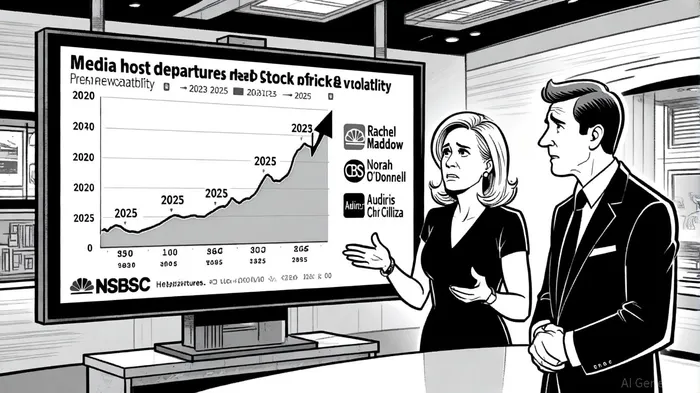
The media industry is undergoing a seismic transformation, driven by the confluence of high-profile talent departures, shifting consumer habits, and the relentless march of digital disruption. For investors, understanding how these changes ripple through company valuations is critical. Recent trends—from Mehdi Hasan's exit from MSNBC to the WCBS 880 format shift—highlight the fragility of brand equity in an era where talent and format flexibility are king.
The Talent-Driven Valuation Equation
High-profile hosts are not just faces on screens; they are brand assets. When left MSNBC in January 2024, the network lost a progressive voice that resonated with a key demographic. While no direct stock price impact was recorded, . Though Hasan's exit was a strategic move rather than a forced resignation, the symbolic loss of a polarizing yet influential figure could have dampened short-term sentiment.
Similarly, 's departure from CBS Evening News in July 2024 marked the end of a 12-year tenure. , a decline that likely pressured CBS's advertising revenue. The network's pivot to a two-anchor format and a 60 Minutes-style magazine format reflects a desperate bid to retain relevance. For investors, this underscores a critical truth: in an age of fragmented attention spans, brand equity is increasingly tied to the gravitational pull of individual talent.
Format Shifts and Financial Realities
The WCBS 880 case study offers a starker quantifiable impact. Audacy's decision to replace its 60-year-old all-news format with ESPN sports programming in August 2024 was driven by financial pragmatism. . By leasing the 880 AM signal to Good Karma Brands, Audacy reduced payroll expenses and reallocated resources to its 1010 WINS station. While the immediate revenue shift is opaque, .
Strategic Investor Takeaways
- Over Reliance: Media companies with diversified revenue streams (e.g., Paramount Global's merger with Skydance Media[4]) are better positioned to weather talent-driven volatility. Investors should favor firms with hybrid models—combining subscription, advertising, and content licensing.
- Short-Term Volatility, Long-Term Resilience: While host departures can trigger short-term stock dips, companies that pivot swiftly (e.g., CBS's format overhaul[2]) may regain traction. Look for firms with agile leadership and a history of innovation.
- in a Digital Age: Traditional EBITDA multiples (8–12x[5]) may no longer apply to digital-first media companies. Instead, focus on user engagement metrics and content library value.
Conclusion
The media landscape is no longer a stable playing field—it's a chessboard where talent moves dictate valuation outcomes. For investors, the lesson is clear: prioritize companies that treat brand equity as a dynamic asset, not a static one. As the industry grapples with the fallout of high-profile exits, those who adapt will thrive; those who cling to the past risk being left in the dust.







Comentarios
Aún no hay comentarios