
Navigating Market Volatility: Strategic Moves Amid Trade Tensions and Central Bank Uncertainty
The global investment landscape in 2025 is defined by a volatile interplay of trade tensions and divergent central bank policies. From the U.S.' abrupt 10% minimum tariff on imports to the European Central Bank's rate cuts amid the Federal Reserve's cautious stance, markets are grappling with uncertainty that has triggered sharp repricing and sector-specific shocks. For investors, the challenge lies in balancing defensive positioning with strategic sector rotation to mitigate risks while capitalizing on emerging opportunities.
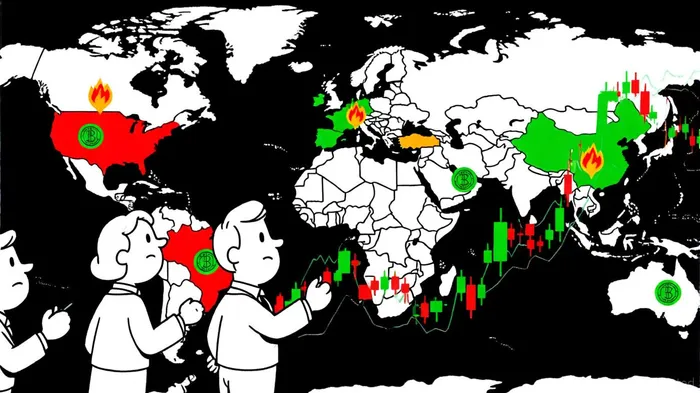
The Dual Forces of Turbulence
Trade tensions have emerged as a primary driver of market instability. The U.S.' reciprocal tariff policies, announced in late 2025, sent the S&P 500 plummeting nearly 11% over two days, underscoring the fragility of investor sentiment, as documented in a Federal Reserve Bank study. These policies disrupted global supply chains, weakened corporate earnings in trade-exposed sectors, and amplified fears of a global slowdown. Energy, industrials, and financials bore the brunt of the selloff, while sectors like technology and consumer discretionary showed relative resilience, the study noted.
Simultaneously, central banks are navigating a complex policy environment. The European Central Bank's rate cuts contrasted with the Fed's hesitation to ease, creating currency volatility and divergent yield curves. As noted in the ECB's May 2025 Financial Stability Review, such policy fragmentation increases the risk of "adverse tail events," emphasizing the need for coordinated global action.
Defensive Positioning: Prioritizing Stability
In this climate, defensive strategies are paramount. BlackRock advocates for low-volatility equities and cash buffers to weather near-term turbulence. Tariff-driven inflation and economic uncertainty demand a focus on sectors with stable cash flows, such as utilities and real estate investment trusts (REITs), which J.P. Morgan highlights as potential safe havens.
Fixed income also offers refuge. Morgan StanleyMS-- predicts that modest growth and easing inflation will spur central bank rate cuts in early 2025, making bonds an attractive hedge against equity market swings. Investors are advised to overweight high-quality corporate debt and Treasury securities to capitalize on widening spreads between risk-free and riskier assets.
Sector Rotation: Navigating Winners and Losers
Strategic sector rotation hinges on macroeconomic signals. An EIU report identifies six key sectors under pressure:
- Energy: Geopolitical conflicts in the Middle East and Ukraine threaten fossil fuels, though renewables in China remain resilient.
- Automotive: Electric vehicle adoption is surging, with global sales projected to hit 25% growth.
- Technology: AI investment persists, but regulatory scrutiny and profit-taking could dampen momentum.
Morgan Stanley's 2025 outlook recommends overweighting U.S. and Japanese equities, where central banks have engineered "soft landings," while adopting a neutral stance on European stocks due to deflationary risks. Conversely, sectors like healthcare-forecast to outpace inflation by 1.9%-and transportation, which benefits from supply chain reconfiguration, present long-term opportunities, the EIU report adds.
The Path Forward: Adaptability and Coordination
As trade tensions persist, investors must remain agile. The Bank for International Settlements has stressed the need for predictable trade policies and fiscal sustainability to curb geoeconomic fragmentation. For now, a dual approach-defensive positioning in resilient sectors and tactical rotations based on policy cues-offers the best path to navigating 2025's turbulence.





Comentarios
Aún no hay comentarios