
Navigating Market Volatility: Strategic Asset Reallocation in the Wake of Trump's 100% China Tariff
The renewed escalation of U.S.-China trade tensions under President Trump's 100% tariff on Chinese imports-set to take effect November 1, 2025-has triggered a seismic shift in global markets. This move, framed as a response to China's rare earth export controls, has already caused the S&P 500 to plummet 2.7% in a single session, marking one of the worst days for equities since April 2025, according to a MarketMinute report. The economic implications extend far beyond short-term volatility, with sector-specific vulnerabilities and macroeconomic risks demanding a recalibration of investment strategies.
Macroeconomic Risks: A Deepening Structural Drag
The Penn Wharton Budget Model (PWBM) projects that Trump's tariffs will reduce long-run U.S. GDP by 6% and wages by 5%, with middle-income households facing a $22,000 lifetime loss. These figures underscore a structural drag on economic growth, driven by higher input costs, disrupted supply chains, and reduced consumer purchasing power. The U.S. and China remain economically interdependent, with the U.S. relying on China for hundreds of billions in goods while China depends on U.S. exports as a top market. Escalating tariffs threaten to unravel this interdependence, creating a self-reinforcing cycle of retaliatory measures that could stifle global trade.
The fiscal implications are equally concerning. While tariffs are projected to generate $5.2 trillion in revenue over the next decade, this windfall comes at the cost of reduced economic efficiency. The PWBM analysis notes that the economic burden of tariffs falls disproportionately on consumers, who will bear the brunt of higher prices over time. For investors, this signals a prolonged period of inflationary pressures and eroding real returns in traditional asset classes.
Sector-Specific Vulnerabilities: Winners and Losers
The manufacturing sector has already borne the first wave of pain. Rising input costs for steel, aluminum, and automotive parts have led to over 42,000 job losses since April 2025, with companies like John Deere citing $300 million in tariff-related costs. The automotive industry alone has shed 5,000 jobs, as firms grapple with the dual challenges of higher material prices and supply chain uncertainty.
Agriculture and technology sectors face equally dire prospects. Retaliatory Chinese tariffs have slashed U.S. soybean exports, while tech firms confront higher costs for imported components, prompting some to consider offshoring production. Retailers and consumer goods companies, meanwhile, are passing costs to consumers through price hikes, with luxury brands like Gucci and Louis Vuitton raising prices by 6–8% to offset tariffs. Small businesses, lacking the scale to absorb these shocks, are particularly vulnerable.
Alternative Assets: A Hedge Against Uncertainty
Amid this turmoil, alternative assets have emerged as a critical bulwark against volatility. Real estate, for instance, has shown surprising resilience despite rising construction costs. The 125% effective tariff on Chinese building materials has reduced new housing supply, driving up the value of existing properties. Industrial real estate, in particular, has thrived as companies reshore supply chains to avoid tariffs, with U.S. industrial leasing hitting record highs. Investors in logistics hubs and secondary cities stand to benefit from this trend.
Gold, the quintessential safe-haven asset, has surged to record levels as inflation fears intensify. The metal's performance highlights its role as a hedge against currency devaluation and geopolitical risk-a dynamic likely to persist as trade tensions escalate. Similarly, commodities tied to industrial demand, such as copper and crude oil, have seen renewed interest from macro hedge funds capitalizing on supply chain disruptions, according to Hedge Fund Alpha.
Hedge funds, however, present a mixed picture. Quantitative strategies, reliant on historical data patterns, have underperformed due to the erratic nature of trade-related market swings. In contrast, volatility-focused and macro strategies have thrived, with the PivotalPath Volatility Trading Index outperforming peers in early 2025. This divergence underscores the importance of strategy diversification within alternative assets.
Strategic Reallocation: A Path Forward
For investors, the imperative is clear: rebalance portfolios to prioritize resilience over growth. Real estate and commodities offer tangible hedges against inflation and supply chain shocks, while diversified hedge fund allocations can capitalize on market turbulence. However, caution is warranted. The luxury of hindsight reveals that rigid strategies-whether in real estate development or algorithmic trading-struggle in environments of prolonged uncertainty, as noted by MarketMinute and the PWBM.
The coming months will test the limits of global markets. As Trump's tariffs take effect and China retaliates, the focus must shift from short-term speculation to long-term risk mitigation. In this new era of trade-driven volatility, the most prudent investors will be those who adapt swiftly, leveraging alternative assets to navigate the storm.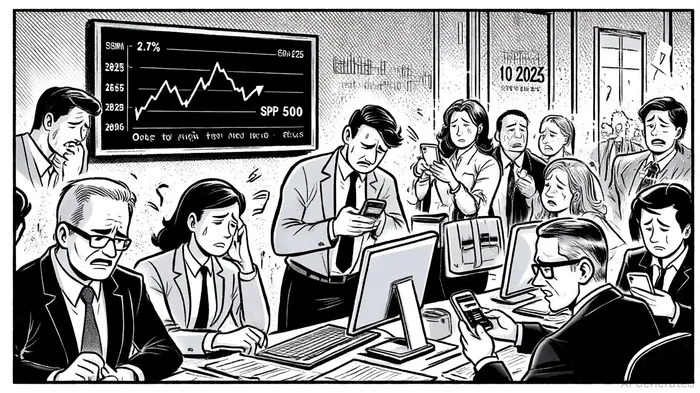







Comentarios
Aún no hay comentarios