
Navigating Market Volatility Amid Mixed U.S. Economic Signals: Strategic Positioning for 2026 Fed Rate Cuts
The U.S. economy in 2025 has been a study in contradictions. Real GDP contracted by 0.6% in the first quarter but rebounded to 3.8% in the second half of the year, driven by improved consumer spending and fiscal stimulus according to Morningstar. Meanwhile, the labor market has shown resilience-unemployment remains near 4.4%-yet job growth has slowed due to high interest rates and tighter credit conditions according to Morningstar. Inflation, though subdued in monthly readings (under 3%), has left a cumulative 25% increase over five years, exacerbating a "household recession" where consumers face stagnant wages and elevated prices according to Morningstar. These conflicting signals have left the Federal Reserve in a delicate balancing act, with 2026 poised to test its ability to navigate uncertainty while managing market expectations.
The Fed's Tightrope: Policy Signals and Diverging Forecasts
The Federal Reserve's December 2025 rate cut, which reduced the federal funds rate to 3.50%–3.75%, marked the beginning of a cautious easing cycle. However, the central bank's projections for 2026 remain measured: the median policymaker anticipates only one additional 25-basis-point cut, bringing rates to 3.25%–3.50% by year-end according to Reuters. This contrasts with external forecasts, such as Morningstar's prediction of two cuts, underscoring the divergence between the Fed's data-dependent approach and market expectations.
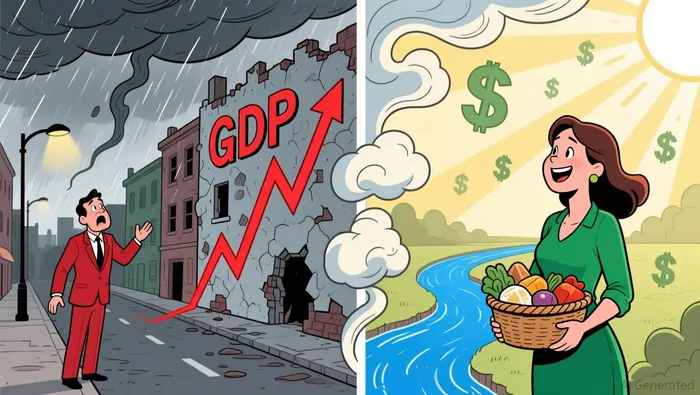 The Fed's hesitancy reflects its dual mandate challenges. While inflation has moderated, it remains above the 2% target, and the potential inflationary risks from tariffs and fiscal policies add complexity according to Morningstar. At the same time, a softening labor market-compounded by high borrowing costs-necessitates a more accommodative stance. This tension has created a "wait-and-see" environment, with the Fed likely to pause rate cuts in early 2026 to reassess inflation and employment trends.
Strategic Positioning: Fixed Income and Equity Allocation
For investors, the path forward requires agility. In fixed income, the focus should shift to short-duration instruments. Allocating to 0-3 month Treasuries or constructing bond ladders can mitigate interest rate risk while capturing near-term yields. Intermediate-duration Treasury bonds and high-yield corporate debt also offer opportunities, as the Fed's balance sheet adjustments-transitioning from quantitative tightening to modest liquidity injections-could stabilize funding markets according to US Bank. Emerging market debt and collateralized loan obligations (CLOs) further diversify risk-return profiles, though they demand careful credit analysis according to Morningstar.
Equity strategies must similarly adapt. The Fed's easing cycle is expected to benefit capital-intensive sectors like Industrials and Utilities, where lower borrowing costs enhance profitability. Defensive stocks, including real estate investment trusts (REITs) and utilities, are also well-positioned as lower rates reduce debt burdens and boost cash flows. Meanwhile, consumer sectors may gain from fiscal stimulus and tax relief, which could spur household spending according to Morgan Stanley. Morgan Stanley projects a 14% gain for the S&P 500 in 2026, driven by AI-driven productivity and accommodative monetary policy according to Morgan Stanley, but this optimism hinges on maintaining disciplined, diversified portfolios.
Managing Volatility: Discipline and Diversification
Market volatility will persist in 2026, as the Fed's data-dependent approach introduces uncertainty. PIMCO notes that the central bank may pause rate cuts in the first half of the year to evaluate inflation and labor market trends, creating short-term fluctuations. Investors should prioritize liquidity, avoid overexposure to rate-sensitive sectors during pauses, and maintain a long-term focus on fundamentals according to Nationwide.
For those seeking to hedge, tactical allocations to defensive equities and high-quality bonds can provide ballast. Citibank highlights that subtle liquidity injections by the Fed could support cyclical assets tied to natural resources, offering another layer of diversification. Ultimately, the key to navigating 2026 lies in balancing proactive positioning with disciplined risk management.
Conclusion
The U.S. economy's mixed signals and the Fed's cautious approach demand a nuanced investment strategy. By prioritizing short-duration fixed income, capitalizing on sector-specific opportunities in equities, and maintaining diversified portfolios, investors can navigate 2026's uncertainties. As the Fed inches toward a more accommodative stance, strategic positioning will be critical to capturing growth while mitigating volatility.





Comentarios
Aún no hay comentarios