
Navigating Market Turbulence: Trump-Powell Tensions and Sector Opportunities in 2026
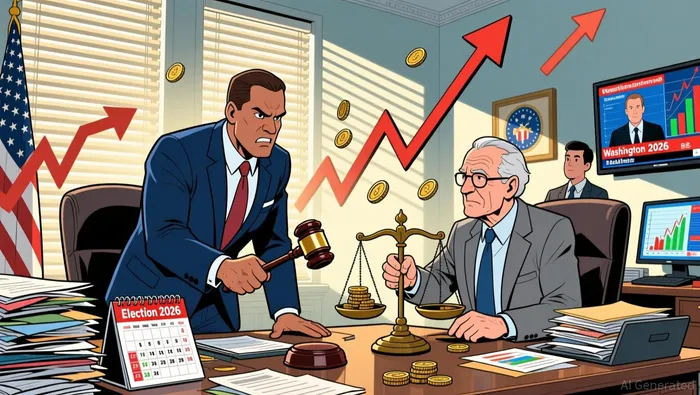
The 2026 market landscape is poised for turbulence as the escalating policy clashes between President Donald Trump and Federal Reserve Chair Jerome Powell create a volatile backdrop for investors. With Trump openly threatening to replace Powell before his term ends in May 2026 and advocating for aggressive fiscal and monetary interventions, the interplay between political ambition and central bank independence is reshaping sector dynamics. This analysis explores how these tensions are influencing market sentiment, identifies key catalysts for strategic stocks across financials, tech, and rare earths, and outlines a defensive-growth approach to capitalize on the uncertainty.
The Trump-Powell Policy Dilemma: A Double-Edged Sword
The Federal Reserve's independence has long been a cornerstone of U.S. economic policy, but Trump's public criticism of Powell-ranging from calls for rate cuts to demands for stricter financial regulations-has raised alarms about potential politicization of monetary policy. According to a report by Reuters, analysts warn that if the Fed cuts rates more aggressively than justified by economic data, it could reignite inflation, creating a "double-edged sword" for markets. Meanwhile, Trump's trade policies, including high tariffs on imports, have disrupted global supply chains and corporate margins, adding further complexity to the investment environment.
The uncertainty is palpable. As stated by J.P. Morgan Global Research, the Fed's succession timeline-Powell's term ends in May 2026-could lead to a dovish shift under a Trump-aligned successor, potentially accelerating rate cuts to 3% by mid-2026. However, such a move risks undermining inflation control, creating a tug-of-war between short-term economic stimulus and long-term stability.
Sector-Specific Catalysts: Strategic Opportunities Amid Volatility
Financials: COF and JPM in the Crosshairs
Capital One Financial (COF) faces a critical headwind as Trump's proposed 10% cap on credit card interest rates threatens to erode profit margins for major issuers. This regulatory pressure could force COFCOF-- to pivot toward alternative revenue streams, such as digital banking services, to offset declining interchange fees. Conversely, JPMorgan ChaseJPM-- (JPM) is navigating a more nuanced landscape. While its earnings remain resilient amid market volatility, the uncertainty around Fed policy-particularly the potential for abrupt rate cuts-introduces execution risk. Investors should monitor JPM's ability to balance interest rate sensitivity with its broader corporate and investment banking operations.
Tech: NFLX and NVAX in a Streaming and Biotech Rebound
Netflix (NFLX) is at a pivotal juncture as it explores a potential acquisition of Warner Bros. Discovery, a move that could redefine its dominance in the streaming wars. According to Bloomberg, this strategic shift could unlock synergies in content production and global distribution, positioning NFLX to capitalize on a dovish monetary environment that favors discretionary spending. Meanwhile, Novavax (NVAX) is attracting retail investor attention following its presentation at the JPMorganJPM-- Healthcare Conference. With its mRNA vaccine platform gaining traction in emerging markets, NVAX's growth trajectory could benefit from a weaker dollar and increased global healthcare spending.
Rare Earths: CRML and Geopolitical Leverage
Critical Metals Corp (CRML) is emerging as a key player in the rare earths sector, driven by Trump's emphasis on securing strategic resources like those in Greenland. As noted by Schwab's 2026 market outlook, geopolitical tensions and supply chain diversification efforts are fueling demand for CRML's lithium and rare earth minerals, which are critical for clean energy and defense technologies. This sector's resilience against inflation and geopolitical shocks makes it a compelling addition to a defensive-growth portfolio.
A Defensive-Growth Strategy: Balancing Risk and Reward
To navigate the Trump-Powell turbulence, investors should adopt a dual-pronged approach:
1. Defensive Positioning: Prioritize sectors with inelastic demand, such as consumer staples and utilities, which are less sensitive to rate cuts and inflationary pressures.
2. Growth Leverage: Allocate capital to high-conviction plays in tech and rare earths, where policy-driven tailwinds (e.g., AI investment, green energy mandates) could offset broader market volatility.
For example, pairing COF's exposure to regulatory risks with CRML's geopolitical tailwinds creates a diversified hedge. Similarly, NFLX's content-driven growth and NVAX's biotech innovation offer asymmetric upside in a dovish environment. JPM's earnings resilience further anchors the portfolio against sudden policy shifts.
Conclusion: Preparing for a Shifting Policy Landscape
The 2026 market will be defined by the interplay between Trump's fiscal ambitions and Powell's (or his successor's) monetary discipline. While this tension introduces near-term volatility, it also creates asymmetric opportunities for investors who can identify sector-specific catalysts. By combining defensive positioning with strategic growth allocations, investors can navigate the turbulence and position themselves to capitalize on the inevitable policy pivots ahead.





Comentarios
Aún no hay comentarios