
Navigating Market Holiday Schedules in a Volatile Climate
In an era of unprecedented economic uncertainty, the interplay between market holidays, unexpected closures, and investor behavior has become a critical area of study. While such disruptions often amplify volatility and erode confidence, they also create unique opportunities for informed investors to generate alpha. By examining historical precedents-from the 9/11 attacks to the 2020 pandemic-this analysis explores how strategic foresight and disciplined execution can transform market dislocations into profit.
The Dual Nature of Market Closures
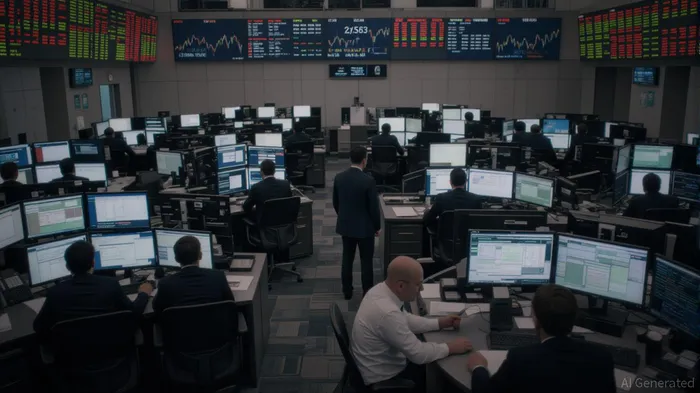 Unexpected market closures, such as the four-day shutdown of the New York Stock Exchange following the September 11, 2001, attacks, have historically triggered sharp liquidity crunches and psychological shocks.
According to a report by the Federal Reserve, the central bank's emergency interventions-emergency lending to banks, large-scale Treasury purchases, and swap lines with foreign central banks-were critical in stabilizing the financial system during this period. However, these closures also exposed vulnerabilities in market structure, such as the fragility of investor confidence and the speed at which panic can spread.
Similarly, the 2020 pandemic-induced crash saw the S&P 500 plummet by over 30% in weeks, only to rebound sharply as governments and central banks deployed unprecedented fiscal and monetary stimulus. By August 2020, the index had regained 27% of its March lows, and by November, it had surpassed pre-pandemic levels
according to analysis. This rapid recovery underscores the importance of timing and patience: investors who avoided panic selling and maintained a long-term perspective were rewarded handsomely.
Strategic Opportunities in Disruption
For informed investors, market closures and reduced sessions are not merely obstacles but catalysts for alpha generation. One such strategy involves leveraging arbitrage opportunities in leveraged financial products. During periods of high volatility, leveraged Exchange-Traded Funds (ETFs) and Exchange-Traded Notes (ETNs) often exhibit significant tracking errors and volatility drag, particularly when held beyond a single rebalancing period. For instance, technology and semiconductor indices during the 2020-2025 period displayed extreme performance patterns, while fixed-income leveraged ETFs showed more moderate but still notable decay effects
as research shows. Skilled investors who recognize these inefficiencies can exploit them through tactical short-term trades or hedging strategies.
Another avenue lies in contrarian positioning. The 2008 Global Financial Crisis, which saw major indices decline by over 50%, demonstrated the value of contrarian investing. Governments and central banks responded with bailouts and stimulus packages, creating a fertile ground for those who identified undervalued assets early.
As MSCI states, historical downturns reveal that investors who maintained diversified portfolios and focused on fundamentals-rather than succumbing to herd behavior-were better positioned to capitalize on subsequent rebounds.
Sector-Specific Dislocations and Policy Interventions
Government interventions during crises often create sector-specific dislocations that informed investors can exploit. For example, Indonesia's stock market rebounded after a 20% decline in March 2020, driven by stimulus packages and lockdown measures that disproportionately benefited certain sectors
according to research. Similarly, the 2008 crisis highlighted the role of policy in reshaping market dynamics, with bailouts in the banking sector enabling a recovery that rewarded those who anticipated regulatory shifts.
Retail investor behavior during the 2020 pandemic further illustrates the potential for alpha generation. A study published in ScienceDirect found that U.S. retail investors increased their investments by 4.7% during the first wave of the pandemic, with those personally affected by the virus investing 12% more
according to research. This heterogeneous response suggests that personal experience with crises can drive informed decision-making, particularly when combined with a disciplined approach to risk management.
The Role of Discipline and Diversification
Ultimately, the key to navigating market closures lies in discipline and diversification. Panic selling, as noted by Vaneck, locks in losses and undermines long-term recovery
according to analysis. Instead, strategies such as dollar-cost averaging-gradually re-entering the market after a downturn-can mitigate timing risks. Additionally, dynamic factor timing and tactical allocations to momentum, quality, and value factors can enhance returns during volatile periods by adapting to shifting economic regimes
as research shows.
Conclusion
Market closures and reduced sessions, while disruptive, are not insurmountable. By studying historical precedents and adopting strategies that prioritize liquidity, diversification, and active management, investors can transform uncertainty into opportunity. As the 2020 pandemic and 9/11 crisis demonstrate, the markets' resilience often rewards those who remain informed, patient, and adaptable. In a volatile climate, the ability to navigate market holiday schedules is not just a skill-it is a necessity.







Comentarios
Aún no hay comentarios