
Navigating Legal and Reputational Risks in PEP-Linked Investments: A 2025 Investor Due Diligence Guide
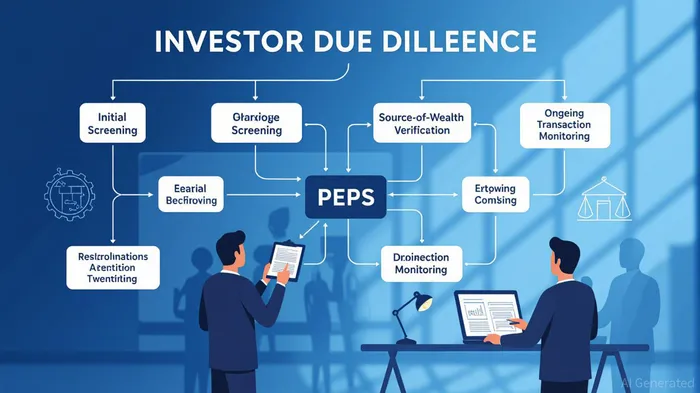
In 2025, the global financial landscape remains under intense scrutiny as regulators and investors grapple with the persistent risks posed by politically exposed persons (PEPs). These individuals—public officials, their families, or close associates—carry unique legal and reputational hazards due to their access to public resources and political influence. Recent enforcement actions and high-profile scandals underscore the critical need for investors to adopt rigorous due diligence frameworks when engaging with PEP-linked ventures.
The Escalating Enforcement Landscape
Regulatory bodies have intensified their focus on PEP-related misconduct. In 2024 alone, the U.S. Securities and Exchange Commission (SEC) filed 583 enforcement actions, imposing record-breaking penalties totaling $8.2 billion, with a significant portion tied to PEP-related violations [1]. Similarly, European banks faced multimillion-euro fines in 2023 for failing to identify PEPs laundering funds through shellSHEL-- companies and secretive trusts [2]. These cases highlight the global scale of PEP risks and the consequences of inadequate compliance measures.
The 1MDB scandal in Malaysia, involving former Prime Minister Najib Razak, exemplifies the catastrophic fallout of PEP exploitation. Billions were siphoned through offshore entities, exposing systemic weaknesses in due diligence processes [4]. Such cases have prompted regulators like the Financial Action Task Force (FATF) to mandate enhanced due diligence (EDD) for PEPs, emphasizing source-of-wealth investigations and ongoing transaction monitoring [5].
Investor Due Diligence: Beyond Compliance
For investors, the stakes extend beyond regulatory compliance to reputational and financial stability. A 2025 enforcement action against RTX CorporationRTX-- (formerly Raytheon) revealed how PEP-linked bribery schemes can erode trust and incur massive penalties. The company settled for $950 million after allegations of bribing a Qatari military official to secure defense contracts [6]. This underscores the reputational damage and operational disruptions that accompany PEP-related misconduct.
Investors must adopt a risk-based approach, integrating EDD into their due diligence protocols. Key steps include:
1. Initial Screening: Verify PEP status using updated databases and public records.
2. Source-of-Wealth Analysis: Scrutinize the origins of assets and transactions to detect inconsistencies.
3. Ongoing Monitoring: Implement real-time transaction tracking to flag suspicious activities.
Technological advancements, such as AI-driven compliance tools, are reshaping risk management. These systems automate PEP identification and suspicious activity detection, addressing limitations in manual screening [5]. However, challenges persist in jurisdictions with opaque financial systems, where PEPs may exploit regulatory gaps [3].
Regulatory Evolution and Investor Preparedness
The EU's 6th Anti-Money Laundering Directive (6th AMLD) now classifies both domestic and foreign PEPs as high-risk, requiring stricter due diligence [2]. Similarly, the UK's Financial Conduct Authority (FCA) has revised its guidelines to emphasize proportionality and clarity in PEP risk assessments [4]. Investors must align their strategies with these evolving standards to avoid penalties and reputational harm.
In 2025, the financial sector's reliance on third-party service providers has also drawn regulatory attention. Institutions penalized for inadequate oversight of fintech partners highlight the need for investors to audit not only direct PEP relationships but also indirect exposures through intermediaries [3].
Conclusion
As enforcement actions intensify and regulatory frameworks evolve, investors must prioritize PEP risk management as a cornerstone of due diligence. The integration of advanced technologies, continuous staff training, and alignment with international standards are no longer optional but imperative. Failure to do so risks not only legal penalties but also long-term reputational damage in an era where transparency is non-negotiable.







Comentarios
Aún no hay comentarios