
Navigating Legal and Media Volatility in Political Influencer Markets: Equity Risks and Opportunities in a Shifting Landscape
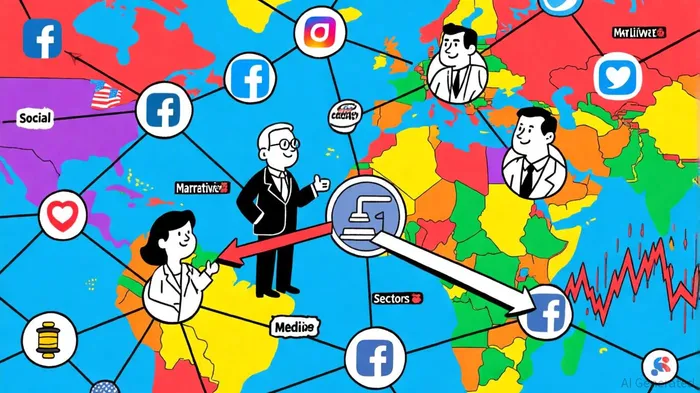
The convergence of legal, media, and political influencer ecosystems has created a volatile yet fertile ground for equity market analysis. As political influencers increasingly act as intermediaries between public opinion and policy, their narratives—amplified by algorithmic media ecosystems—have become critical drivers of investor sentiment and sectoral performance. This article examines the risks and opportunities emerging from this intersection, drawing on recent case studies and market trends.
The Rise of Political Influencers and Media Amplification
Political influencers now wield unprecedented power to shape public discourse, particularly among younger demographics. Their ability to blend personal branding with political messaging has blurred traditional boundaries between entertainment, advocacy, and policy analysis [1]. For instance, during the 2024 global election cycle, over 60 nations experienced political shifts that disrupted international relationships and policy stability, directly impacting equity markets [1]. Media coverage of these events further amplified volatility, as framing effects influenced investor confidence and risk appetite [2].
The re-election of Donald J. Trump in 2024 exemplifies this dynamic. His announced tariffs on global imports, including Australian goods, triggered immediate market turbulence, with the ASX 200 losing $50 billion in value before partial recovery [4]. Such events underscore how political influencer-driven narratives—when amplified by media—can rapidly translate into sectoral shocks. Energy and agriculture, for example, faced dual pressures from policy uncertainty and trade disruptions, while defense and traditional energy stocks saw renewed interest amid calls for deregulation [6].
Legal Challenges and Shareholder Activism
Legal frameworks governing political influencer activities remain inconsistent, creating an "information black market" where partisan agendas thrive [4]. This has coincided with a surge in shareholder activism, as dissident investors leverage proxy votes to reshape corporate governance. In 2025, activists like Elliott Investment Management and Mantle Ridge LP successfully pushed for board changes at firms such as Starbucks and Twilio, illustrating how political and legal volatility can intersect with corporate strategy [3].
The legal sector itself has experienced shifts, with transactional practices slowing in early 2025 due to political uncertainty. Firms specializing in litigation and labor law, however, saw growth as clients sought protection from anticipated regulatory changes [2]. This duality—where some legal practices flourish while others contract—reflects broader market fragmentation driven by political influencer ecosystems.
Sector-Specific Impacts and Equity Volatility
Equity markets have exhibited stark divergences in response to political influencer activities. The 2024 U.S. presidential election, for example, triggered a 100-year high one-day gain in the S&P 500 as Trump's victory signaled pro-business policies [3]. Energy and industrial sectors surged, while European and Asian markets faced negative abnormal returns due to trade war fears [1]. The VIX index plummeted post-election, but the Economic Policy Uncertainty (EPU) index rose, highlighting lingering concerns over tariffs and immigration policies [3].
Defense contractors like Lockheed Martin (LMT) have faced mixed signals. While a $176 billion backlog suggests long-term resilience, regulatory scrutiny under Trump and criticism from figures like Elon Musk have caused intraday volatility, including a 9.17% single-day drop in early 2025 [5]. Conversely, companies like Starbucks have seen modest gains, with first-quarter 2025 earnings exceeding expectations despite broader political headwinds [5].
Starbucks (SBUX) and Twilio (TWLO) offer instructive case studies in navigating earnings-driven momentum amid political noise. Historical backtests reveal that SBUX's price tends to show a cumulative abnormal return of approximately +4% over 30 days following earnings beats, with gains plateauing after two weeks [5]. For TWLO, the cumulative abnormal return reaches ~+11% by day 30, though with wider confidence bands and muted single-day reactions due to higher volatility. These patterns suggest that while immediate post-earnings pops are elusive for both stocks, patient strategies—coupled with disciplined profit-taking for SBUX and tighter risk controls for TWLO—can capture medium-term drift.
Strategic Implications for Investors
Investors must navigate this landscape with a dual focus on short-term volatility and long-term structural shifts. Historical data suggests that staying invested during election cycles often outperforms cash strategies, as markets tend to normalize within a month post-election [4]. However, sectoral rotations—such as the shift from growth to value stocks during Trump's re-election campaign—highlight the need for agile asset allocation [5].
For defense and energy sectors, geopolitical risks and policy changes necessitate rigorous due diligence. Conversely, technology and healthcare firms may face regulatory headwinds if activist agendas prioritize short-term gains over innovation. Investors should also monitor legal influencer activities, as misinformation risks could distort sector valuations, particularly in markets with weak press freedoms [4].
Conclusion
The interplay of legal, media, and political influencer dynamics presents both challenges and opportunities. While volatility is inevitable, disciplined strategies—rooted in diversification, sectoral analysis, and long-term horizons—can mitigate risks. As the 2025 proxy season unfolds and global elections continue to reshape policy landscapes, investors must remain attuned to the narratives driving markets, not just the policies themselves.







Comentarios
Aún no hay comentarios