
Navigating La Niña's Uncertain Emergence: Strategic Positioning in Commodity Markets Amid Climate Volatility
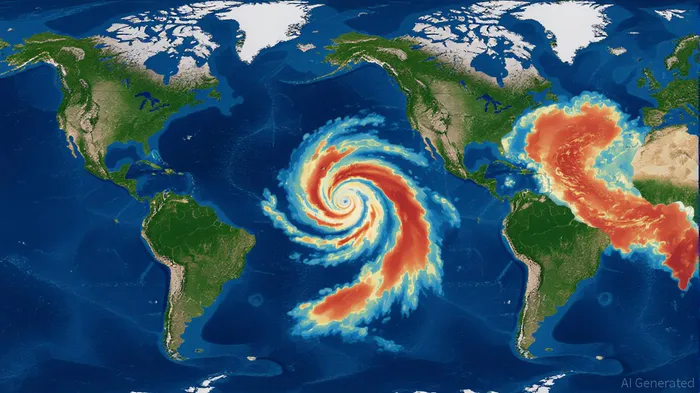
As of August 2025, the tropical Pacific remains in a state of ENSO-neutral conditions, with a 56% probability of persisting through the late Northern Hemisphere summer. However, the Climate Prediction Center (CPC) and the International Research Institute for Climate and Society (IRI) warn of a growing likelihood of La Niña development by late fall and winter 2025–26. While current subsurface temperatures and atmospheric indicators suggest a weak transition, the "spring predictability barrier" introduces uncertainty into long-term forecasts. For investors, this ambiguity demands a nuanced approach to positioning in agricultural and energy sectors, where La Niña's climatic fingerprints historically drive sharp price swings and supply chain disruptions.
Agricultural Sector: Regional Divergence and Price Volatility
La Niña's hallmark is its polarizing impact on global weather patterns. In the agricultural space, this translates to stark regional contrasts. For instance, Southeast Asia, Australia, and parts of South America are likely to see increased rainfall, boosting rice, soybean, and wheat production. Brazil's southern regions could benefit from favorable conditions for corn and soybeans, while northern Brazil may face coffee yield risks. Conversely, the U.S. Midwest and southern states could experience drier conditions, threatening winter wheat and cotton crops.
Investors should consider hedging against these divergences by diversifying portfolios across geographies. For example, long positions in Brazilian soybean futures could be balanced with short exposure to U.S. wheat contracts. Additionally, companies with climate-resilient supply chains—such as those leveraging AI-driven crop analytics or vertical farming—may outperform in volatile markets.
Energy Sector: Hurricanes, Demand Shifts, and Infrastructure Risks
The energy sector faces dual threats from La Niña: heightened hurricane activity in the Atlantic and shifting temperature-driven demand. The Gulf of Mexico, a critical hub for U.S. oil and gas production, is particularly vulnerable. A single major storm could disrupt 15% of U.S. crude output and delay refining operations, sending ripples through global energy prices.
Winter heating demand in North America and Asia may also surge due to colder-than-average temperatures, straining natural gas and thermal coal supplies. Investors should monitor infrastructure resilience in energy-producing regions and consider utilities with diversified generation portfolios (e.g., renewables paired with natural gas).
Metals and Mining: Floods, Droughts, and Logistical Bottlenecks
Mining operations in Southeast Asia, Australia, and South America are at risk of operational halts due to heavy rainfall and cyclones. Australia's coal and iron ore exports, for instance, could face delays similar to those seen during the 2020–2023 La Niña period. Conversely, Chile's copper sector may suffer from prolonged droughts, exacerbating water scarcity and slowing production.
Investors should prioritize companies with robust contingency planning, such as those investing in water recycling technologies or logistics diversification. Additionally, the rise of battery metals (e.g., nickel, lithium) amid the energy transition could offset some of these risks, particularly if La Niña-driven disruptions in traditional metals create supply gaps.
Strategic Recommendations: Balancing Risk and Opportunity
- Agricultural Futures and ETFs: Allocate capital to sector-specific ETFs like the InvescoIVZ-- Agriculture ETF (CROP) or individual futures contracts in crops with strong regional outlooks (e.g., Brazilian soybeans).
- Energy Infrastructure Resilience: Invest in energy firms with hurricane-resistant infrastructure or diversified generation assets. Consider utilities like NextEra EnergyNEE-- (NEE) or independent oil producers with Gulf Coast contingency plans.
- Climate-Resilient Mining Stocks: Target mining companies with advanced water management systems or diversified geographic exposure, such as BHP GroupBHP-- (BHP) or Rio TintoRIO-- (RIO).
- Weather Derivatives: Use weather-linked insurance products to hedge against extreme event risks, particularly for physical commodity holdings.
Conclusion: Preparing for a Climate-Driven Future
La Niña's uncertain emergence underscores the need for agility in commodity investing. While the CPC and IRI forecasts suggest a weak-to-moderate event by winter 2025–26, the interplay of atmospheric and oceanic signals remains complex. By prioritizing diversification, leveraging real-time climate data, and hedging against regional vulnerabilities, investors can navigate the volatility and capitalize on emerging opportunities in a climate-uncertain world.





Comentarios
Aún no hay comentarios