
Navigating India's IT Sector Underperformance: Strategic Hedging and Sector Rotation in 2025
India's IT sector, once a cornerstone of the nation's economic growth, is grappling with a confluence of challenges in 2025. A 7% decline in hiring across major firms, according to a Reuters report, coupled with tepid global demand and the disruptive rise of AI-driven automation, has created a perfect storm of underperformance. While the sector is projected to reach $350 billion in revenue by 2026, per an IBEF projection, near-term headwinds-including U.S. fiscal tightening, geopolitical uncertainties, and intensifying competition from Vietnam and the Philippines, according to an Upstox analysis-demand a recalibration of investment strategies. For investors, the path forward lies in strategic hedging and sector rotation, leveraging both defensive positioning and growth opportunities in adjacent markets.
The Dual Pressures on India's IT Sector
Global demand for traditional IT services has softened as clients prioritize cost optimization amid economic volatility. The Reuters report expects Indian IT majors to post single-digit revenue growth in Q3 2025, with TCS's revenue growth projected at a mere 2% year-on-year. Meanwhile, AI and automation are reshaping the sector's value proposition, according to a NASSCOM strategic review. While these technologies promise efficiency gains, they also reduce reliance on human labor, exacerbating attrition concerns and forcing firms to re-skill workforces.
Compounding these issues is the rise of competing IT hubs. Vietnam and the Philippines, with their lower labor costs and improving infrastructure, are siphoning market share from India, as noted by the Upstox analysis. A NASSCOM survey reveals that 82% of CXOs plan to increase digital spend by 5% or more in 2025, but this growth is unevenly distributed, favoring firms with AI-native capabilities over traditional outsourcing players.
Strategic Hedging: Mitigating Currency and Operational Risks
For Indian IT firms, foreign exchange volatility remains a critical risk. Over 66% of their revenue is dollar-denominated, according to a SlideShare analysis, and the rupee's depreciation-while boosting short-term earnings-introduces uncertainty in cost management. Hedging frameworks, including forwards, swaps, and options, are essential to stabilize cash flows. The SlideShare analysis emphasizes the need for dynamic pricing models and flexible cost structures to counteract currency swings.
Operational hedging is equally vital. As shorter deal cycles and modular contracts become the norm, firms must prioritize AI-driven efficiency. For instance, leveraging agentic AI to automate repetitive tasks can reduce labor dependency while maintaining service quality, as highlighted in the NASSCOM review. However, monetizing AI remains a hurdle, as it contributes less than 1% of total revenue for most IT firms, according to a LinkedIn piece. Investors should favor companies demonstrating clear pathways to scale AI-driven solutions, such as domain-specific co-innovation or "Services-as-Software" models, per the NASSCOM review.
Sector Rotation: Balancing Defensive and Growth Sectors
Amid IT sector volatility, sector rotation offers a tactical edge. Defensive sectors like healthcare and infrastructure have outperformed in 2025, driven by consistent demand and government-led initiatives. The healthcare sector, valued at $638 billion, and infrastructure-projected to grow at 8% CAGR through 2030-are detailed in an IndustryWired report. The healthcare gains are supported by Ayushmann Bharat and rising health insurance penetration, while infrastructure is buoyed by the National Infrastructure Pipeline and PM Gati Shakti.
For investors, rotating into these sectors during macroeconomic downturns aligns with historical patterns. Institutional flows into IT have been mixed in 2025, with foreign institutional investors (FIIs) withdrawing in the first half before a modest recovery, according to the Upstox analysis. In contrast, infrastructure and healthcare have attracted steady inflows, reflecting their resilience to cyclical shocks.
However, IT is not without its bright spots. The BFSI sector in North America has shown traction, with AI-led deals driving growth, as noted in an HFS Research note. Investors with a longer-term horizon may selectively overweight IT sub-sectors-such as cybersecurity or cloud-native solutions-that align with global digital transformation trends, per the NASSCOM review.
Expert Recommendations: Navigating the Crossroads
HFS Research underscores the need for Indian IT firms to transition from cost arbitrage to value creation. This includes adopting modular, outcome-based contracts and investing in domain-specific AI expertise. For investors, diversification is key: balancing IT exposure with allocations to healthcare and infrastructure can mitigate sector-specific risks while capturing growth in resilient markets, as discussed in the IndustryWired report.
Moreover, the sector's reliance on H-1B visas remains a vulnerability. Proposed U.S. visa fee hikes could reduce IT earnings by 4–13%, according to the LinkedIn piece, prompting firms to explore nearshoring or onshore Global Capability Centers (GCCs) as alternatives. Investors should monitor regulatory shifts in the U.S. and India's domestic policy responses, such as the PLI Scheme for IT hardware, referenced in the NASSCOM review.
Conclusion
India's IT sector stands at a crossroads, with near-term underperformance driven by macroeconomic headwinds and technological disruption. Yet, the sector's long-term potential-anchored by AI adoption and a $350 billion revenue target by 2026, noted in the IBEF projection-remains intact. For investors, the key lies in strategic hedging against currency and operational risks while rotating into defensive sectors like healthcare and infrastructure. By aligning portfolios with both resilience and innovation, investors can navigate the current turbulence and position for future growth.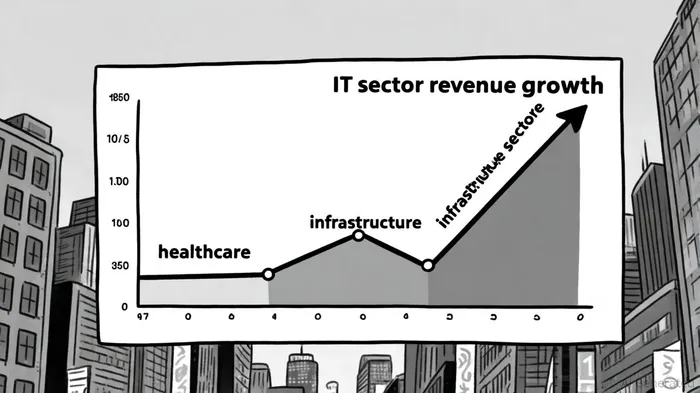







Comentarios
Aún no hay comentarios