
Navigating Housing Market Distress: The Rise of Alternative Real Estate as a Strategic Hedge
The U.S. housing market has entered a period of structural recalibration, marked by regional price declines, surging inventory levels, and persistent affordability challenges. By Q2 2025, 29 of the 100 largest metro areas recorded annual home price declines, with Sunbelt markets like Cape Coral (down 7.8%) and San Francisco (down 3.7%) leading the downturn, according to a Harvard JCHS blog. Elevated mortgage rates and a "lock-in" effect-where homeowners cling to low existing rates-have further stifled mobility, leaving sellers increasingly reliant on price reductions to attract buyers, per a housing.info analysis. Against this backdrop, investors are pivoting toward alternative real estate assets to hedge against traditional market risks.
The Case for Alternative Real Estate: Structural Tailwinds and Resilience
Alternative real estate sectors, including senior housing, data centers, and life sciences facilities, have emerged as robust countercyclical investments. These assets thrive on long-term demographic and technological megatrends, offering stable cash flows and diversification benefits.
Senior Housing: Aging Demographics as a Catalyst
The aging U.S. population-projected to grow by 36% among those aged 80+ over the next decade-has fueled a surge in demand for senior living communities, as noted in an Ansarada report. In 2024, U.S. senior housing and care property sales reached $13.2 billion, a 21% increase from 2023, driven by limited supply and high occupancy rates, the report added. REITs like American HealthcareAHR-- REIT Inc (AHR) have outperformed, delivering 60.59% one-year returns in 2025, according to NerdWallet, as operators capitalize on rising healthcare needs and inflation-linked rent growth.
Data Centers: The AI-Driven Infrastructure Boom
The insatiable demand for AI and digital infrastructure has transformed data centers into a high-conviction sector. North American vacancy rates for hyperscale facilities remain near 1%, with firms like Principal Asset Management raising $3.6 billion in 2025 to develop next-generation infrastructure, per a ULI article. These assets benefit from long-term leases with tech giants and are insulated from traditional real estate cycles, making them a compelling hedge against office and retail sector declines, the article notes.
Traditional vs. Alternative: A Stark Performance Divergence
While alternative real estate thrives, traditional sectors face existential headwinds. The U.S. office market, for instance, has been battered by hybrid work models, with national vacancy rates hitting 19.6% in Q1 2025-22.65% in San Francisco, according to Kaplan statistics. Retail and industrial sectors, though showing some resilience, remain vulnerable to e-commerce shifts and rising construction costs.
In contrast, alternative assets have demonstrated uncorrelated performance. Life sciences real estate, for example, has seen average annual rent growth exceed 10% for four consecutive years, outpacing traditional sectors, per CBRE data. Similarly, self-storage and student housing have maintained occupancy rates above 95%, leveraging demographic trends and flexible usage models, according to a CFA Institute overview.
Strategic Allocation: Diversification and Inflation Hedging
Alternative real estate's appeal lies in its ability to diversify portfolios and mitigate volatility. A 2025 investor survey from JLL found 78% of respondents plan to increase exposure to seniors housing and data centers, citing their alignment with inflationary pressures and long-term care needs. Crowdfunding platforms have further democratized access, with a 38% volume surge in 2025 as retail investors seek niche opportunities, according to CoinLaw data.
Conclusion: A New Paradigm for Real Estate Investment
As housing market distress intensifies, the shift toward alternative real estate is not merely a tactical adjustment but a strategic reorientation. Sectors anchored to demographic inevitabilities and technological progress-such as senior housing and data centers-offer a resilient counterbalance to traditional market fragilities. For investors, the lesson is clear: diversifying into these alternative assets is no longer optional but essential in an era of prolonged uncertainty.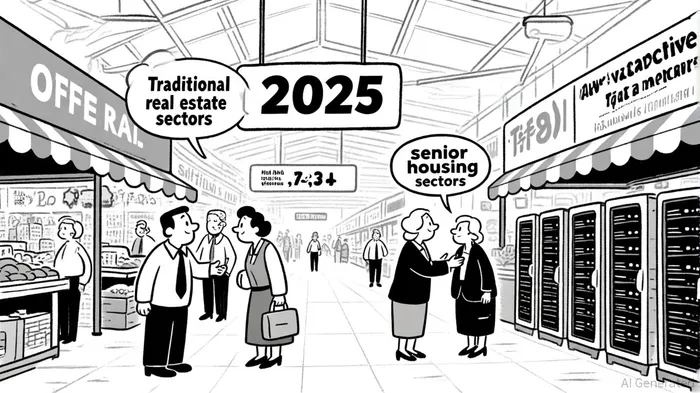





Comentarios
Aún no hay comentarios