
Navigating the Holiday-Shortened Week: Implications of Q3 GDP, Consumer Confidence, and Jobless Claims on 2026 Rate-Cutting Expectations
The holiday-shortened week of late 2025 has brought into sharp focus the interplay between delayed economic data, fragile labor indicators, and the Federal Reserve's evolving policy calculus. As markets await the December 23, 2025, release of the preliminary Q3 GDP estimate-a report long overdue due to the 43-day federal government shutdown-the broader economic narrative is shaped by a mix of resilience and vulnerability. This analysis examines how the confluence of Q3 GDP expectations, a sharp decline in consumer confidence, and persistent jobless claims may accelerate Fed easing in 2026 and reshape portfolio allocations.
Q3 GDP: A Benchmark Amid Uncertainty
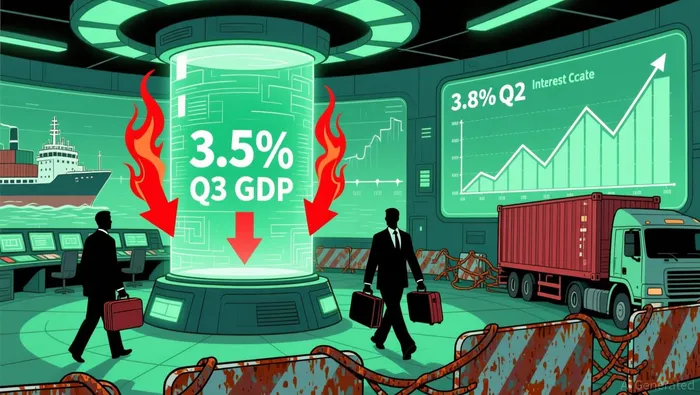 The Atlanta Fed's GDPNow model projects Q3 2025 GDP growth at 3.5%, a figure that, if confirmed, would signal continued economic resilience despite headwinds from federal job cuts and tariff-driven disruptions. However, this estimate must be contextualized against the Q2 rebound of 3.8%, which was fueled by a decline in imports and a surge in consumer spending but offset by weak investment and exports according to the BEA. A Q3 reading above 3.0% could reinforce the notion that the neutral interest rate is higher than previously estimated, potentially delaying rate cuts in 2026. Conversely, a weaker-than-expected result might compel the Fed to adopt a more aggressive easing stance to counteract inflationary pressures from tariffs or a deflating AI boom as research indicates.
Consumer Confidence: A Harbinger of Recessionary Sentiment
The November 2025 Consumer Confidence Index, at 88.7, reflects a 6.8-point drop from October, with the Expectations Index falling to 63.2-the lowest since April 2025 according to the Conference Board. This decline underscores growing pessimism about jobs, incomes, and business conditions, exacerbated by the government shutdown and inflationary concerns. The "lipstick effect" is evident, with consumers prioritizing modest splurges in beauty and dining while cutting back on big-ticket items. Such behavior signals a shift toward defensive spending, which could pressure the Fed to act preemptively to stabilize demand.
Jobless Claims: Labor Market Resilience Under Strain
While the labor market has shown resilience-with Q2 average payroll growth of 150,000 per month and an unemployment rate averaging 4.1% according to Treasury-jobless claims remain elevated. Initial claims rose to 232,000 in October 2025, influenced by the federal shutdown's impact on government employment. Additionally, tariff policies are projected to cost 100,000 jobs in Q2 alone, compounding the 12,000 federal job losses in Q1 according to Geographic Solutions. These trends highlight a labor market under structural stress, which could force the Fed to prioritize employment over inflation in its dual mandate.
The Fed's Dilemma: Balancing Growth and Inflation
The Fed's December 2025 rate cut-a quarter-point reduction-reflects its acknowledgment of these challenges. However, its official forecast for one rate cut in 2026 contrasts with external analysts' expectations of two cuts as research indicates. The Q3 GDP data, coupled with weak labor indicators and consumer pessimism, may push the Fed toward a more dovish stance. J.P. Morgan Global Research notes a 35% probability of a U.S. and global recession in 2026, underscoring the fragility of the current environment. A "wait-and-see" approach is likely, but delayed data and deteriorating indicators could erode patience, accelerating easing.
Sector Implications and Portfolio Adjustments
Investors should consider reallocating toward sectors poised to benefit from monetary easing. Consumer discretionary and technology-particularly AI-driven industries-remain attractive, given their sensitivity to lower borrowing costs and innovation cycles according to J.P. Morgan. Defensive sectors like healthcare and utilities may also gain traction amid recessionary risks. Conversely, sectors reliant on export growth or capital-intensive investment (e.g., manufacturing) could face headwinds from tariffs and a weaker dollar.
Conclusion
The delayed Q3 GDP data and weak labor indicators paint a picture of an economy at a crossroads. While the Fed's cautious approach persists, the risk of accelerated rate cuts in 2026 cannot be ignored. Investors must remain agile, favoring sectors aligned with monetary easing and defensive positioning. As the December 23 GDP release approaches, the data will serve as a critical litmus test for the Fed's next move-and for the broader market's trajectory in 2026.







Comentarios
Aún no hay comentarios