
Navigating Holiday Retail Volatility: Operational Adaptability and Customer Retention in Regional Grocery Chains
The holiday season has long been a make-or-break period for retailers, but for regional grocery chains, the stakes are higher than ever. In 2023–2025, shifting consumer behavior, economic pressures, and supply chain challenges have forced these chains to rethink their operational strategies and customer retention tactics. As major players like KrogerKR-- and Aldi demonstrate, success hinges on agility, technology integration, and a deep understanding of local markets.
The Shifting Holiday Shopping Landscape
Consumer behavior during the holiday season has undergone a seismic shift.
According to a report by Logile, two-thirds of shoppers began their holiday shopping before Black Friday in 2025, front-loading demand into September and October. This trend has compelled regional grocers to adjust staffing and inventory planning earlier than traditional peak periods. For instance,
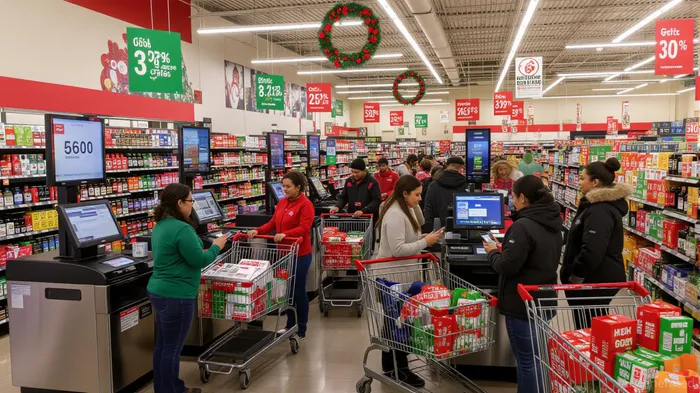
68% of retailers reported higher operating costs due to labor constraints and elevated workload pressures during the holiday rush. To mitigate these challenges, many chains have turned to automation and self-checkout systems,
reducing reliance on seasonal hiring while improving efficiency.
Kroger, a dominant force in the U.S. grocery market, exemplifies this adaptability. Its regional banners, such as Food 4 Less and King Soopers,
maintained steady foot traffic in 2024 despite inflationary pressures, showcasing the value of localized service and regional customization. Meanwhile, Aldi's lean operational model-focusing on private-label products and streamlined inventory-has enabled it to offer consistent pricing, a critical factor for price-sensitive holiday shoppers
according to industry analysis.
Operational Adaptability Through Technology
Regional grocers are increasingly leveraging technology to navigate volatility.
Kroger's use of digital tools like DXPro, which provides real-time visibility into online order fulfillment and staffing capabilities, has been pivotal in maintaining profitability during peak seasons. Similarly, Aldi's hybrid sourcing model-combining centralized global logistics with localized distribution-
ensures flexibility in responding to regional demand fluctuations.
Automation is another cornerstone of operational resilience. Walmart's AI-driven inventory management, which dynamically reroutes shipments during disruptions, offers a blueprint for smaller chains
according to case studies. For example, regional grocers can use predictive analytics to adjust stock levels for seasonal items,
avoiding overstocking while meeting surges in demand for essentials like groceries, baby supplies, and pet care products.
Omnichannel Integration and Customer Retention
Omnichannel strategies have become a lifeline for regional chains competing with national giants. By offering seamless Buy Online, Pick Up In Store (BOPIS) options and real-time inventory visibility, grocers enhance the customer experience.
Carrefour's omnichannel approach, which boosted online conversions by 30%, underscores the potential of these strategies. Regional chains are also leveraging localized promotions and community engagement to differentiate themselves. For instance,
Advent calendars with curated seasonal products and QR code-based subscription models have proven effective in driving early holiday engagement.
Customer retention during the holidays hinges on value-driven messaging. With 77% of consumers expecting tariffs to increase prices, grocers emphasize transparent pricing and loyalty programs
according to retail data. Kroger's "Our Brands" private-label portfolio, generating over $31 billion annually,
offers competitive pricing while expanding profit margins. Aldi's focus on private-label products, rated equal to or better than national brands, further reinforces customer trust
according to industry reports.
Case Studies: Kroger and Aldi in Action
Kroger's 2025 holiday strategy highlights its operational adaptability. The company plans to hire 18,000 associates-a 28% reduction from 2024-focusing on customer-facing roles like cashiers and deli clerks
according to financial reports. This cautious approach reflects broader retail trends, including labor market softness and a shift toward cost efficiency. Despite reduced hiring, Kroger's regional banners have maintained steady visitation,
demonstrating the effectiveness of localized service and wage incentives in retaining staff.
Aldi's expansion into urban and underserved areas in 2025 underscores its customer retention focus. By opening 225 new stores and leveraging its streamlined product assortment, Aldi captures price-sensitive shoppers while maintaining consistent inventory turnover
according to market analysis. Its Loxley, Alabama distribution center further supports regional agility, ensuring timely restocking during peak demand
according to company disclosures.
Conclusion: The Path Forward
For regional grocery chains, the 2023–2025 holiday seasons have underscored the importance of operational adaptability and customer-centric strategies. By embracing automation, omnichannel integration, and localized promotions, these chains can compete with larger rivals while addressing the evolving needs of holiday shoppers. As economic uncertainties persist, the ability to balance cost efficiency with service quality will remain a critical determinant of success.







Comentarios
Aún no hay comentarios