
Navigating Holiday Market Closures: Strategic Positioning for the Santa Claus Rally
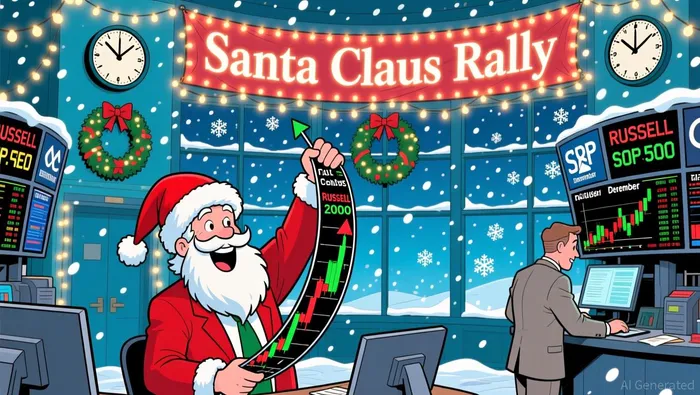
The Santa Claus Rally, a well-documented seasonal phenomenon in global equity markets, has historically delivered robust returns during the last five trading days of December and the first two of January. According to a report by Bloomberg, the S&P 500 has averaged a 1.3% gain during this seven-day window since 1950, with positive outcomes occurring in 79% of years. However, the 2024 holiday season marked a rare exception, as the index declined by 2.4% in December, underscoring the need for strategic positioning amid evolving macroeconomic dynamics. As 2025 approaches, investors must balance historical patterns with contemporary challenges such as liquidity constraints, tax considerations, and sector-specific momentum to capitalize on year-end opportunities.
Leveraging Early Closures and Limited Liquidity
Holiday market closures and reduced trading volumes create unique conditions that can be exploited with disciplined execution strategies. Data from Russell Investments highlights that December liquidity tends to thin significantly, leading to wider spreads, slower execution, and higher trading costs, particularly in fixed income and foreign exchange markets. To mitigate these risks, investors should adjust their timing: executing major trades before mid-December or delaying them until early January may yield better outcomes.
For those seeking to participate in the Santa Claus Rally, smaller position sizes and tighter stop-loss levels are advisable to manage volatility in thin markets. Additionally, favoring continuation patterns over mean reversion strategies aligns with December's momentum-driven environment. For example, the Russell 2000 index, which tracks small-cap stocks, has historically outperformed during this period due to its high beta and sensitivity to capital flows.
Tax-Loss Harvesting and Portfolio Adjustments
Year-end portfolio reviews present a critical opportunity for tax-loss harvesting, a strategy that involves selling underperforming assets to offset capital gains and reduce tax liability. Even in strong markets, diversified portfolios often contain positions that have lagged due to sector rotation or valuation resets. By systematically identifying and liquidating these holdings, investors can enhance tax efficiency without compromising long-term goals.
Institutional investors also engage in "window dressing," rebalancing portfolios to align with new index criteria or ESG standards. This activity can drive sector rotations, particularly in areas like technology and clean energy, which have shown year-to-date strength in 2025. However, the 2025 window dressing effect may be weaker than in prior years due to reduced activity in tax-saving funds and cautious sentiment. Investors should monitor these shifts to avoid overexposure to sectors facing regulatory or valuation headwinds.
Sector-Specific Timing and Positioning
Historical data and 2025 market dynamics suggest that certain sectors are more likely to benefit from the Santa Claus Rally. Technology, especially AI infrastructure and "Magnificent Seven" stocks, remains a focal point due to durable growth narratives and strong inflows. The Roundhill Magnificent Seven ETF (MAGS) has already demonstrated upward momentum, reflecting this trend.
The metals and mining sector has also gained traction, driven by rising demand and safe-haven flows. Similarly, the airline and defense sectors are poised to outperform, with the U.S. Global Jets ETF (JETS) and iShares U.S. Aerospace & Defense ETF (ITA) showing gains amid heightened travel demand and geopolitical tensions. Small-cap and economically sensitive sectors, such as transportation and financials, have historically strengthened in December, making them attractive candidates for year-end positioning.
Execution Strategies for Thin Markets
In low-liquidity environments, order types and execution timing become critical.
Traders should also avoid sympathy plays-positions taken based on sectoral correlations rather than fundamentals-to reduce exposure to sudden reversals. The 2025 Santa Claus Rally window (24 December 2025 to 3 January 2026) is shaped by macroeconomic tailwinds, including cooling inflation and anticipated Federal Reserve rate cuts. However, risks such as trade tensions and geopolitical shocks could disrupt the pattern. A "Jan 2" reversal, where institutional investors return to full capacity and initiate profit-taking, remains a potential headwind.
Conclusion
While the Santa Claus Rally is not guaranteed, its historical prevalence and 2025's favorable macroeconomic backdrop make it a compelling focal point for strategic positioning. By combining tax-loss harvesting, sector rotations, and liquidity-aware execution strategies, investors can optimize their exposure to year-end momentum. As always, discipline and adaptability are key-balancing historical insights with real-time market conditions will determine success in navigating the holiday trading window.







Comentarios
Aún no hay comentarios