
Navigating Holiday Debt: Strategic Recovery and Credit Score Optimization in 2025
The holiday season, while a time of celebration, often leaves a financial footprint that can linger well into the new year. Recent data reveals a troubling trend: U.S. , with many expecting to take three months or longer to repay these balances at high interest rates. , late-stage delinquencies rose, particularly among households with tighter budgets. For investors and individuals alike, the post-holiday period presents a critical window to implement strategic debt recovery and credit score improvement initiatives.
The Dual Impact of Holiday Spending on Credit Health
Holiday spending in 2023-2025 has revealed stark generational and income-based divides. Gen Z consumers, for instance, in holiday spending compared to 2023, driven by economic uncertainty and rising healthcare costs. Yet, paradoxically, splurged on luxury categories like beauty and fashion. Meanwhile, high-income earners ($100,000+ annual income) tightened their budgets, . These divergent behaviors underscore the complexity of consumer sentiment, where indulgence and frugality coexist.
The financial risks are clear: increased credit card utilization, often exceeding 30% of credit limits, can erode credit scores over time. For example, , signaling a growing comfort with debt. However, this comfort comes at a cost. High-interest debt, if not managed, can lead to a cycle of compounding charges and late payments, which .
Debt Consolidation: A Path to Credit Score Improvement
Debt consolidation has emerged as a powerful tool for mitigating holiday debt's long-term impact. By combining multiple high-interest debts into a single loan with a lower rate, consumers can reduce monthly payments and simplify repayment. TransUnion's 2025 study found , . However, success hinges on financial stability. , as fixed monthly payments may strain their budgets. For instance, while consolidators initially reduced credit card balances , . This underscores the need for complementary strategies, such as credit monitoring and budget discipline.
: The Invisible Guardian of Credit Health
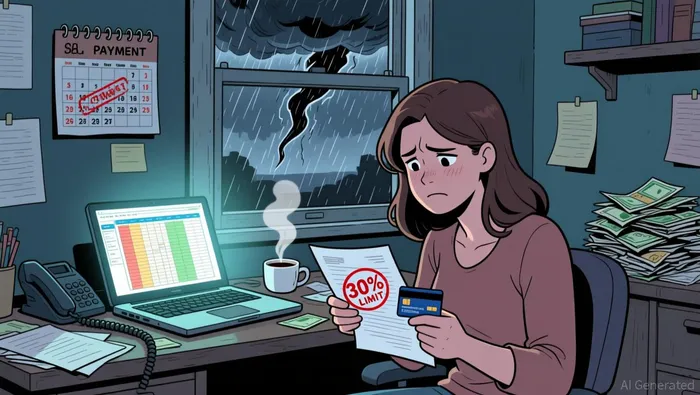 Regular credit monitoring is essential for maintaining and improving credit scores. According to TransUnion, . This is largely due to proactive management of .
For example, FICO's 2025 Credit Insights report highlights , . This trend is particularly pronounced among Gen Z and Millennials, who monitor their scores monthly. By identifying errors, detecting fraud, and tracking utilization, consumers can avoid surprises that might derail their credit recovery efforts.
: A Blueprint for Recovery
The first quarter of the year is pivotal for post-holiday debt recovery. A structured approach includes:
1. Budget Reallocation: Redirect funds from discretionary spending (e.g., dining out, subscriptions) to debt repayment.
2. Repayment Strategies: The debt snowball method (paying off smaller debts first) builds momentum, while the avalanche method (targeting high-interest debts) minimizes long-term costs.
3. Balance Transfer Offers: on credit cards to reduce interest charges.
4. Credit Utilization Controlpaying down balances or requesting credit limit increases.
For instance, , , . Additionally, cutting nonessential expenses and increasing income through part-time work or selling unused items can accelerate recovery.





Comentarios
Aún no hay comentarios