
Navigating High-Risk Real Estate Stocks: Liquidity Stress and Balance Sheet Vulnerabilities in a Rising Rate Environment
The real estate sector is undergoing a seismic shift as rising interest rates reshape capital flows, asset valuations, and borrower solvency. For investors, identifying high-risk real estate stocks requires a sharp focus on liquidity stress and balance sheet vulnerabilities-factors that have amplified sector-specific challenges in 2023–2025. This analysis examines the structural risks facing commercial real estate (CRE) companies, REITs, and regional banks, drawing on recent data to highlight key warning signs and strategic considerations.
The Perfect Storm: Rising Rates and Sector-Specific Pressures
The Federal Reserve's aggressive rate hikes since 2022 have created a perfect storm for real estate firms. According to a report by the Financial Stability Board, non-bank CRE investors, including REITs and property funds, are particularly vulnerable to liquidity risks due to their reliance on short-term debt and exposure to volatile sectors like office and retail. For instance, the San Francisco office property 350 California Street traded in Q2 2023 at just 20% of its pre-pandemic asking price, reflecting broader distress in the Class B office market. Hybrid work models have exacerbated this trend, with office vacancy rates peaking in 2025 and effective rents declining by double digits in major markets.
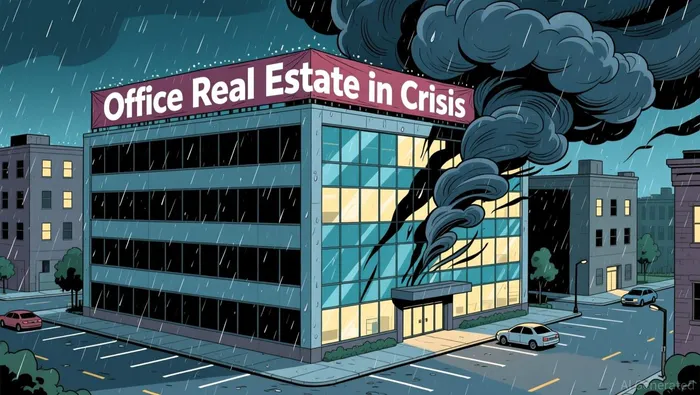 The ripple effects extend beyond occupancy. Rising interest rates have elevated capitalization rates (cap rates), reducing property valuations and complicating debt refinancing. Data from NortheastPCG indicates that 14% of commercial real estate loans are now tied to distressed assets, creating systemic risks for lenders and investors. For real estate companies, the challenge is twofold: managing existing debt maturities in a high-rate environment while navigating declining asset values.
Debt Maturities and Liquidity Crunches: A $2 Trillion Time Bomb
A critical vulnerability lies in the wave of maturing CRE debt. By the end of 2025, nearly $957 billion in commercial real estate mortgages will come due, followed by $539 billion in 2026 and $550 billion in 2027, totaling over $2 trillion. This debt originated during the low-rate pandemic period, when borrowing costs were near historic lows. Refinancing these obligations at today's elevated rates is proving untenable for many borrowers.
Regional banks, which hold a significant portion of this debt, are under particular scrutiny. As of 2025, they account for approximately 20% of the $900+ billion in CRE loans maturing between 2025 and 2028. Office sector loans are especially problematic, with delinquency rates surging to 11.76%. In response, banks like Flagstar, Regions, and M&T have reduced their office loan concentrations by selling portfolios or extending maturities. However, these measures may not be sufficient to offset the broader liquidity crunch.
Office REITs: High Leverage and Structural Weaknesses
Office REITs exemplify the sector's balance sheet vulnerabilities. While REITs overall maintained strong debt profiles in 2025-average debt-to-market assets at 32.9% and weighted average debt maturities of 6.2 years-office REITs stand out for their structural weaknesses. As of Q3 2025, 75% of office REITs had debt-to-equity ratios above 100%, with some exceeding 264%. This high leverage amplifies their exposure to rising interest rates and declining rental income.
Occupancy rates further underscore the sector's fragility. Office REITs averaged 85.3% occupancy in Q3 2025, the only sector below 95%. Weak demand is compounded by rising operational costs, including insurance, payroll, and taxes, which have squeezed net operating income (NOI) and reduced refinancing flexibility. For example, a REIT with a 22.7% interest expense-to-NOI ratio faces significant strain if rental growth stagnates or vacancies rise.
Strategic Implications for Investors
Investors seeking to avoid high-risk real estate stocks must prioritize liquidity metrics and leverage ratios. Key red flags include:
1. Short Debt Maturities: REITs with concentrated debt maturities in 2025–2026 face heightened refinancing risks.
2. High Leverage: Debt-to-equity ratios above 100% signal overreliance on borrowed capital, increasing vulnerability to rate hikes.
3. Sector Exposure: Office and retail REITs remain structurally challenged, while industrial and data center REITs have shown greater resilience.
Conversely, companies with conservative balance sheets-such as those with fixed-rate debt, long maturities, and low leverage-are better positioned to weather the storm. For example, Buchanan Mortgage Holdings' use of private credit to originate a $49 million bridge loan for a Los Angeles multifamily property highlights the role of alternative financing in stabilizing distressed assets.
Conclusion: A Cautious Path Forward
The real estate sector's challenges in a rising rate environment are neither uniform nor insurmountable. While office REITs and CRE lenders face acute liquidity stress, the broader market has demonstrated resilience through disciplined balance sheet management and innovative financing solutions. For investors, the key lies in rigorous due diligence: scrutinizing debt structures, sector exposure, and liquidity buffers to avoid the most vulnerable players. As the $2 trillion debt wall looms, those who act proactively will be best positioned to navigate the turbulence ahead.







Comentarios
Aún no hay comentarios