
Navigating the Healthcare Sector's Governance Crisis: Lessons for Investors in 2025
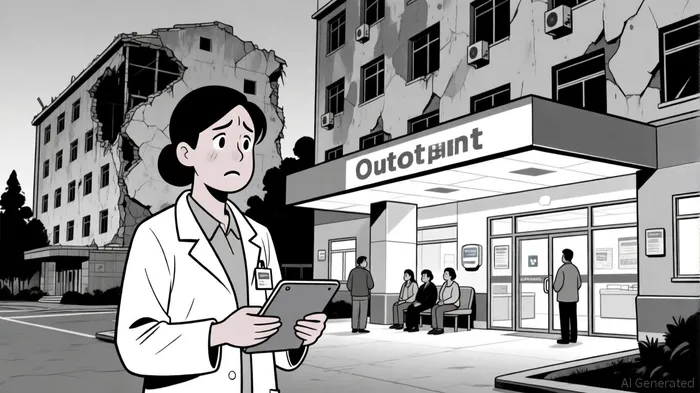
The healthcare sector in 2025 is a battlefield of survival. , investors are scrambling to untangle the web of corporate governance failures and operational missteps that have left many firms teetering on the edge. , the sector's struggles are no longer abstract—they're existential. But for those willing to dig into the data, there's a roadmap to recovery. Let's break it down.
Corporate Governance: The New Frontier of Risk Management
The boards of declining healthcare firms are no longer just stewards of profit—they're crisis managers. Regulatory pressures, particularly around ESG compliance, have forced companies to disclose everything from labor practices to carbon footprints[2]. Yet, as the notes, many boards are still lagging in aligning executive compensation with long-term value creation[1]. This misalignment is a red flag. Take Prospect Medical Holdings, where critics accused the board of prioritizing dividends over infrastructure reinvestment, eroding care quality in critical units like behavioral health[1].
The solution? Governance frameworks must evolve from passive oversight to proactive strategy. According to , top-tier firms are embedding real-time risk dashboards into their operations, allowing boards to spot threats like or regulatory shifts before they blow up[1]. For investors, this means scrutinizing a company's ESG disclosures and board refreshment rates. If a firm isn't adapting, it's a sign they're already behind.
Investor Recovery: The Art of the (Strategic) Sell-Off
When the going gets tough, healthcare firms are turning to M&A and asset sales to stay afloat. CVS HealthCVS--, for instance, , . Similarly, . These moves highlight a critical truth: in a declining sector, liquidity isn't just important—it's everything.
But not all recovery strategies are created equal. Consider UnitedHealth Group's response to its Change Healthcare ransomware attack and Medicare Advantage fraud probe. By reaffirming full-year guidance and addressing operational gaps head-on, the company restored investor confidence, . Contrast this with Pipeline Health, which failed to adapt to post-pandemic demand shifts and collapsed under rising labor costs[1]. The lesson? Strategic clarity and transparency are non-negotiable.
Case Study: Prospect Medical Holdings—A Cautionary Tale
Prospect's Chapter 11 filing in January 2025[2] is a masterclass in governance gone wrong. , the firm's reliance on private equity-driven leverage and its neglect of operational efficiency left it vulnerable. , critics highlighted “overwhelming evidence of ”[3]. For investors, this underscores the danger of over-leveraged models in volatile sectors.
Yet, Prospect's story isn't entirely bleak. . The key is to watch for signs of liquidity stress early. If a firm is forced to sell assets at fire-sale prices, it's already too late.
The Road Ahead: Where to Play and Where to Stay Clear
For 2025, the healthcare sector's recovery hinges on three pillars: governance transparency, operational agility, and strategic capital allocation. . Conversely, those clinging to outdated models—think Steward Health Care's reliance on asset sales without structural reforms[2]—are likely to falter.
Final Takeaway
The healthcare sector in 2025 is a mix of chaos and opportunity. For investors, the key is to separate the survivors from the casualties. Look for boards that prioritize , , and . Avoid firms with or over-leveraged balance sheets. As the sector grapples with , , and aging populations, only those with robust risk management and agile strategies will thrive.





Comentarios
Aún no hay comentarios