
Navigating U.S. Government Shutdown Risks: Strategic Investment Opportunities in Defense and Essential Services
The U.S. government shutdown that began on October 1, 2025, has reignited debates about sectoral vulnerabilities and investment resilience in times of political gridlock. While the immediate market reaction was muted-according to a YCharts analysis, the S&P 500 rose 0.34% on the first day of the shutdown-the long-term implications for defense and essential services sectors warrant closer scrutiny. Historical patterns suggest that investors who strategically position portfolios toward these sectors may mitigate risks and capitalize on post-shutdown rebounds.
Defense Sector: Stability Amid Uncertainty
The defense sector, though not immune to shutdown-related disruptions, has historically demonstrated resilience. Active military operations continue uninterrupted, but civilian defense workers face furloughs, and new contracts are delayed, as YCharts notes. However, defense manufacturers like Lockheed MartinLMT-- (LMT), BoeingBA-- (BA), and Raytheon Technologies (RTX) have shown minimal stock volatility during past shutdowns, with an average decline of just -0.01% in 2025, per YCharts. This stability stems from the sector's reliance on long-term, non-discretionary budgets for national security.
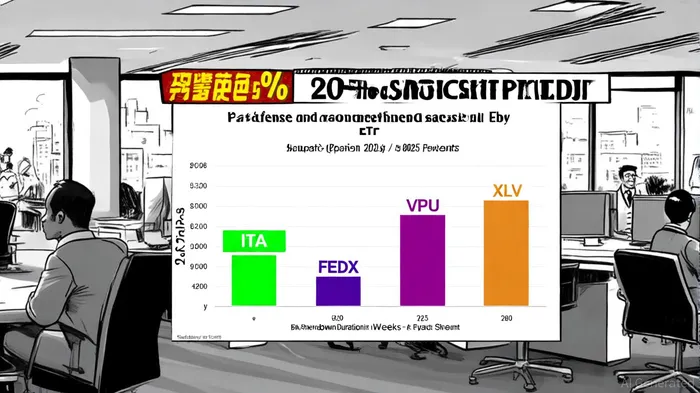
For investors, ETFs like the iShares U.S. Aerospace & Defense ETF (ITA) and Invesco Aerospace & Defense ETF (PPA) offer diversified exposure to these stalwarts, as highlighted in a Motley Fool roundup. However, prolonged shutdowns could strain government services contractors, which rely on timely contract approvals. The Emles Federal Contractors ETF (FEDX), which focuses on firms with high federal contract exposure, surged 2.28% in early October 2025 as markets anticipated catch-up spending post-resolution, according to YCharts.
Essential Services: Defensive Plays in Turbulent Times
Essential services sectors, including healthcare and utilities, are less susceptible to shutdown shocks due to their non-cyclical demand. Healthcare providers and insurers, such as UnitedHealth Group and Cigna, continue operations even when federal agencies slow down, according to TheStreet. Similarly, utilities like NextEra Energy and Duke Energy maintain steady cash flows, as electricity and water services remain critical regardless of political developments, according to Investopedia.
Investors seeking defensive exposure can consider:
- Vanguard Utilities ETF (VPU), which tracks companies providing essential energy services.
- Health Care Select Sector SPDR Fund (XLV), offering access to non-cyclical healthcare providers, according to Campaign for a Million.
- Consumer Staples Select Sector SPDR ETF (XLP), which includes firms selling household essentials.
During the 2025 shutdown, VPU and XLV outperformed the broader market, reflecting their role as safe havens during uncertainty, per YCharts.
Historical Context: Lessons from Past Shutdowns
Historical data underscores the value of a balanced approach. For instance, during the 35-day 2018–2019 shutdown, the S&P 500 rallied 10.3%, as documented by YCharts, driven by broader economic factors. Defense stocks, meanwhile, have shown long-run gains (about 5.2% since 1995), per the Motley Fool analysis, while government services contractors often see post-shutdown surges due to delayed spending. CACI International (CACI) and Booz Allen Hamilton (BAH) rose 3.28% and 2.65%, respectively, in October 2025, illustrating this dynamic, according to Campaign for a Million.
Strategic Recommendations
- Diversify Across Sectors: Pair defense-oriented ETFs (ITA, PPA) with essential services funds (VPU, XLV) to balance growth and stability.
- Monitor Shutdown Duration: Prolonged shutdowns could amplify risks for government services contractors (FEDX), while defense manufacturers remain relatively insulated.
- Leverage Post-Shutdown Rebounds: Historically, sectors like healthcare and utilities have outperformed in the 12 months following shutdown resolution, per Campaign for a Million.
Conclusion
While the 2025 shutdown introduces short-term volatility, it also creates opportunities for investors attuned to sectoral dynamics. By prioritizing defense and essential services, investors can navigate uncertainty with a focus on resilience and long-term gains. As markets continue to adapt, a disciplined, data-driven approach will remain critical.





Comentarios
Aún no hay comentarios