
Navigating Government Shutdown Risks: Sector-Specific Defensive Investment Strategies
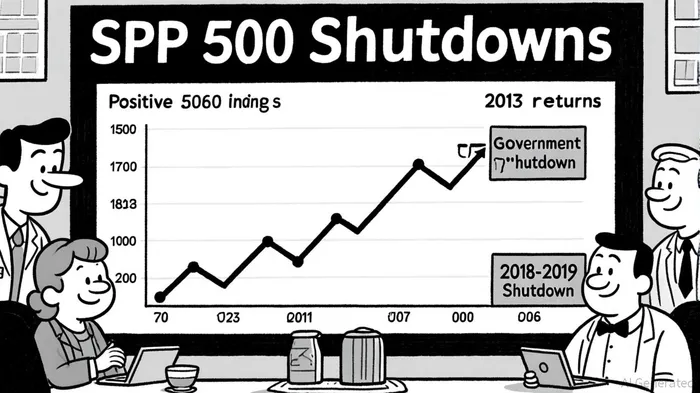
Government shutdowns in the United States, while politically charged and economically disruptive in the short term, have historically demonstrated limited long-term impacts on the stock market. According to a report by Kiplinger, the S&P 500 has risen 55% of the time during shutdowns, with an average return of 0.3% [1]. For instance, during the 35-day shutdown in 2018–2019, the index surged 10.3%, and in the 2013 shutdown, it advanced 3.1% [1]. These data points underscore the market's resilience, driven by the Federal Reserve's dovish monetary policies and the continuation of essential economic activity.
Sector-Specific Vulnerabilities and Opportunities
While the broader market often remains stable, individual sectors exhibit divergent behaviors. Defense and aerospace industries are particularly vulnerable due to their reliance on federal contracts. Delays in procurement and research funding during shutdowns can lead to operational bottlenecks, as seen in past closures [3]. Conversely, technology and utilities tend to perform relatively well. Defensive sectors like consumer staples and utilities, such as Procter & Gamble and Duke EnergyDUK--, have historically gained 5.7% to 5.8% during the 2018–2019 shutdown, reflecting their resilience amid political uncertainty [3].
Healthcare: A Mixed Defensive Play
The healthcare sector presents a nuanced case. While core programs like Medicare and Medicaid continue uninterrupted due to mandatory funding, non-essential functions at agencies like the CDC and NIH are often furloughed. For example, during the 2013 shutdown, the CDC furloughed 59% of its staff, disrupting public health initiatives [4]. However, essential services such as FDA drug approvals and health insurance861218-- payments remain operational, shielding the sector from immediate collapse.
A report by Becker's Hospital Review notes that healthcare providers typically maintain revenue streams through entitlement-based programs, making the sector a relatively stable investment [5]. Yet, indirect risks persist. The expiration of pandemic-era telehealth waivers and potential Medicaid cuts could destabilize access to care and strain safety-net hospitals [1]. Investors must weigh these risks against the sector's defensive traits, particularly in a prolonged shutdown scenario.
Strategic Recommendations for Investors
- Prioritize Defensive Sectors: Overweight utilities, consumer staples, and healthcare in portfolios to mitigate volatility.
- Monitor Healthcare Sub-Sectors: Favor companies less reliant on federal grants or regulatory approvals, such as pharmaceutical firms with diversified pipelines.
- Stay the Course: Historical data suggests that long-term investors should avoid panic selling, as markets typically recover within 12 months post-shutdown [3].
Conclusion
Government shutdowns, while disruptive, rarely derail long-term market trends. By leveraging sector-specific insights—such as the resilience of utilities and the conditional stability of healthcare—investors can navigate political uncertainty with a defensive strategy. As the Federal Reserve's policy stance and fiscal developments remain critical variables, a balanced approach that combines short-term agility with long-term perspective will be key.





Comentarios
Aún no hay comentarios