
Navigating Government Shutdown Risks: Sector Resilience and Hedging Strategies in Critical Infrastructure and Airline Operations
The U.S. government's looming shutdown risk in October 2025, driven by partisan gridlock over funding for healthcare, foreign aid, and community programs, poses significant challenges for critical infrastructure and airline operations. With Congress yet to pass a spending bill, the economic toll could reach $7 billion per week, compounding uncertainty for sectors reliant on federal contracts and consumer demand, according to a RoanCP report. This analysis evaluates sector-specific vulnerabilities, historical stock resilience, and actionable hedging strategies to mitigate risks.
Critical Infrastructure: Vulnerabilities and Resilience
Infrastructure sectors, particularly defense and aerospace, face acute exposure during shutdowns due to delayed federal contracts and halted operations. For example, during the 2018–2019 shutdown-the longest in U.S. history-defense contractors like Lockheed MartinLMT-- and Northrop GrummanNOC-- experienced temporary revenue disruptions as government payments were suspended, a Motley Fool analysis found. Similarly, the 2013 shutdown saw a 6.2% spike in the VIX, reflecting investor anxiety over infrastructure-linked sectors, according to a Landmark Wealth analysis.
However, historical data reveals a nuanced picture. While defense and aerospace struggle, utilities and healthcare infrastructure have shown resilience. Utilities, insulated from direct government funding, maintained stable performance during the 2013 and 2018–2019 shutdowns, with the S&P 500 gaining 3.1% and 10.3%, respectively, according to Dave Manuel's data. Healthcare stocks, similarly, outperformed due to inelastic demand for services, even as federal agencies paused non-essential operations, in a YCharts report.
Airline Sector: Operational Disruptions and Market Volatility
The airline industry, though not explicitly detailed in historical shutdown analyses, faces indirect risks. Operational disruptions-such as delayed air traffic control services and passport processing-could strain capacity and customer demand. During the 2018–2019 shutdown, for instance, the industry's high operational leverage exacerbated profitability challenges, even as broader markets rebounded, according to an NCBI study. Fuel hedging, a common practice in the sector, may offer partial protection against volatility, but prolonged closures could erode cost-saving benefits, as suggested by a SAGE article.
Historically, the S&P 500 has shown resilience during shutdowns, as a CNBC analysis notes. However, airlines' reliance on consumer discretionary spending makes them more susceptible to shifts in travel behavior during prolonged closures.
Hedging Strategies: Mitigating Sector-Specific Risks
Investors can employ tailored strategies to navigate shutdown-related uncertainties:
1. Diversification and Defensive Sectors: Allocating to utilities, healthcare, and Treasury bonds-historically stable during shutdowns-can offset risks in cyclical sectors like defense and airlines, according to a Morgan Stanley report.
2. Derivatives and Options: Equity put options and Treasury futures provide downside protection, particularly for infrastructure firms with high government exposure, as Northern Trust notes.
3. Sector Rotation: Shifting toward small-cap resilience stocks (e.g., regional utilities) and away from large-cap defense contractors during shutdowns may capitalize on market mispricings, Campaign for a Million argues.
4. Fuel Hedging for Airlines: Locking in fuel prices through long-term contracts can stabilize costs amid operational disruptions, an Oliver Wyman analysis concludes.
Conclusion
While government shutdowns introduce short-term volatility, historical trends suggest markets and resilient sectors recover swiftly. For critical infrastructure and airlines, proactive hedging-coupled with a focus on defensive assets-can mitigate risks while capitalizing on post-shutdown rebounds. As the 2025 shutdown looms, investors must balance caution with a long-term perspective, leveraging data-driven strategies to navigate uncertainty.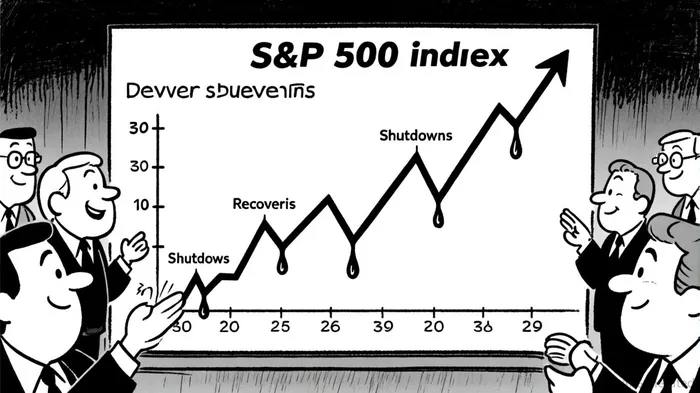





Comentarios
Aún no hay comentarios