
Navigating Global Trade Tensions and Central Bank Policy Uncertainty in European Equities
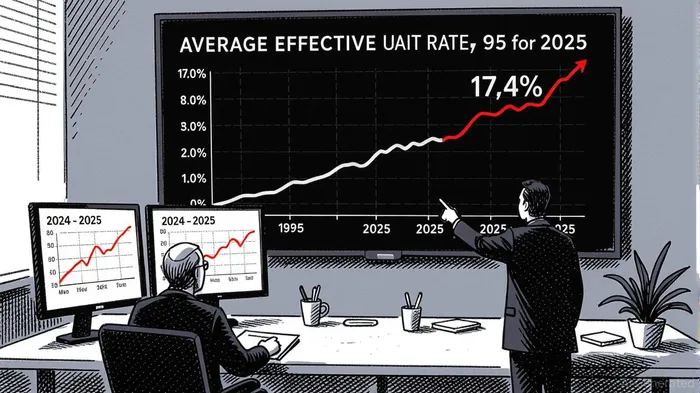
The New Normal: Tariffs, Rates, and European Equities
Global trade tensions and divergent central bank policies have created a complex landscape for European equities in 2025. The U.S.-EU trade deal, which imposes a 15% baseline tariff on most European goods while maintaining 50% tariffs on steel, aluminum, and copper, has reshaped export dynamics and investor sentiment [6]. Meanwhile, the Federal Reserve’s cautious approach to rate cuts contrasts with the European Central Bank’s (ECB) strategic pause, creating a policy divergence that amplifies sector-specific risks and opportunities.
Tariff-Driven Sectoral Shifts
The U.S. tariff regime has disproportionately impacted Europe’s export-dependent sectors. The automotive industry, for instance, faces a 15% tariff on vehicles and parts, a significant increase from pre-2025 levels, with steel and aluminum tariffs compounding costs for manufacturers [3]. According to a report by J.P. Morgan, this could cost European automakers billions annually, particularly as they navigate the transition to electrification [6]. Conversely, aerospace and industrial goods—exempt from the 15% tariff—stand to benefit from increased U.S. demand, as the EU agreed to eliminate tariffs on American industrial products [6].
For investors, this duality underscores the need to differentiate between sectors. Aerospace and defense stocks, supported by both tariff exemptions and rising U.S. defense budgets, have shown resilience [4]. In contrast, automotive and manufacturing equities face near-term headwinds, with analysts warning of reduced corporate investment and GDP growth in the eurozone [3].
Central Bank Divergence: ECB’s Dovish Stance vs. Fed Caution
The ECB’s decision to pause rate cuts in July 2025, maintaining its key rate at 2.00%, reflects its focus on monitoring trade-related uncertainties [5]. This contrasts with the Fed’s 4.25–4.50% rate range, where policymakers remain wary of inflationary pressures and Trump-era trade policies [2]. The resulting policy divergence has fueled a rally in European value and small-cap stocks, which benefit from lower borrowing costs and stable earnings [5].
However, this divergence may not persist indefinitely. As noted by Bloomberg, global inflationary shocks and trade conflicts could force the ECB and Fed to align policies, particularly if energy prices or geopolitical tensions resurge [4]. For now, though, the ECB’s accommodative stance provides a tailwind for sectors like utilities and real estate, which thrive in low-rate environments [6].
Strategic Sector Positioning
Aerospace and Defense: With U.S. tariffs excluding this sector and European governments boosting defense spending, aerospace firms are well-positioned to capitalize on cross-border demand [6]. Companies with strong balance sheets and long-term contracts should outperform.
Industrial Goods: The EU’s tariff concessions on U.S. industrial products open new export opportunities, but European firms must navigate compliance with U.S. standards like CE marking [6]. Firms with diversified supply chains and R&D capabilities will gain an edge.
Automotive and Manufacturing: These sectors face near-term challenges due to elevated tariffs and supply chain disruptions. However, companies investing in automation and green technologies may mitigate risks by improving margins [3].
Financials and Banks: European banks with limited exposure to trade-sensitive sectors could benefit from ECB-driven liquidity, but those with high trade-related loan portfolios remain vulnerable [2].
Risk Mitigation and the Road Ahead
Investors must also account for geopolitical uncertainties, such as the war in Ukraine and potential escalations in U.S.-China trade relations. Political risk insurance (PRI) and hedging strategies can protect against sudden market corrections [1]. Additionally, structural reforms in the eurozone—such as Germany’s fiscal stimulus and labor market adjustments—could bolster long-term growth [6].
The ECB’s potential for further rate cuts in autumn 2025, contingent on inflation trends, will remain a critical factor. If inflation stabilizes near 2%, equities in sectors like consumer discretionary and healthcare may see renewed interest [5]. Conversely, a resurgence in inflation or trade tensions could trigger a re-rating of defensive assets.
Conclusion
The interplay of U.S. tariffs, Fed caution, and ECB inaction has created a fragmented but navigable landscape for European equities. By prioritizing sectors insulated from trade shocks and leveraging ECB-driven liquidity, investors can position portfolios to weather near-term volatility while capitalizing on structural opportunities. As central banks and trade policies evolve, agility and sector-specific insights will be paramount.
Source:
[1] European Stability and Geopolitical Risks [https://www.esma.europa.eu/press-news/esma-news/heightened-geopolitical-uncertainties-drive-risks]
[2] ECB’s July 2025 Policy Decision [https://www.nytimes.com/2025/07/24/business/ecb-interest-rate.html]
[3] Impact of U.S. Tariffs on European Manufacturing [https://www.jpmorganJPM--.com/insights/global-research/current-events/us-tariffs]
[4] Fed-ECB Policy Divergence Analysis [https://www.bloomberg.com/news/articles/2025-06-07/don-t-count-on-a-sustained-fed-ecb-decoupling-schnabel-says]
[5] State of U.S. Tariffs and ECB Policy [https://budgetlab.yale.edu/research/state-us-tariffs-september-4-2025]
[6] U.S.-EU Trade Deal and Sector Opportunities [https://www.whitehouse.gov/fact-sheets/2025/07/fact-sheet-the-united-states-and-european-union-reach-massive-trade-deal/]







Comentarios
Aún no hay comentarios