
Navigating Global Market Volatility: Strategic Asset Reallocation in Q4 2025
The global economic landscape in Q4 2025 is marked by stark contrasts: slowing growth in advanced economies, divergent inflation trajectories, and a surge in emerging market optimism. As central banks grapple with policy normalization and geopolitical tensions simmer, investors face a critical juncture to reallocate assets strategically. This analysis unpacks the macroeconomic shifts shaping markets and outlines actionable strategies to capitalize on regional imbalances.
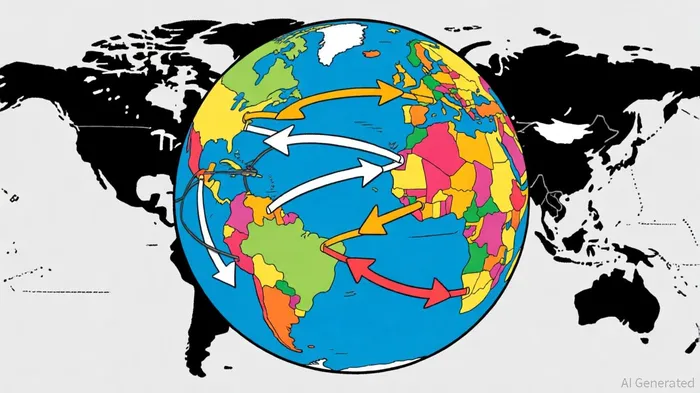
Macroeconomic Trends: A Tale of Two Worlds
Global GDP growth is projected to slow to an average annual rate of 2.9% in 2025 (2.5% in Q4), driven by the U.S. deceleration and structural disruptions from new trade policies and higher tariffs, according to Morgan Stanley's midyear outlook. These tariffs, while boosting domestic manufacturing sentiment, have created a "significant shock" to global supply chains, crimping demand in trade-dependent economies like Canada and Mexico, as highlighted in the IMF's October 2025 WEO. Meanwhile, the U.S. economy, though slowing to 2.4% in 2025, remains a standout performer among developed peers, per Deloitte's global outlook.
Inflation differentials are widening. While most economies see inflation easing to 2.1% in 2025, the U.S. is an outlier, with inflation peaking at 3–3.5% in Q3 2025 due to tariff-driven cost pressures and labor shortages, according to the CBO's outlook. Central banks are responding asymmetrically: the Federal Reserve is poised to cut rates after inflation peaks, while the European Central Bank may reduce rates to 1.50% by December 2025. Emerging markets, particularly India, are bucking the trend, with GDP growth projected at 5.9% in 2025 and 6.4% in 2026, fueled by robust domestic demand, the CBO projects.
Strategic Asset Reallocation: Balancing Risks and Opportunities
The interplay of tariffs, inflation, and policy divergence demands a nuanced approach to asset allocation.
- Equities: Tilting Toward Resilience
- Japan emerges as a compelling destination. Corporate governance reforms, aggressive buybacks, and high cash returns to shareholders are driving a "value renaissance," making Japanese equities a hedge against global volatility, as Morgan StanleyMS-- notes.
Emerging markets are rallying on the back of lower U.S. rates and a weaker dollar, though fundamentals remain mixed. While optimism around China's AI sector is growing, meaningful macroeconomic improvements are still absent, according to recent market analysis.
Fixed Income: Capitalizing on Policy Divergence
- UK rates offer attractive opportunities as the Bank of England is expected to cut rates more aggressively than its European counterparts, a dynamic highlighted by market strategists.
In the U.S., Treasury yields may remain volatile as the Fed balances inflation control with growth risks. Investors should prioritize short-duration bonds to mitigate rate uncertainty, a recommendation reflected in CBO analysis.
Commodities and Inflation Hedges
- Gold and small-cap equities have outperformed, reflecting a flight to safety and speculative demand, according to IMF analysis.
- Emerging market commodities (e.g., copper, lithium) could benefit from green energy transitions, though geopolitical risks remain a drag, as the CBO and other analysts caution.
Regional Imbalances: Where to Focus
- North America: U.S. tariffs are creating a "structural imbalance" in trade flows. Investors should favor domestic manufacturing and logistics sectors but remain cautious about overexposure to tariff-sensitive industries, a risk the IMF has emphasized.
- Asia: India's growth story is underpinned by demographic tailwinds and fiscal stimulus. However, overbought valuations in its equity market warrant a measured approach, according to CBO commentary.
- Europe: The ECB's easing cycle and weaker euro could boost export-oriented sectors, but energy security concerns persist, per policy analysis and CBO assessments.
Risk Management: Navigating the Unknown
Geopolitical risks loom large. A re-escalation of U.S. tariffs could trigger a global recession, while China's property sector and debt challenges remain a "black swan" threat, issues flagged by the IMF. Proactive strategies include:
- Diversifying across geographies to avoid overconcentration in high-risk regions.
- Hedging against currency swings, particularly in emerging markets.
- Prioritizing liquidity to navigate sudden market corrections, a precaution echoed in CBO guidance.
Conclusion
Q4 2025 presents a paradox: a fragile global economy coexists with pockets of resilience and innovation. Strategic asset reallocation must balance caution with opportunism, leveraging policy divergences and regional growth differentials. As central banks pivot and trade policies evolve, agility will be the key to navigating volatility and securing long-term returns.





Comentarios
Aún no hay comentarios